If Taylor Sheridan's Yellowstone is famous for its grueling, horseback-riding "Cowboy Camp," his newest Texas oil epic demanded something entirely different, yet equally punishing. How did Landman actors train for oil rig roughneck roles? The answer lies in a highly structured, intense, and deeply immersive industrial training program dubbed by the crew as the "Roughneck Boot Camp."

In the Sheridan-verse, faking it was never an option. The rhythmic, dangerous ballet of an active drill site requires precise muscle memory that cannot be CGI'd or mimed on a soundstage. The sheer weight of the chains, the deafening roar of the diesel generators, and the lethal pressure of the pipes require an absolute suspension of disbelief from the audience. Here is an inside, comprehensive look at how Hollywood actors transformed into hardened West Texas oil workers.
The Texas Tech Petroleum Engineering Partnership
To ensure absolute occupational realism, the television production bypassed standard Hollywood technical consultants and instead partnered directly with the Texas Tech University Department of Petroleum Engineering in Lubbock, Texas. Before principal photography even began in Fort Worth, key cast members—especially those playing the grueling roles of roughnecks, derrickhands, mud loggers, and company men—were sent to specialized industrial training facilities.
Far from a simple classroom lecture or a PDF manual overview, actors were thrust into simulator environments and decommissioned training rigs originally used to certify real-world petroleum engineers. The overarching goal was to build subconscious physical competence. When a seasoned director like Stephen Kay or Taylor Sheridan yelled "Action," the actors needed to know intrinsically how to throw a chain, handle a heavy pipe, and react instinctively to pressure gauges without thinking about their lines.

Mastering the "Symphony of Steel" on the Rig Floor
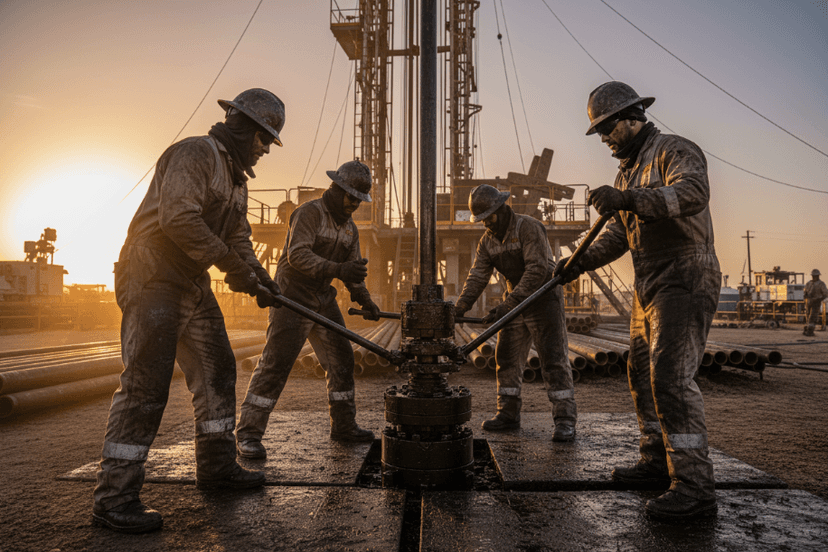
The daily life of a roughneck is intensely, relentlessly physical. It is often described by industry veterans as a 'Symphony of Steel.' How Landman actors trained for oil rig roughneck roles involved mastering specific physical tools under a blazing Texas sun. The choreography of the drill floor includes:
- Tripping Pipe: Actors spent days learning the mechanics of connecting and disconnecting 30-foot sections of drill pipe. The heavy steel collars require specific leverage techniques, knee-bending, and core strength to avoid serious, career-ending back injuries.
- Working the Slips: The physical exertion of pulling and aggressively dropping "slips" (heavy, serrated metal wedges that wrap around the drill string and hold the pipe secure in the rotary table) was drilled repeatedly. This ensured the actors looked naturally fatigued, efficient, and never out of sync with their castmates.
- Wielding Hydraulic Tongs: Handling massive, swinging hydraulic wrenches (tongs) taught the cast the precise danger of pinch-points and crushing hazards on the rig floor. A single misplaced hand during a connection can result in severed fingers in real life—a danger the training explicitly pounded into their minds.
Quote from the Set: The Heat and the Dirt
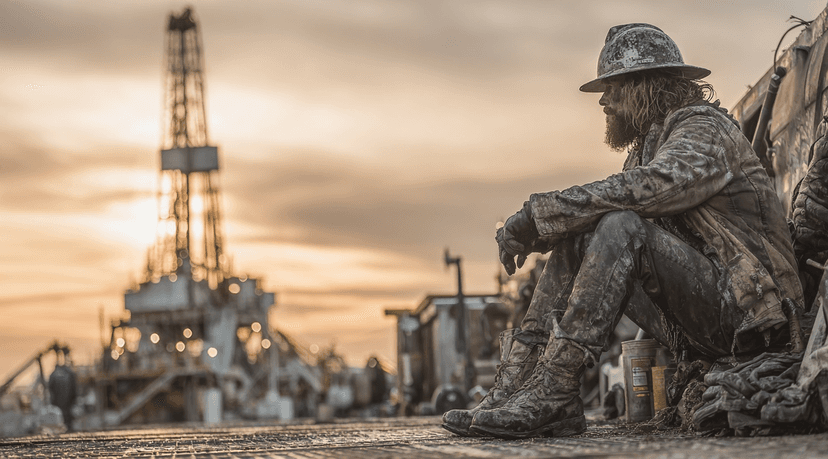
"They didn't want us to just act tired... they wanted us to actually be completely exhausted. You spend six straight hours throwing a heavy steel chain on a mock rig in 100-degree Texas heat, you don't have to pretend your muscles are burning when the cameras finally roll. You just live it. The dirt under your fingernails stops being makeup by Day 3."
OSHA, H2S, and High-Stakes Safety Protocols
A crucial, unavoidable part of the Roughneck Boot Camp was legitimate occupational safety training. The American oil patch is statistically one of the most perilous work environments in the country. The actors weren't simply learning to look cool; they were required to pass genuine safety briefings that real oil field workers take to acquire their certification.

- Hydrogen Sulfide (H2S) Training: Understanding the deadly nature of "sour gas," a silent, invisible killer that haunts the Permian Basin. Actors learned how to respond to immediate H2S alarms, calculate wind direction, and correctly don emergency breathing apparatuses (SCBAs) in under ten seconds.
- Fall Protection and Derrick Safety: Actors playing derrickhands (those who work terrifyingly high up in the rig's mast racking pipe) underwent rigorous harness and fall-arrest training. This allowed camera crews to capture genuine reactions of vertigo and trust in their equipment.
- Lockout/Tagout (LOTO): Learning the critical, non-negotiable procedures for ensuring dangerous machines are properly shut off, locked, and tagged out so they cannot be accidentally started up during highly tense repair and maintenance scenes.
Psychological Conditioning: Embracing the Long Shift Mentality
Beyond the immense physical toll, the Landman roughneck training camp intentionally encompassed psychological conditioning. Real roughnecks often work grueling rotations—14-days on, 14-days off, or 20-days on, 10-days off—clocking relentless 12 to 16-hour shifts around the clock in isolated "man camps." The showrunners required the actors to deeply adopt this "long shift" mentality, breaking down their Hollywood egos.
Technical advisors, who were themselves hardened, weather-beaten veterans of the Permian Basin and the North Dakota Bakken shale, acted as drill instructors and cultural guides. They mercilessly pushed the ensemble to understand the unique camaraderie, the dark, gallows humor, the specific jargon-heavy linguistics, and the isolated culture that forms among a crew (referred to locally as a 'tour' or 'tower') that literally trusts each other with their lives every twenty seconds.
They learned that out on the rig floor, there are no pronouns, no politics, and no pasts—there is only the goal of safely putting drill bit to the earth and going home with all ten fingers attached.
The End Result: Unprecedented Television Realism
The total, unwavering commitment to learning how Landman actors trained for oil rig roughneck roles translates directly to the screen from Episode 1. When viewers sit on their couches watching the high-tension, mud-soaked drilling sequences, they aren't seeing pampered actors guessing where to put their hands or how to shout instructions over the roaring deafening thunder of Detroit Diesel generators.
Audiences are witnessing the result of a grueling, respectful, dirty dedication to the men and women who actually pull America's energy out of the dirt every single day. The sweat is real, the exhaustion is palpable, and the danger, while controlled for television, is treated with the absolute reverence it commands in the real world.