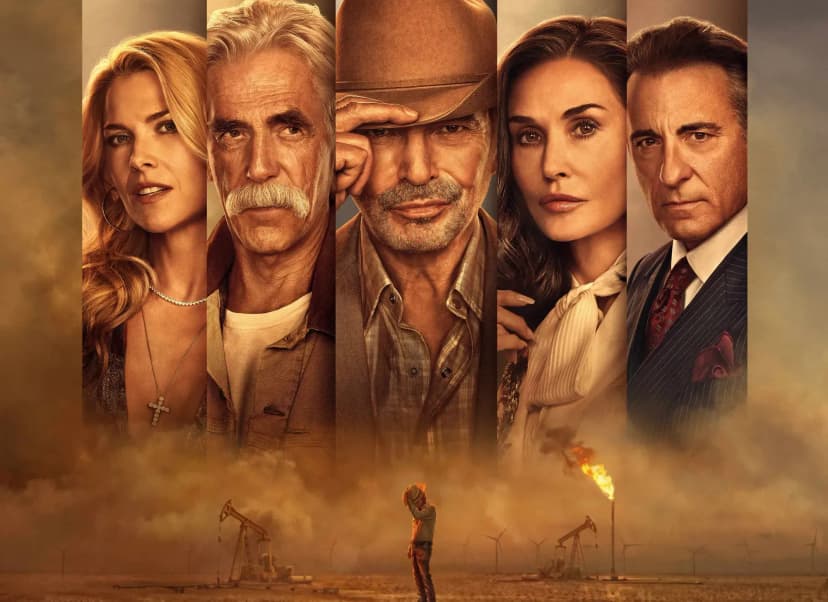
On January 11, 2026, a single scene from Paramount+'s "Landman" ignited a firestorm across social media that transcended typical television discourse. Within hours, clips from Season 2, Episode 9 had accumulated millions of views on X (formerly Twitter), Reddit threads exploded with heated debate, and political commentators from both sides of the aisle weighed in. The scene—a confrontation between Ainsley Norris and her non-binary college roommate over pronouns—became an unlikely cultural flashpoint that reveals as much about America's ongoing culture wars as it does about Taylor Sheridan's provocative storytelling approach.
The viral scene: Ainsley meets her new roommate Paigyn — and their pet ferret
This article examines a controversial television scene and the surrounding debate from multiple perspectives. We present various viewpoints for analysis purposes and do not endorse any particular political position.
The Scene That Launched a Thousand Hot Takes
The controversy centers on a seemingly simple premise: Ainsley Norris (Michelle Randolph), daughter of protagonist Tommy Norris (Billy Bob Thornton), arrives at Texas Christian University for summer cheer camp. Upon meeting her assigned roommate, Paigyn Meester (Bobbi Salvör Menuez)—a sports medicine major from Minneapolis who uses they/them pronouns—a clash of worldviews immediately erupts.
Ainsley arrives at TCU, unaware that her dorm assignment will spark a national conversation about pronouns, identity, and free speech
The Exchange: What Actually Happened
The confrontation begins innocuously enough. Paigyn, short red hair and ferret in tow, establishes the rules for their shared space:
"This is my safe space, and I need my environment crafted to support my mental health."
— Paigyn Meester, establishing dorm room boundaries
The restrictions cascade: no meat products, no air fresheners (citing "toxic airborne petrochemicals"), no music, and critically, no use of the word "penetrate"—which Paigyn finds triggering due to its patriarchal connotations.
Ainsley, characteristically direct, responds with the question that would soon be clipped, shared, and debated across every corner of the internet:
"I always wondered why they/them? Because there's just one of you and those are plural pronouns. Using a plural pronoun for one person is just kind of incorrect [according to] the English language."
— Ainsley Norris, questioning pronoun usage
She continues with a philosophical observation that struck many viewers as either refreshingly logical or dismissively reductive: pronouns, she argues, are third-person references used by others—so why would an individual care what strangers use to describe them?
The Social Media Explosion
Within hours of the episode's premiere, the scene achieved viral velocity. Political commentator Ben Loudon's tweet captured the conservative framing that would dominate one side of the discourse:
"BREAKING: Paramount's Landman is going viral for having a pretty blonde actress politely school a liberal character on 'they/them' pronouns."
— Ben Loudon, political commentator
The response was swift and polarized. Conservative viewers celebrated what they saw as a mainstream platform finally pushing back against progressive orthodoxy:
- "Now they're trolling pronouns. LOVE IT!!"
- "Wokeism is losing control!"
- "Finally, someone in Hollywood with the courage to say what we're all thinking."
Progressive critics, meanwhile, saw the scene as confirmation of their worst fears about Taylor Sheridan's political leanings—a calculated provocation designed to mock rather than understand:
- "This is what happens when you let culture war talking points write your characters."
- "Paigyn isn't a character—she's a strawman built to be knocked down."
- "Taylor Sheridan finally saying the quiet part loud."

The scene generated millions of views and thousands of comments within 24 hours, becoming one of the most discussed television moments of 2026
The Linguistics Question: Is Singular "They" Actually Incorrect?
Ainsley's core argument—that using "they/them" for a single person violates English grammar—invites examination. The historical record, however, tells a more complicated story.
600 Years of Singular They
The singular "they" is not a modern invention. According to linguistic research, the earliest documented use appears in the 1375 medieval poem "William and the Werewolf"—predating the current debate by over six centuries.
Just a decade later, Geoffrey Chaucer employed singular "they" in "The Canterbury Tales" (1386). William Shakespeare used it multiple times across his works, including "A Comedy of Errors" and "Hamlet." Jane Austen, in "Mansfield Park" (1814), wrote: "I would have everybody marry if they could do it properly."
Historical Usage of Singular "They"
- 1375: First documented use in "William and the Werewolf"
- 1386: Chaucer employs it in "The Canterbury Tales"
- 1590s: Shakespeare uses it in multiple plays
- 1814: Jane Austen uses it in "Mansfield Park"
- 2019: Merriam-Webster names singular "they" Word of the Year
Sources: Mental Floss, Oxford English Dictionary, Purdue OWL
The 18th Century Intervention
So why does singular "they" feel grammatically suspicious to many speakers? The answer lies in 18th-century prescriptive grammarians who declared the usage invalid, arguing that plural pronouns cannot take singular antecedents. This ruling ignored an inconvenient precedent: the word "you" underwent precisely the same transformation from exclusively plural to both singular and plural without similar objection.
Linguist Kirby Conrod explains the distinction: "There's a difference between conceptual singularness and grammatical singularness." Most English speakers naturally use singular "they" in sentences like "Everyone should bring their towel" or "Someone left their phone here" without sensing any grammatical violation.
The irony is notable: Ainsley's argument, presented as common-sense grammar, actually contradicts centuries of documented English usage and relies on an 18th-century prescriptivist intervention that most linguists today consider arbitrary.
Taylor Sheridan's Provocateur Philosophy
Understanding the scene requires understanding its creator. Taylor Sheridan has never been a neutral chronicler of American life—he is, as co-star Ali Larter describes him, a "provocateur" who deliberately writes characters designed to provoke audience reactions.

Taylor Sheridan has built a media empire on exploring controversial American themes without apology
The Sheridan Approach to Cultural Conflict
Sheridan's works consistently feature characters whose values clash with mainstream liberal assumptions. "Yellowstone" celebrates land ownership and traditional masculinity. "Mayor of Kingstown" examines the prison-industrial complex through a morally ambiguous lens. "Landman" itself elevates oil industry workers—often cast as environmental villains—into sympathetic protagonists.
The pronoun scene fits this pattern. Sheridan isn't interested in characters who neatly align with progressive sensibilities. He writes people who think differently, speak bluntly, and refuse to perform ideological compliance—whether that makes audiences uncomfortable or not.
Satire or Stereotype?
The critical question: Is Paigyn satire or stereotype? Supporters argue the character represents Sheridan's trademark willingness to mock extremism on all sides. The Minneapolis origin, the ferret, the extensive list of restrictions, the performative fragility—all read as deliberate exaggeration designed to highlight real phenomena in contemporary campus culture.
Critics counter that satire requires nuance, and Paigyn offers none. Screen Rant's review described the character as "a generalized caricature meant to clash with Ainsley" rather than a genuine challenge to her worldview. The character exists, this argument goes, not to illuminate but to confirm existing biases.
Michelle Randolph and the Actor's Perspective
Michelle Randolph, who has played Ainsley across two seasons, has addressed criticism of her character's perceived shallowness. In interviews before the pronoun controversy erupted, she offered a defense that now reads as prescient:
"I like to say she's not dumb, she just has limited life experience... When you spend so much time in someone else's head space, you start to understand their logic."
— Michelle Randolph, Dallas Morning News interview
Co-star Demi Moore praised Randolph's performance, noting that skillfully portraying seemingly unintelligent characters requires genuine talent. The observation cuts to the heart of the controversy: Ainsley isn't meant to be a mouthpiece for correct opinions. She's meant to be Ainsley—a sheltered Texas girl whose worldview has been shaped by her specific environment.
The Danielle D'Souza Gill Tweet
The image that accompanied the viral moment—shared by conservative commentator Danielle D'Souza Gill—framed the controversy in explicitly political terms:
"Actress Michelle Randolph is under attack by the Left for her role in Paramount's Landman after her character spoke out against pronouns. I stand with Michelle!"
— Danielle D'Souza Gill, X post, January 14, 2026
The framing conflates actress with character—a common phenomenon in culture war discourse. Randolph herself has not publicly responded to the specific controversy, maintaining professional distance from the political interpretations of her scripted dialogue.
Bobbi Salvör Menuez: The Actor Behind Paigyn
Less discussed in the viral discourse is Bobbi Salvör Menuez, the actor who portrays Paigyn. A non-binary performer with extensive credits including "Euphoria" and "I Love Dick," Menuez brings lived experience to a role that many critics argue was written without such consideration.
The casting choice is itself interesting: Sheridan hired an actual non-binary actor to play a character many perceive as a caricature of non-binary identity. Whether this represents thoughtful inclusion or cynical cover remains debated.
The Critical Perspective: Problematic Tropes and Queer Representation
Academic and critical analysis of the scene has been largely negative. CBR's analysis identified the roommate arc as relying on the "tragic queer" stereotype—a long-standing media trope where LGBTQ+ characters exist primarily as foils for straight protagonists' development.
"Rather than using the conflict as a teaching moment, the show reduces Paigyn to a sad character... This framing denies the queer character agency or growth—a hallmark of how media often treats LGBTQ+ figures as plot devices for straight characters' development."
— CBR Critical Analysis
The Resolution Problem
Critics particularly object to how the scene resolves. Rather than any growth or understanding on Ainsley's part, her mother Angela (Ali Larter) intervenes with the university, obtaining an off-campus housing waiver by citing allergies. Ainsley moves to a luxury hotel, leaving Paigyn behind as a punchline.
The message, critics argue, is clear: When confronted with difference, wealth and privilege provide an escape hatch. No learning occurs. No bridge is built. The "problematic" roommate simply gets left behind while our protagonist upgrades her accommodations.

The scene's resolution—Ainsley moving to a luxury hotel rather than engaging with difference—has drawn criticism from media analysts
The Defense: Why Some Viewers Celebrate the Scene
Not all responses have been negative. A substantial portion of the audience views the scene as refreshingly honest about dynamics many perceive but feel unable to discuss.
The "Finally Someone Said It" Response
For many conservative viewers, the scene articulates frustrations that feel silenced in mainstream discourse. The argument runs: Paigyn represents real phenomena on contemporary college campuses—excessive sensitivity, rigid ideological demands, the weaponization of identity politics. Ainsley's blunt questioning simply says what others think but fear to voice.
Whiskey Riff's coverage captured this sentiment: "The writing was so good... finally mocking progressive excess after years of conservative ridicule in Hollywood."
Satire as Social Commentary
Defenders argue that satire requires exaggeration, and Paigyn's over-the-top restrictions (no music, no meat, no "penetrate") clearly signal satirical intent. The character isn't meant to represent all non-binary people—she's meant to represent a specific type of performative progressivism that even many progressives find exhausting.
From this perspective, the scene isn't attacking trans or non-binary identity generally, but rather mocking a particular strain of campus culture that has become a legitimate target of criticism across the political spectrum.
The Broader "Landman" Gender Problem
The pronoun controversy doesn't exist in isolation. Critics have noted a pattern in Sheridan's writing of female characters that the Paigyn scene extends rather than originates.
The "Sheridan Woman" Archetype
Sheridan excels at writing women in professional contexts—Beth Dutton's corporate ruthlessness, Emily Blunt's "Sicario" agent, Cami Miller's boardroom dominance in "Landman" itself. These women are "tougher than the men," competent, and often terrifying.
But in domestic contexts, critics argue, Sheridan's female characters often become chaotic, hyper-sexualized, or shrill. Angela and Ainsley in "Landman" have both drawn criticism for fitting these patterns. The pronoun scene, in this reading, represents the extension of problematic gender dynamics to queer representation.
The Sheridan Female Character Pattern
✓ Professional Context (Generally Praised)
Beth Dutton (Yellowstone), Kate Macer (Sicario), Cami Miller (Landman)
Powerful, competent, ruthless, respected
✗ Domestic Context (Often Criticized)
Angela Norris, Ainsley Norris (Landman)
Chaotic, sexualized, or stereotyped for conflict
T.L. Norris and "The View": The Episode's Self-Aware Moment
Interestingly, the same episode contains what appears to be self-aware commentary on its own controversies. In a scene with T.L. Norris (Sam Elliott), Tommy's elderly father mentions he took Tommy's advice and started watching "The View"—finding the hosts "pretty funny."
The moment references real-world controversy from earlier in the season, when T.L.'s "The View" comment in Episode 6 generated its own headlines. That Sheridan and the writers chose to callback this moment suggests awareness of their show's position in the culture war discourse—and perhaps a winking acknowledgment that the controversies are, at least partially, by design.
What the Controversy Reveals About American Media in 2026
Beyond the specific scene, the explosion surrounding Landman's pronoun moment illuminates broader truths about contemporary media consumption.
The Clip Culture Problem
The vast majority of people who engaged with the controversy never watched the full episode. They encountered a 60-second clip, stripped of context, optimized for outrage. This clip-based discourse inevitably flattens nuance: Ainsley becomes either "brave truth-teller" or "ignorant bigot" depending on the viewer's priors.
The full episode contains complexity the clips cannot convey. Ainsley isn't rewarded for her stance—she has to leave. Paigyn isn't destroyed—they maintain their boundaries. The resolution is messy and unsatisfying in ways that mirror real-life conflicts over these issues.
Entertainment as Political Battleground
The intensity of the response reflects how thoroughly entertainment has become political territory. A scene that would have generated minimal discourse in 2015 becomes a national conversation in 2026. Every creative choice reads as political statement. Every character embodies cultural position.
Sheridan, to his credit or blame, seems to understand and embrace this dynamic. He writes knowing his scenes will be clipped, shared, and debated. The question is whether this awareness improves or distorts his storytelling.
Where Do We Go From Here?
The Landman pronoun controversy will likely fade from discourse within weeks, replaced by the next viral moment. But the underlying tensions it exposed—about language, identity, representation, and the role of entertainment in cultural conflict—will persist.
For Creators
The episode demonstrates both the power and peril of wading into culture war territory. Sheridan generated massive engagement and conversation, but at the cost of critics who view his work as increasingly ideological rather than artistic.
For Viewers
The controversy invites reflection on how we consume politically charged entertainment. Do we seek stories that challenge our assumptions, or do we primarily want confirmation of existing beliefs? Can a character like Paigyn be read generously, or does the writing preclude such reading?
For the Industry
Paramount+ faces an interesting calculation. The controversy generated enormous attention for "Landman," but attention isn't uniformly positive. As streaming services compete for subscribers across the political spectrum, the question of how provocative to be—and in which direction—becomes increasingly strategic.
Final Thoughts
The Landman pronoun scene succeeded, by one measure: people are talking about it. Whether that conversation advances understanding or merely entrenches existing positions depends largely on how we choose to engage.
The scene can be read as cultural criticism, as political provocation, as lazy stereotype, or as uncomfortable truth-telling—often simultaneously. What it cannot be is ignored.
The Actors' Silence
Notably absent from the discourse are extended statements from the actors most directly involved. Michelle Randolph has not specifically addressed the pronoun controversy, maintaining professional distance from political interpretations of her scripted dialogue. Bobbi Salvör Menuez similarly has not publicly commented on the scene's reception.
This silence is itself meaningful. In an era when actors are expected to perform political positions as enthusiastically as they perform characters, the choice to let the work speak—and be interpreted—without authorial intervention represents its own kind of statement.
Will It Affect the Show's Future?
As the Season 2 finale approaches, questions emerge about the controversy's long-term impact. Will Paramount+ and Sheridan lean further into culture war content, emboldened by the engagement? Will progressive viewers abandon a show they increasingly view as hostile? Will conservative viewers demand more such moments?
The answers will likely emerge not from any single decision, but from the aggregate response: viewership numbers, social media sentiment, critical reception, and ultimately, renewal decisions. In the streaming era, the audience votes with their attention—and the Landman pronoun scene guaranteed, at minimum, that people are paying attention.
Sources & References
- • Newsweek: Landman Episode Sparks Discussion Over Pronouns
- • Fox News: Paramount's Landman Tackles Woke Roommate Culture
- • GB News: Drama Applauded for 'Schooling' Liberal Viewers
- • CBR: Landman Season 2 Ainsley Arc Falls Victim to TV's Most Problematic Trope
- • Screen Rant: Landman Season 2 Episode 9 Review
- • Dallas Morning News: Michelle Randolph Weighs In on Ditzy Blonde Critiques
- • Whiskey Riff: Taylor Sheridan Takes Aim at Woke College Culture
- • Mental Floss: The 600-Year History of Singular They
- • Purdue OWL: Gendered Pronouns & Singular They
Last updated: January 14, 2026