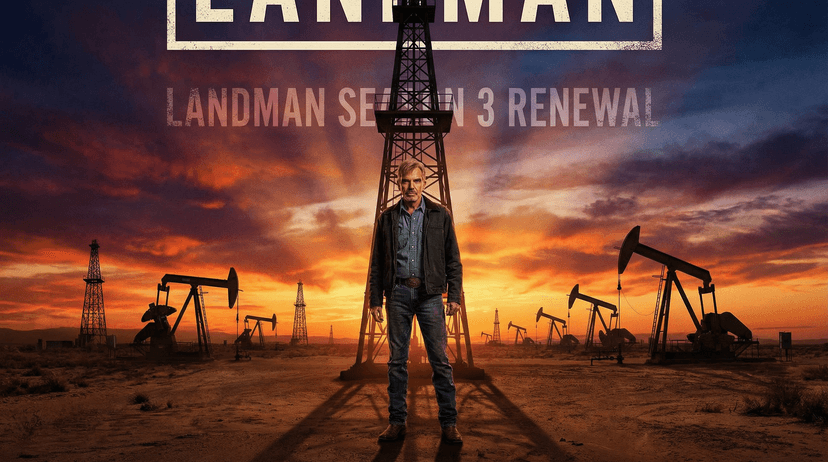
Paramount Network's newest series, Landman, is as massive financially as the Texas oil industry it depicts. With an astronomical production scale, many industry insiders have asked: what is the Landman series budget per episode cost? By dissecting the on-location shooting, practical effects, and massive cast salaries, we break down how Taylor Sheridan's latest epic reached a staggering nine-figure production cost.

Budget estimates are synthesized from publicly available Texas Film Commission tax incentive filings, Paramount Global earnings reports, union rate cards, leasing fees in the Permian basin, and industry comparisons to other Taylor Sheridan productions like Yellowstone.
The "Sheridan Premium": Estimating the Blockbuster Episode Cost
While Paramount Global has not explicitly disclosed the overarching cost of Season 1 in a single press release, analyzing similar productions and local tax rebate applications provides a clear financial window into the economics of Landman. Taylor Sheridan's flagship show, Yellowstone Season 5, famously climbed to roughly $12 million to $15 million per episode. However, Landman operates in a realm that is significantly more complex, dangerous, and resource-heavy: heavy industrial operations.
Estimated Cost per Episode: Industry trackers, financial analysts, and Texas Film production insiders estimate that the Paramount Landman series budget per episode cost rests between $15 million and $18 million. For a standard 10-episode first season, this amounts to a total upfront production commitment of approximately $150 million to $180 million, before marketing and distribution are even factored into the equation.
Why Oil Rigs Cost Exponentially More Than Horses
The core difference between a traditional Western, even one as lavish as Yellowstone, and a modern industrial drama is the sheer scale and danger of the necessary machinery. Renting a beautiful, functioning cattle ranch in Montana is certainly expensive, but renting active petroleum extraction equipment in the heart of Texas represents a quantum leap in baseline production costs.
- Heavy Machinery Rental: Sourcing decommissioned or temporarily leased oil derricks, massive pump jacks, commercial mud pumps, and heavy-duty industrial vehicles costs tens of thousands of dollars per day. You cannot simply build this equipment out of plywood; it must look real, smell real, and sound real.
- Insurance and Liability Premiums: Filming anywhere near combustible materials, swinging steel chains, highly pressurized tanks, and active drilling zones pushes cast and crew insurance premiums to record highs for television production. Specialized risk assessment firms must be permanently retained.
- Environmental Compliance: Ensuring that the 500-person production crew does not cause ecological damage or protocol violations in the actively drilled Permian Basin requires teams of full-time environmental monitors, pushing up "Below The Line" (BTL) costs.
Above The Line Costs: Stacking the A-List Cast
Taylor Sheridan has developed a fierce reputation for securing top-tier Hollywood talent, effectively resurrecting or elevating careers. Landman is undoubtedly his most star-studded, prestige cast to date. High "Above the Line" (ATL) budgets—which encompass the writer-creator, directors, producers, and the principal cast—significantly eat into the overall spending footprint.
Billy Bob Thornton (Tommy Norris): As the central protagonist, the engine of the narrative, and an Academy Award winner, Thornton's episodic salary is projected to be in the absolute upper echelons of premium cable and streaming television. Industry comparables suggest he is potentially demanding upwards of $750,000 to $1 million per episode, putting his season take-home around $10 million.
Demi Moore & Jon Hamm: Playing the elite, Machiavellian billionaires pulling the strings of the West Texas oil game from their corporate boardrooms, Moore and Hamm add significant generational prestige. Supporting stars of their caliber, even in limited or recurring capacities, command multi-million dollar seasonal contracts that rival blockbuster film fees.
The Sheridan Fee: Taylor Sheridan himself writes essentially every episode, produces, and frequently directs. His overall deal with ViacomCBS (now Paramount Global) is famously worth over $200 million, and a slice of that massive overhead is amortized across every show he creates, meaning Landman carries an immediate premium before cameras even roll.
Below The Line Costs: The Price of Practical Effects and Pyrotechnics
Unlike Marvel superhero films or sci-fi epics that rely heavily on green screens and CGI (Computer Generated Imagery) to create spectacle in post-production, the Landman production ethos is rooted aggressively in practical, in-camera effects. When viewers see an oil rig violently explode and rain fire down upon the crew in the opening episodes, the production actually constructed a rig specifically to burn thousands of gallons of real diesel and gasoline.

The $500,000 Blowout Sequence
A single major rig blowout sequence, common in Texas wildcatting history and highly dramatized for television, can easily devour a massive portion of a single episode's budget. To shoot practical fire of this magnitude safely requires:
- Sacrificial Sets: Custom-built mock rigs designed specifically by structural engineers to be safely and predictably destroyed on camera.
- The Stunt Team: Dozens of specialized, fire-rated stunt performers, coordinators, and local fire department personnel on standby paying extreme overtime rates.
- Specialized Camera Gear: Fire-retardant camera housings and extreme telephoto lenses to protect millions of dollars in Panavision equipment while capturing the blistering heat distortions.
The post-production budget, while not as CGI-heavy as a fantasy show, still required tremendous clean-up: erasing safety wires, enhancing the scale of the dust storms, and perfecting the color grade to match the blistering, bleached-out look of the authentic West Texas sun.
Fort Worth Integration: The Texas Film Incentive Impact
To offset the staggering Paramount Landman series budget per episode cost, the studio executed a brilliant, strategic move: basing the primary production hub in Fort Worth, Texas. Beyond the narrative requirement of authenticity, the Texas Film Commission provides the highly competitive Texas Moving Image Industry Incentive Program (TMIIIP).
This program offers base cash grants and sliding scale rebates of up to 22.5% of eligible Texas spending. By intentionally employing over 500 local Texas crew members (from grips and gaffers to specialized petroleum consultants), casting thousands of local background actors, and funneling millions of production dollars into Fort Worth hotels, local catering, and lumber suppliers, Paramount+ secured significant state tax rebates.
This financial strategy is not just a bonus; it is crucial to survival. Without tens of millions of dollars in state subsidies returning to the studio's coffers, producing a rigorous, sweeping industrial drama of this sheer scale would severely strain the profitability models of the modern streaming era.

The Marketing Juggernaut
A $150 million production budget does not include Print and Advertising (P&A). Paramount launched a massive, aggressive marketing campaign targeted heavily at Middle America, the South, and the Midwest—demographics that drove the unprecedented success of Yellowstone.
From prime-time NFL commercial spots to sprawling billboards across Texas, Oklahoma, and the Rust Belt, the marketing budget alone is estimated to have added a minimum of $30 million to $50 million to the ultimate cost of establishing Landman as a household name. Bringing the total investment well past the $200 million threshold.
Return on Investment: Why Spend $150 Million on Oil?
In an era of "peak TV contraction," where major studios are aggressively cutting costs, writing off completed movies, and canceling moderately successful shows to save money, writing a $150 million upfront check for an unproven new show is a monumental risk. However, Paramount's calculus relies entirely on the fiercely proven, incredibly lucrative loyalty of the Taylor Sheridan audience.
Landman is not evaluated simply as a single show; it operates as a structural pillar for paramount+, designed for subscriber acquisition and, more importantly, long-term retention. Yellowstone proved that there is an underserved, massive audience craving stories about authentic American industry, traditional masculinity, and raw, unforgiving landscapes.
The breathtaking visual authenticity, the visceral danger of the oil patch, and the prestige of Billy Bob Thornton—all bought and paid for by that massive Landman series budget per episode cost—effectively markets the show as a premium, must-see cultural event. In the high-stakes game of streaming platforms, Paramount has proven that sometimes, to strike a gusher, you have to spend oil money to make oil money.