Taylor Sheridan's Landman is not simply a television drama about the oil industry. Beneath the pumpjacks, lease negotiations, and boardroom confrontations lies a deeper exploration of American identity, family legacy, moral compromise, and the price of progress. The show uses the Permian Basin as both setting and symbol — a vast, ancient landscape where old debts, new money, and human ambition collide.
This article breaks down the major themes of Landman and how they connect to the real world of West Texas oil country.
Family, Legacy, and Inheritance
At its core, Landman is a family drama. Tommy Norris is a man whose professional identity has consumed his personal life. His divorce from Angela, his strained relationship with his son Cooper, and his protective love for his daughter Ainsley form the emotional center of the series. The show argues that the real inheritance a parent leaves is not money or property but patterns of behavior — the way conflict is handled, the way ambition is pursued, the way love is expressed or withheld.
Season 1 establishes the Norris family as a unit held together by proximity rather than harmony. Tommy and Angela are divorced but still physically connected. Cooper works in the oil fields, trying to prove himself without relying on his father's reputation. Ainsley attends college, representing the family's hope for an escape from the oil business. Each family member is negotiating a different kind of contract with their own future.
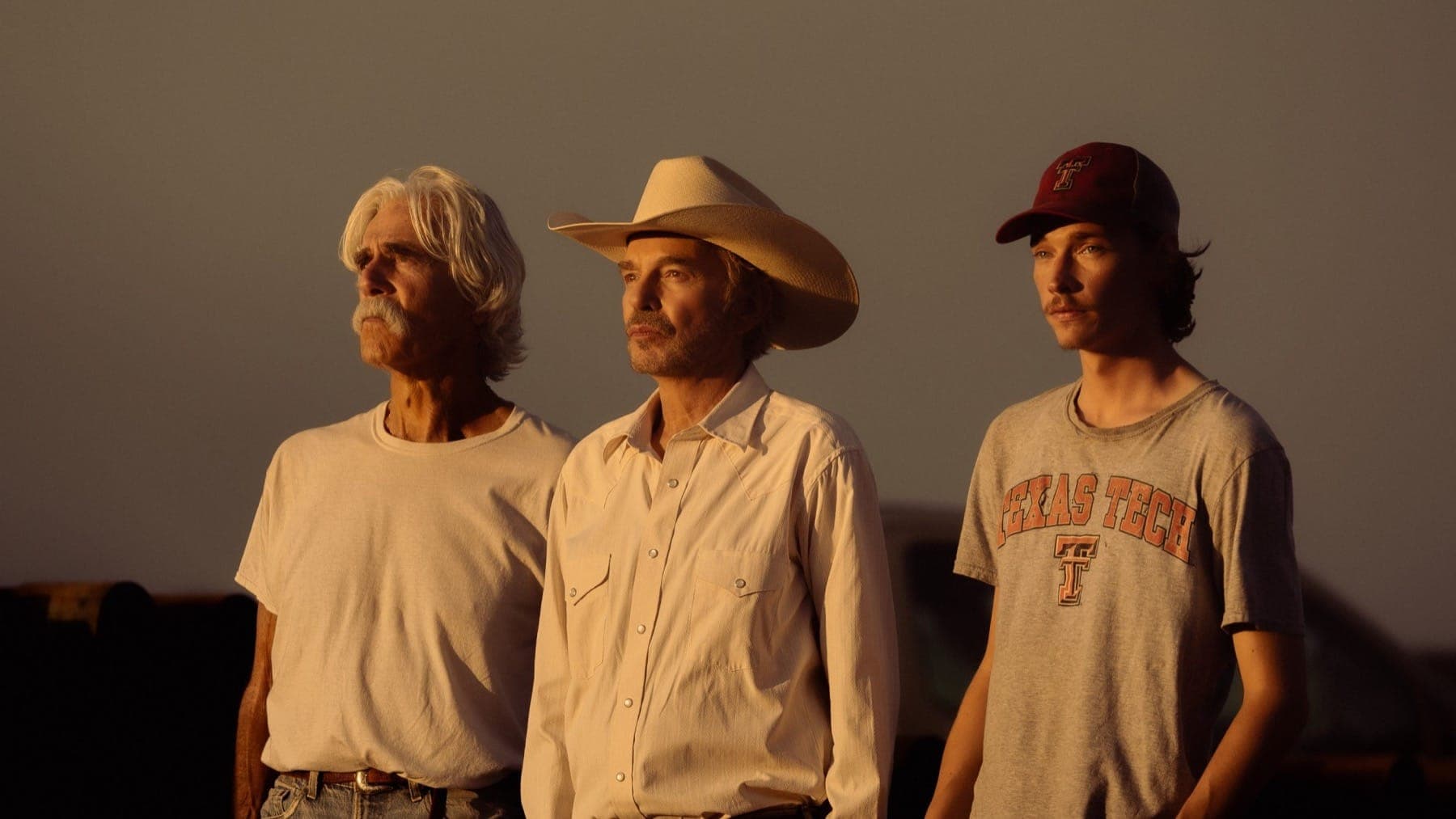
Season 2 intensifies this theme through the arrival of T.L. Norris, Tommy's estranged father. T.L. is a patriarch in the oldest, most damaged sense: a man whose authority was built on control and whose legacy includes both practical skills and emotional wounds. Played by Sam Elliott with quiet menace, T.L. arrives in a wheelchair, but his presence is larger than his physical ability. The show asks whether Tommy can break the cycle — whether he can be a different kind of father and a different kind of man than the one who raised him.
The family theme also appears in the land itself. Mineral rights, leases, and deeds are passed down through generations. The show repeatedly shows elderly landowners facing decisions about property their grandparents settled. The question is not just whether to sell — it is whether future generations will be better or worse off after the deal is signed. In Landman, inheritance is never just about what you receive. It is about what you pass on, including the damage.
Capitalism and the Cost of Extraction
Landman takes an unflinching look at American capitalism through the lens of oil extraction. Tommy Norris is not a hero or a villain. He is a functionary — a skilled negotiator who makes the machinery of corporate America run smoothly. His job is to turn resistance into agreement, to turn questions into signatures, to turn people's attachment to their land into a transaction.
The show refuses to make capitalism abstract. We see the specific mechanisms: the royalty percentage, the surface rights clause, the deadline pressure, the promise of future wealth against the certainty of immediate disruption. Every deal has a human cost, and the show is careful to show who pays it — the widow who does not understand the contract, the rancher whose cattle range is bisected by a road, the community whose water table is threatened.
But Landman is not a simple anti-capitalist sermon. It also shows the benefits: the jobs, the tax revenue, the chance for working people to escape poverty, the raw energy that powers modern life. The show's moral complexity comes from refusing to choose between these truths. It presents extraction as a genuine bargain, one where both sides get something and both sides lose something.
The Season 2 finale crystallizes this theme. When Tommy is forced out of M-Tex, he does not leave the industry. He starts CTT Oil, becoming an independent operator. The system that damaged him is also the only system he knows. The show suggests that in modern capitalism, there is no outside. Even rebellion takes the form of starting another company.
The Land as Character
The Permian Basin is more than a backdrop in Landman. It is a force — ancient, patient, indifferent to human ambition. The land was a shallow sea hundreds of millions of years ago. The organisms that died there became hydrocarbons. Now humans drill into it, argue over it, and build temporary cities on top of it.
Sheridan treats the land as a kind of silent witness. It does not judge, but it does not forget either. The show's visual language emphasizes this: wide shots of empty terrain, pumpjacks moving like mechanical animals, flare stacks burning against the night sky. The land endures while the people come and go.
This theme connects to the real history of West Texas boom towns. Midland and Odessa have risen and fallen with oil prices for a century. The show captures the cyclical nature of these communities: the boom brings money, workers, and chaos; the bust leaves debt, empty buildings, and a landscape dotted with abandoned equipment. The land remains. The people must adapt or leave.
The land also functions as a moral test. Characters who understand the land — its history, its geology, its limits — tend to make better decisions. Characters who treat the land as nothing but a resource tend to make worse ones. Tommy Norris's knowledge of the land is part of what makes him valuable, but it is also part of what makes him complicit.
Power, Violence, and the American Myth
Landman is deeply interested in how power works in America. The show presents multiple forms of power: corporate power (M-Tex Oil), legal power (contracts and courts), political power (regulators and commissioners), criminal power (the cartel), and familial power (T.L. Norris's patriarchal control). Tommy Norris moves between these systems, translating one form of power into another.
The show also engages with the myth of the American frontier. Sheridan's work has always drawn on Western imagery: the lone man, the vast landscape, the tension between law and custom. In Landman, the frontier is not a place in the past but an ongoing economic zone where the same questions are still being asked. Who owns the land? Who has the right to profit from it? What happens when the law and local custom disagree?
Violence in Landman is rarely spectacular. It arrives through contracts, through deadlines, through the slow pressure of financial necessity. The most damaging violence is often the kind that does not leave a mark: the loss of a family ranch, the corruption of a young man like Cooper, the emotional armor that Tommy has built over decades. The cartel scenes are shocking because they make visible what the rest of the show keeps subtle — the connection between business and physical force.
Cami Miller's Season 2 arc adds another dimension to this theme. As she takes control of M-Tex, she demonstrates that power in masculine spaces can be wielded by women without imitating male aggression. Her intimidation speech works because she is clearer, not louder. She does not ask for a seat at the table. She redesigns the table's blueprint. This suggests that power in Landman is not only about who has money but about who can articulate consequences with precision.
The American Dream and Its Complications
Tommy Norris represents a particular version of the American dream: the self-made professional, the skilled negotiator, the man who can talk his way through any problem. He has worked hard, learned his trade, and built a life in one of America's most lucrative industries. By many measures, he is successful.
But Landman asks what that success costs. Tommy is divorced. His son is drifting toward danger. His daughter is trying to escape the world he has made. His body is showing the effects of stress and cigarettes. He has money and competence but lacks the kind of life that money was supposed to buy.
This is the show's central question about American success: Is it possible to win the game without being damaged by it? The oil industry offers enormous rewards, but those rewards come from a system that extracts value from the land and the people who live on it. Tommy is good at that system. The show's tragedy is that being good at it may mean being bad at everything else.
Ainsley Norris represents the alternative version of the American dream. Her acceptance to TCU is treated as a deed to another life — a way out that does not require drilling, leasing, or leveraging someone else's land. But the show is too honest to make escape simple. Ainsley will carry her family with her. The question is not whether she will be free of them, but whether she will metabolize their history differently.
Progress and the Modern American Soul
Landman is a portrait of a country still trying to figure out what progress means. Is progress more production? More wealth? More energy independence? Or is it healthier communities, preserved landscapes, and stronger families?
Landman does not answer this question. Instead, it shows the debate in human terms. Environmental lawyers like Rebecca Falcone represent one vision of progress. Corporate executives like Monty Miller and Cami Miller represent another. Roughnecks like Cooper represent the working-class desire to build something of their own. Landowners represent the desire to protect what their families built. Tommy Norris stands in the middle, trying to keep all these competing versions of progress from destroying each other.
The show's timeliness comes from this tension. America is still arguing about energy, climate, land use, and economic inequality. Landman grounds those abstract debates in specific people and specific places. It makes the national conversation personal.
The Human Dilemma Inside the Machine
One of the most compelling themes in Landman is the human dilemma inside systems of power. Tommy is not a CEO. He does not set policy. He executes. His moral agency is limited by his role, and he knows it. Yet he is still responsible for the deals he closes, the people he persuades, and the consequences he can see coming.
This is the show's most uncomfortable insight: Most people do not choose between good and evil. They choose between bad options inside systems they did not design. Tommy can walk away from a deal, but someone else will close it. He can refuse to negotiate with a cartel, but the cartel will not disappear. He can try to protect his son, but he cannot protect him from the industry that has defined their family.
The "human dilemma" is that ordinary people are required to make extraordinary moral calculations just to keep their lives moving. Tommy's smoking, his avoidance, his dry humor, and his rare moments of tenderness are all ways of living with that dilemma. He is not a cynic. He is a man who has seen too much to be idealistic and knows too much to be naive.
Gender and Power in the Oil Patch
Landman also explores how gender functions in the masculine spaces of the oil industry. Cami Miller's rise to power, Angela's domestic resistance, Ainsley's search for independence, and Rebecca Falcone's legal battles all show different ways women navigate a world built by and for men.
Cami's power is professional and strategic. Angela's power is emotional and relational. Ainsley's power is the power of exit. Rebecca's power is the power of principle. Together, they complicate the show's portrait of the oil industry. Landman is not only about men negotiating in boardrooms and oil fields. It is also about the women who live with the consequences of those negotiations.
This theme has become one of the most discussed aspects of the show. The question of whether Taylor Sheridan has a "woman problem" — whether his female characters are given the same depth and agency as his male characters — is itself part of the cultural conversation around Landman. The show invites this debate by making gender visible in ways that are sometimes uncomfortable and always specific.
Faith, Ritual, and the Work of Survival
One of the quieter themes in Landman is the role of faith and ritual in a world of uncertainty. Roughnecks work dangerous jobs. Landowners sign contracts that will outlive them. Executives make bets on geological formations they cannot control. Everyone in the show is operating under conditions of radical uncertainty.
Ritual becomes a way to manage that uncertainty. The careful choreography of a lease signing. The way a family says grace before dinner. The habits of a man who has smoked the same cigarettes for decades. The show pays attention to these small rituals because they are how people survive in a world where the ground itself is the source of both wealth and danger.
Faith appears less directly but no less importantly. Characters in Landman are not often shown in churches, but they are constantly making moral judgments. They believe in fairness, in hard work, in family, in keeping one's word. When those beliefs conflict with economic necessity, the show's drama begins.
Frequently Asked Questions
What is Landman about?
Landman is a drama about the modern American oil industry, centered on Tommy Norris, a landman who negotiates mineral rights and handles crises in the Permian Basin. But the show is also about family, capitalism, land, power, and the American dream.
What are the main themes of Landman?
The main themes are family legacy, the cost of capitalism, the relationship between people and land, the nature of power and violence, and the meaning of progress in modern America.
Is Landman a conservative show?
Landman is not easily categorized as conservative or liberal. It portrays the oil industry and its workers with sympathy while also showing the human and environmental costs of extraction. The show presents debates rather than conclusions.
How does Landman relate to Yellowstone?
Both shows are created by Taylor Sheridan and explore American identity through rural landscapes and family conflict. Landman focuses on the oil industry and West Texas, while Yellowstone focuses on ranching and Montana. Both are interested in land, power, and legacy.
What does Season 3 mean for the themes of Landman?
Season 3 will test whether Tommy can build a different kind of company with CTT Oil. It raises the stakes for every major theme: family, capitalism, power, and the possibility of moral change.
The Speed of Money: Time and Debt in the Oil Patch
One of the most distinctive thematic elements in Landman is its treatment of time. Oil operates on a different timeline than human lives. A lease can outlast the person who signs it. A well can produce for decades. A family ranch can pass through three generations before a single drilling rig arrives. The oil industry forces people to make decisions today whose consequences will be felt long after they are gone.
Debt accelerates this mismatch. The show repeatedly shows landowners who need money now — for medical bills, for mortgages, for children's education — signing away mineral rights that will generate wealth for oil companies for years. Tommy Norris knows this timeline better than anyone. He has seen the same pattern repeat: a family in trouble, a company with cash, a deal that looks like rescue but functions like transfer.
The show also captures the speed of corporate decision-making. A drilling permit, a court ruling, a board vote can change the economic fate of an entire community overnight. Tommy spends much of his time managing these sudden shifts. The pressure of the deadline is one of the show's constant tensions. Every negotiation has a clock attached to it, and the clock favors the people who can wait.
This temporal theme gives Landman its sense of tragedy. The characters are making decisions inside a timeline they cannot control. The oil was formed over hundreds of millions of years. The boom may last ten. The family land may be gone in one afternoon. The show's patience — its willingness to let scenes breathe, to show drives, to wait for signatures — mirrors the geological and economic timelines it is depicting.
Conclusion: Why Landman Matters
Landman matters because it refuses easy answers. It does not tell viewers whether the oil industry is good or bad. It does not tell them whether Tommy Norris is a hero or a victim. It shows a world where those categories are too simple — where every person is trying to survive inside systems larger than themselves.
The show's themes — family, power, capitalism, land, and the American dream — are not new. They are the enduring subjects of American storytelling. What makes Landman distinctive is its setting and its restraint. By placing these old questions in the Permian Basin, by showing them through the specific work of a landman, by refusing to romanticize or condemn, Sheridan creates a drama that feels both timeless and urgently contemporary.
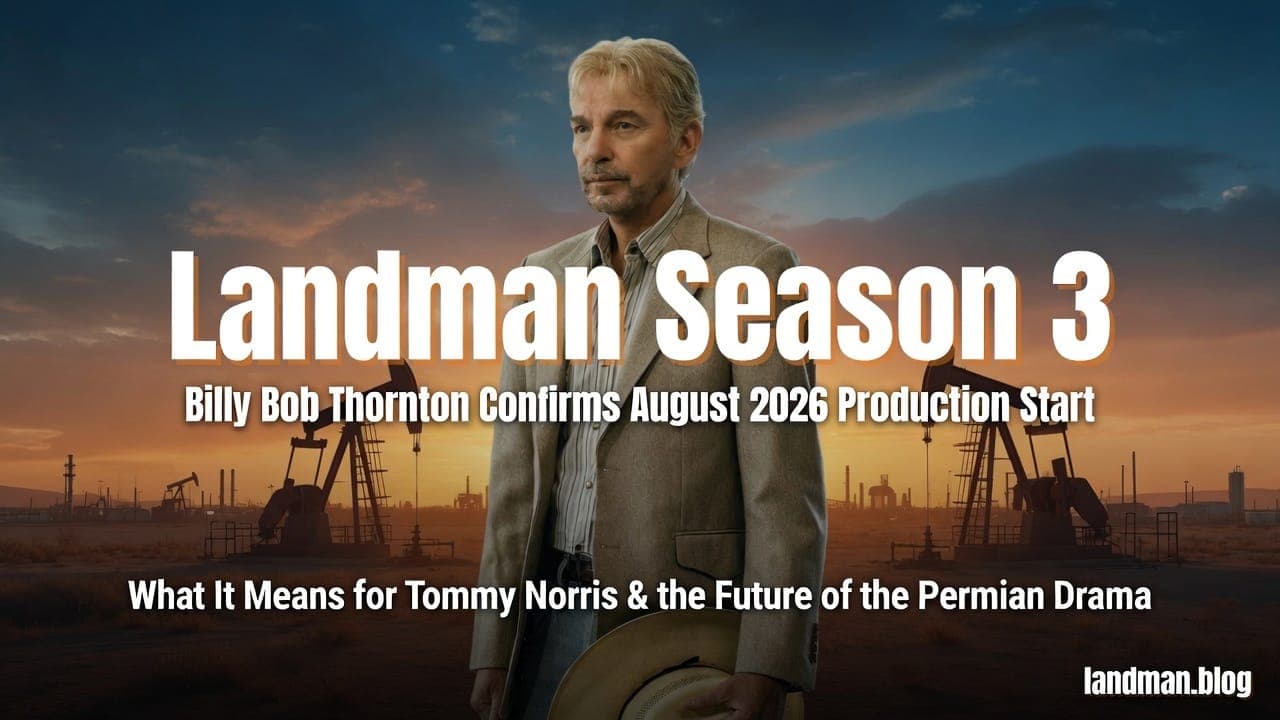
As the series moves into Season 3, Tommy's departure from M-Tex and the creation of CTT Oil raise the stakes of every theme. Can he build a different kind of company when his funding comes from the same cartel money he spent his career managing? Can he be a different kind of father when his son is now his business partner? Can he find a way to keep working in the oil industry without repeating the damage it has already done to him and his family?
These questions are not just about Tommy Norris. They are about the America Landman is trying to understand. The show asks whether a country built on extraction can change its relationship with the land, with labor, and with the future. It does not promise answers. It only promises to keep looking, with the same patience and restraint that its characters bring to the difficult work of reading a contract, signing a lease, or deciding what kind of person to be.