Landman is visually and sonically distinctive. Taylor Sheridan and director Stephen Kay use the wide horizons of West Texas, the industrial geometry of oil equipment, and a carefully chosen musical palette to create a world that feels both specific and timeless. The show's look and sound are not decorative choices. They are part of the storytelling, communicating themes of isolation, ambition, and the relationship between people and the land.
This article explains the visual style and soundtrack of Landman, from cinematography and production design to music selection and sound design.
The Visual World of Landman
Opening Credits and Title Sequence
The title sequence of Landman is a concise statement of the show's visual priorities. It uses aerial photography of the Permian Basin, shots of pumpjacks at dusk, and images of Texas highways stretching toward the horizon. The music is slow and atmospheric. The sequence does not introduce characters. It introduces territory. Before the viewer meets Tommy Norris, they meet the world he works in.
This choice matters. The title sequence tells the audience that the land is not background. It is the subject. The show is called Landman, not Oilman, and the title sequence makes that distinction visible. The job is not about oil as a commodity. It is about land — who owns it, who profits from it, and what happens to the people who live on it.
The typography and pacing of the credits also set the tone. The sequence is deliberate, almost elegiac. It does not rush. This pacing trains the viewer to watch the show with patience, to notice composition and atmosphere rather than waiting for the next plot point.
Landscape as Character
The most striking visual element of Landman is the landscape. The Permian Basin stretches across West Texas and southeastern New Mexico, a flat, semi-arid region punctuated by pumpjacks, drilling rigs, and flare stacks. The show uses this landscape the way a Western uses the frontier: as a test of character, a source of beauty, and a reminder of human smallness against natural scale.
The opening shots of the pilot establish the visual language. We see roads cutting through empty land, vehicles traveling long distances, and the human-built machinery of extraction scattered across ancient terrain. The camera is patient. It allows viewers to feel the scale of the space and the solitude of the people who work in it.
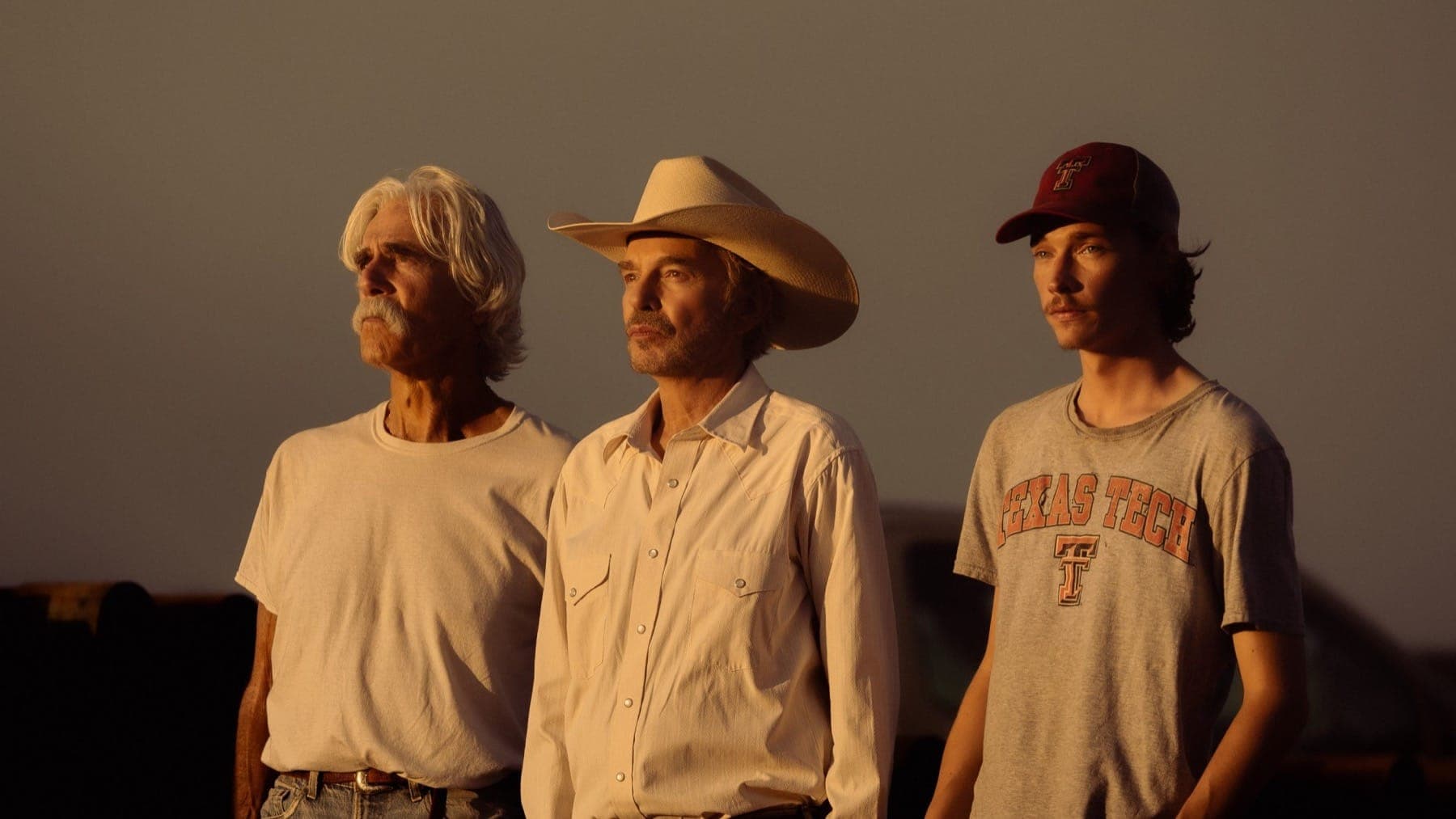
This approach connects Landman to classic American landscape painting and photography. The composition often places small human figures against vast skies. The color palette leans toward ochre, rust, and dust — colors that suggest both natural geology and industrial weathering.
Color Grading and Light
The color grading of Landman is one of its most distinctive features. The show favors warm tones, particularly during outdoor scenes. Sunsets and sunrises are golden and dramatic. The flare stacks glow orange against deep blue night skies. Interiors are often cooler — corporate offices lit by fluorescent panels, kitchens lit by single overhead bulbs — creating a contrast between the external warmth of the land and the internal coldness of business.
Natural light is used deliberately. Scenes in the oil fields are shot during the "golden hours" of early morning and late afternoon when the Texas sun is low and directional. This creates long shadows and textured surfaces. The light makes the land look beautiful even when the story is ugly.
The color scheme also has thematic meaning. The warm exterior tones suggest the seductive appeal of oil wealth. The cool interior tones suggest the transactional, calculating nature of the business. Tommy Norris moves between these palettes, visually representing his position between the land and the corporation.
Industrial Geometry and Production Design
The production design of Landman emphasizes the industrial transformation of the landscape. Pumpjacks move with mechanical rhythm. Drilling rigs rise like temporary cathedrals. Storage tanks, pipelines, and access roads create a grid of human order imposed on natural irregularity.
The show pays attention to the details of this world: the mud on work trucks, the dust on dashboards, the paperwork on office desks, the tools in a landman's truck. These details create authenticity. The viewer believes that the characters live in this environment because every surface looks used.
Costume design reinforces the same realism. Tommy's clothes are worn but not shabby. The roughnecks wear practical workwear. Corporate executives wear crisp shirts that contrast with the dust outside. Each character's clothing signals their relationship to the land and the industry.
Camera Movement and Composition
Sheridan and Kay use a restrained camera style. There are few quick cuts or flashy movements. The camera often stays still or moves slowly, letting scenes unfold in real time. This patience matches the rhythm of the oil business, where deals take time and people drive long distances to have conversations.
Wide shots are used frequently to establish context. When two characters negotiate at a ranch gate, the camera pulls back to show the empty road behind them and the flat land stretching in every direction. The composition reminds the viewer that these negotiations happen in the middle of nowhere, far from courts, regulators, and witnesses.
Close-ups are saved for moments of emotional weight. Billy Bob Thornton's face is often held in tight frame, allowing the viewer to read the small changes in expression that reveal Tommy's internal state. The camera trusts the actors to communicate complexity without dialogue.
The Soundtrack and Sound Design of Landman
Music Selection
The soundtrack of Landman draws heavily from country, Americana, and Texas music. The songs are not background filler. They are chosen to comment on the action, evoke the region, and connect the show to a tradition of American storytelling about hard work and hard choices.
Artists like Cody Jinks, Shane Smith & The Saints, and other Texas and red-dirt country musicians appear throughout the series. Their music carries themes of rootlessness, regret, pride, and survival. The lyrics often echo what the characters are experiencing: the tension between home and ambition, the weight of the past, the lure of easy money.
The music also serves as regional shorthand. A viewer who hears Texas country knows immediately where they are and what values are in play. The soundtrack roots the show in a specific musical tradition while also signaling that the story belongs to a larger American genre.
Original Score and Tension
In addition to licensed songs, Landman uses an original score to build tension. The score is minimal, often relying on low drones, guitar figures, and sparse percussion. It avoids the sweeping orchestral sound of traditional dramas. Instead, it sounds like the landscape: dry, expansive, and occasionally menacing.
The score becomes most active during crisis moments: the cartel confrontation, the drilling accident, the boardroom power play. But even in these moments, the music remains restrained. The show trusts silence and the sound design to do much of the work.
Sound Design and the Industrial Soundscape
The sound design of Landman is one of its most immersive elements. The oil patch has its own sonic identity: the rhythmic pump of a pumpjack, the roar of a drilling rig, the hiss of gas, the rumble of heavy trucks, the wind against metal signs. The show uses these sounds to create a sense of place.
Interior scenes are often quiet by contrast. The silence of a corporate office or a family kitchen makes the industrial world outside feel louder. When a character steps from a house into an oil field, the soundscape changes dramatically. The audience feels the shift from domestic space to industrial space.
The sound design also emphasizes the physicality of work. We hear boots on gravel, doors closing on trucks, tools being set down, papers being signed. These small sounds create a tactile world. The viewer does not just watch the oil industry. They hear what it feels like to live inside it.
Dialogue and Silence
Sheridan is known for dialogue that sounds like real speech. In Landman, characters speak in the cadences of Texas and the oil industry. Sentences are often short. Jokes are dry. Threats are delivered politely. The dialogue does not explain itself. It trusts the audience to understand the subtext.
Silence is used as carefully as music. Long pauses in negotiations carry meaning. A character who stops speaking may be more dangerous than one who raises their voice. The show's sound design respects these silences, allowing them to land with emotional force.
How Visual Style and Sound Work Together
The visual and sonic elements of Landman reinforce each other. The wide landscapes and minimal score create a sense of scale and solitude. The warm color palette and country music create a sense of place and tradition. The industrial sounds and geometric compositions create a sense of order and pressure.
Together, these choices create what might be called an "extraction aesthetic." The show looks and sounds like the world it is depicting: beautiful and damaged, ancient and modern, natural and mechanical. The visual style does not judge the oil industry. It simply presents it in its full complexity, allowing the viewer to decide what to feel.
Specific Scenes and Visual Choices
Several scenes in Landman demonstrate how the visual style serves the story. The pilot's opening sequence shows Tommy Norris being kidnapped by a cartel. The scene is shot at night, in close quarters, with quick cuts that create disorientation. This visual chaos contrasts with the calm, wide-open landscapes that follow, establishing the two extremes of Tommy's world: sudden violence and vast, slow-moving business.
The ranch gate negotiations are recurring visual motifs. Two or three people stand beside a truck, framed against a fence and empty land. These scenes are shot at eye level, with no dramatic angles. The simplicity of the composition focuses attention on the dialogue and the subtle power dynamics. The fence is not just a prop. It is a visual representation of the border between landowner and corporation, between private life and industrial ambition.
Cami Miller's boardroom scenes use a different visual language. The camera is more stable, the lighting is cooler, and the compositions are more symmetrical. These choices signal corporate power and institutional control. When Cami delivers her intimidation speech in Season 2, the camera holds on her face, allowing her clarity and precision to dominate the frame.
T.L. Norris's arrival in Season 2 is filmed with unusual restraint. The camera stays at a distance, showing the van, the doorway, and the wheelchair before revealing Sam Elliott's face. The sequence builds anticipation through composition rather than cutting. By the time we see T.L., his presence has already been established through the architecture of the shot.
Vehicles, Roads, and the Geography of Work
One of the most consistent visual elements in Landman is the use of vehicles and roads. Characters spend a surprising amount of time driving. Tommy Norris travels between Midland, Fort Worth, drilling sites, and ranch houses. These drives are not transitional scenes. They are part of the show's grammar.
The road sequences serve multiple functions. They show the scale of the territory. They create space between scenes, allowing emotional beats to land. They emphasize the isolation of the work. A landman does not have an office with a view. He has a truck, a map, and hundreds of miles of two-lane highway.
Vehicles are also character markers. Tommy's truck is worn but reliable. Cooper's truck becomes cleaner as he gets new money in Season 2, a small detail that signals his changing status. Corporate executives arrive in leased sedans. The cartel arrives in vehicles that look out of place in ranch country. The cars and trucks tell the audience who belongs and who is intruding.
The show also uses roads as visual metaphors. A straight road through flat land suggests inevitability. A winding road suggests complication. A dirt road leading to a ranch gate suggests the boundary between public commerce and private life. The visual language of Landman is built from these simple, repeated images.
The Role of the Western Tradition
Landman belongs to a long tradition of American Westerns, but it updates the genre for the 21st century. The Western frontier is usually associated with cowboys, cattle, and open range. Landman replaces that frontier with the oil patch — a new kind of frontier where the resource is underground and the cowboys drive trucks instead of riding horses.
The visual style draws on Western conventions: the lone figure against the landscape, the showdown at the ranch gate, the conflict between local custom and outside money. But the soundtrack and production design ground these conventions in contemporary reality. The result is a show that feels like a Western and a modern workplace drama at the same time.
Frequently Asked Questions
Who composed the music for Landman?
Landman features a mix of licensed songs from country and Americana artists and an original score. The show uses music by artists associated with the Texas and red-dirt country scene, including Cody Jinks and Shane Smith & The Saints.
Where is Landman filmed?
Landman is filmed in and around Fort Worth, Texas, with additional work in West Texas locations. The production uses real Texas landscapes to stand in for the Permian Basin, giving the show its distinctive visual identity and regional authenticity.
What is the visual style of Landman?
The visual style combines wide landscape shots, warm color grading, industrial production design, and restrained camera movement. It creates a look that is both beautiful and documentary-like, emphasizing the scale of the oil industry and the isolation of the people who work in it.
Why does Landman use so many country songs?
Country and Americana music connects the show to its Texas setting and to a tradition of American storytelling about hard work, regret, and survival. The lyrics often echo the themes of the show.
Is Landman's sound design realistic?
The sound design is highly realistic. The production team recorded and used authentic oil field sounds, including pumpjacks, drilling rigs, heavy trucks, and industrial equipment, to create an immersive environment.
Conclusion
The visual style and soundtrack of Landman are essential to the show's power. They create a world that feels authentic, specific, and emotionally resonant. The cinematography turns the Permian Basin into a character. The sound design makes the oil industry feel immediate and tangible. The music connects the story to a tradition of American art about work, land, and consequence.
As Landman continues, its visual and sonic language will likely evolve with the story. The creation of CTT Oil, the arrival of new characters, and the deepening family conflicts will all require new visual and musical ideas. The cartel's growing presence may introduce darker, more claustrophobic visual registers. The family conflicts may bring more intimate, interior compositions. But the core aesthetic — patient, specific, and grounded in the reality of West Texas — will remain the foundation of the show's identity.