
Article Highlights
- Trace Sheridan's journey from actor to Oscar-nominated screenwriter
- Analyze the "Frontier Trilogy" narrative techniques
- Understand Yellowstone's unprecedented success formula
- Discover how Landman represents Sheridan's latest evolution
- Learn the key themes defining Sheridan's storytelling universe
The Genesis: From Actor to Storyteller
Taylor Sheridan's transformation from a working television actor to one of Hollywood's most influential storytellers represents one of the most remarkable creative evolutions in modern American cinema and television. His journey—from bit parts on shows like Sons of Anarchy and Veronica Mars to creating the Yellowstone universe that now dominates streaming platforms—offers a masterclass in authentic American storytelling.
Born in 1970, Sheridan spent years navigating Hollywood as a character actor before making the pivotal decision to transition behind the camera. This shift wasn't merely a career change; it was the beginning of a creative vision that would redefine how America tells stories about itself, its frontiers, and the moral complexities of survival in the modern West.

The vast American landscapes that define Sheridan's visual storytelling aesthetic
The Frontier Trilogy: Establishing a Voice (2015-2017)
Sicario (2015): The Birth of Moral Ambiguity
Sheridan's screenplay for Sicario, directed by Denis Villeneuve, introduced audiences to what would become his signature narrative approach: morally complex characters operating in ethically ambiguous situations where traditional notions of right and wrong dissolve under the pressure of survival and institutional corruption.
The film's protagonist, FBI agent Kate Macer (Emily Blunt), serves as the audience's moral compass—gradually realizing that the war on drugs operates by rules far more complex and compromised than her training prepared her for. This narrative structure—an idealistic protagonist confronting uncomfortable realities—would become a Sheridan hallmark.
"In Sheridan's world, the line between hero and villain isn't blurred—it's actively erased by the systems and circumstances that force impossible choices."
Key Narrative Elements in Sicario:
- • Institutional Critique: Government agencies operating outside legal and moral boundaries
- • Visual Storytelling: Landscape as character—the Texas-Mexico border as a moral wasteland
- • Sparse Dialogue: Letting action and visual composition carry narrative weight
- • Ambiguous Resolution: Refusing to provide easy answers or moral clarity
Hell or High Water (2016): Economic Desperation and American Mythology
With Hell or High Water, Sheridan delivered an Oscar-nominated screenplay that transformed a seemingly simple bank robbery narrative into a profound meditation on economic desperation, family legacy, and the death of the American Dream in forgotten rural communities.
The film follows two brothers—Toby (Chris Pine) and Tanner (Ben Foster)—robbing branches of the bank that's foreclosing on their family ranch. What could have been a straightforward crime thriller becomes something far more profound: a character study of men trapped by generational poverty, making desperate choices to break the cycle for the next generation.
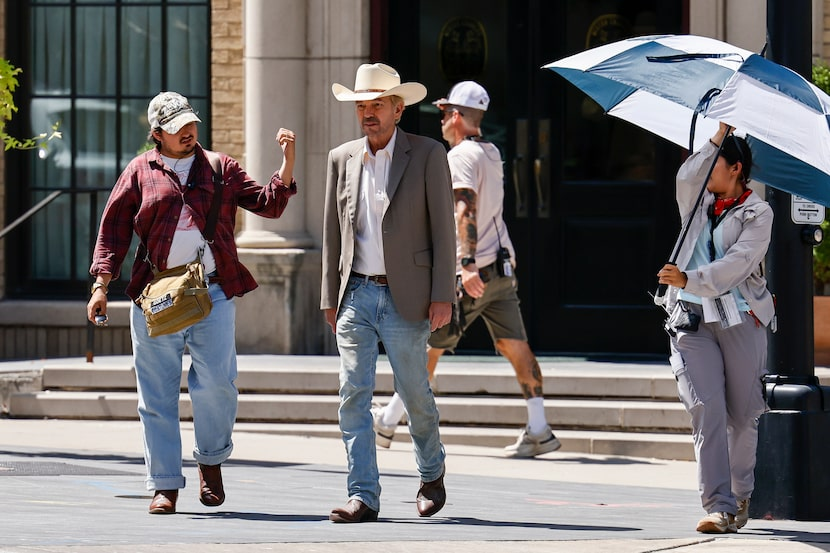
The dying small-town Texas landscape that forms the emotional core of Hell or High Water
Sheridan's screenplay masterfully interweaves multiple narrative threads: the brothers' increasingly dangerous robberies, Texas Ranger Marcus Hamilton's (Jeff Bridges) pursuit, and—most critically—the economic devastation of West Texas communities. The banks aren't villains in a traditional sense; they're part of a system that has systematically extracted wealth from rural America, leaving behind ghost towns and broken dreams.
Thematic Evolution:
- Economic Justice: Crime as rational response to systemic exploitation
- Generational Trauma: Sons attempting to break cycles created by their fathers
- Landscape as Economic Text: Foreclosure signs and abandoned buildings tell the story of American decline
- Pyrrhic Victories: Success that comes at devastating personal cost
Wind River (2017): Directorial Debut and Complete Vision
Sheridan's directorial debut, Wind River, represents the culmination of the Frontier Trilogy's thematic concerns while introducing new levels of visual storytelling and atmospheric tension. Set on the Wind River Indian Reservation in Wyoming, the film combines murder mystery mechanics with searing social commentary on violence against indigenous women and the systematic abandonment of Native American communities.
Jeremy Renner's Cory Lambert—a Fish and Wildlife tracker helping FBI agent Jane Banner (Elizabeth Olsen) investigate a young woman's murder—embodies Sheridan's evolving protagonist archetype: competent, morally clear, but haunted by personal tragedy and operating in systems that have fundamentally failed the communities they're meant to serve.
"Wind River marks the moment Sheridan gained complete creative control, allowing him to synthesize visual storytelling with his thematic obsessions about abandoned American communities and institutional failure."
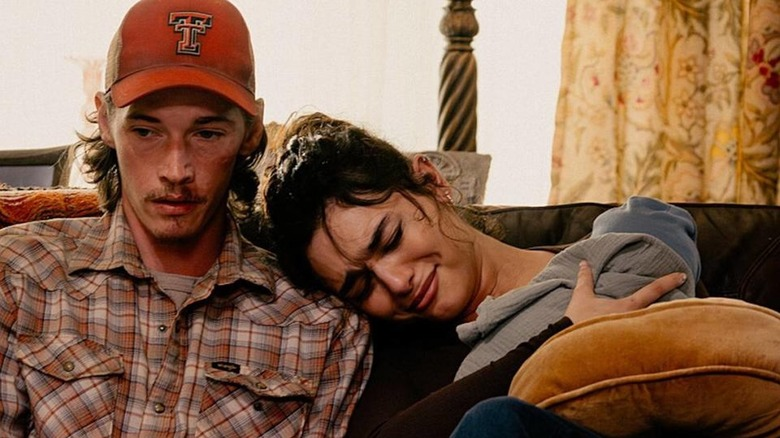
The unforgiving Wyoming landscape that becomes a character in Wind River
The Television Revolution: Yellowstone and Empire Building (2018-Present)
Yellowstone: Redefining Modern American Television
The launch of Yellowstone in 2018 represented Sheridan's transition from critically acclaimed filmmaker to television empire builder. The show's success—becoming the most-watched cable drama and launching multiple spinoffs—proved that Sheridan's thematic obsessions and narrative approach could sustain long-form storytelling while attracting massive audiences often ignored by traditional prestige television.
Yellowstone centers on the Dutton family, owners of Montana's largest contiguous ranch, defending their land against encroaching development, government regulation, and corporate interests. The show synthesizes all of Sheridan's thematic concerns: the clash between traditional ways of life and modern capitalism, institutional corruption, generational trauma, and the moral complexities of power.
Narrative Structure Evolution:
- Serialized Character Development: Characters evolve over seasons rather than two-hour films
- Multiple Perspective Storytelling: Exploring the same conflicts from competing viewpoints
- Epic Time Scale: Generational conflicts play out across multiple seasons
- Ensemble Dynamics: No single protagonist; family members represent different moral positions
Yellowstone's Cultural Impact
Viewership Achievement: Became the most-watched cable drama, averaging 11+ million viewers per episode in later seasons—unprecedented in the streaming era.
Demographic Reach: Successfully attracted audiences in rural and small-town America largely ignored by coastal-focused prestige television.
Franchise Expansion: Spawned 1883, 1923, and multiple upcoming spinoffs, creating a television universe rivaling major studio franchises.
Cultural Phenomenon: Influenced fashion trends, tourism to Montana filming locations, and renewed interest in Western aesthetics.
The Paramount+ Era: Diversification and Expansion
Sheridan's exclusive deal with Paramount+ transformed him into television's most prolific creator, launching multiple series that expand his thematic universe while exploring different genres and settings:
- Mayor of Kingstown (2021): Institutional corruption in America's prison-industrial complex
- 1883 (2021): Historical Western exploring the brutal reality behind frontier mythology
- Tulsa King (2022): Fish-out-of-water crime drama examining American regional culture
- Special Ops: Lioness (2023): Military thriller addressing contemporary geopolitical complexity
- 1923 (2022): Dutton family origins during Prohibition and the Great Depression
This expansion demonstrates Sheridan's evolution from auteur filmmaker to television architect, building interconnected narratives exploring different aspects of American power, corruption, and survival across time periods and settings.
Landman: The Latest Evolution (2024)
From Ranches to Oil Fields: Industrial America
Landman represents Sheridan's latest narrative evolution, shifting focus from ranching to the oil industry while maintaining his core thematic concerns. Based on the podcast Boomtown, the series explores the human cost and moral complexity of America's energy industry through the eyes of Tommy Norris (Billy Bob Thornton), a crisis manager for an oil company in West Texas.
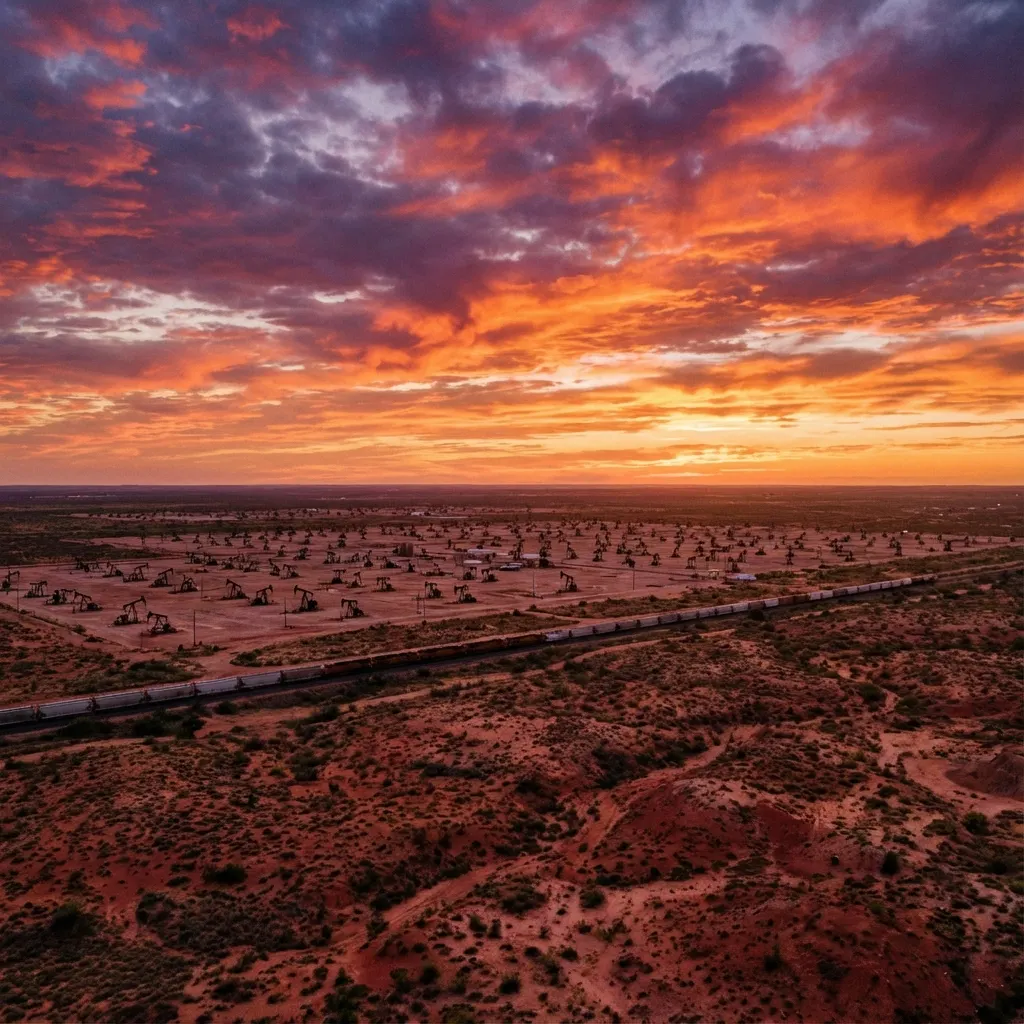
The oil fields of West Texas: Sheridan's latest frontier of American industry and moral complexity
Narrative Innovations in Landman:
- Industrial Realism: Unprecedented authentic portrayal of oil industry operations and culture
- Economic Storytelling: Characters defined by their economic function and class position
- Expanded Female Perspectives: More nuanced female characters with agency and complexity
- Contemporary Urgency: Directly engaging with current debates about energy, environment, and economy
- Procedural Elements: Incorporating crisis-of-the-week structure within serialized character development
Thematic Maturation
Landman showcases Sheridan's evolving sophistication in several key areas:
Moral Complexity Without Nihilism: Unlike the Frontier Trilogy's often bleak worldview, Landman presents characters making difficult choices within corrupt systems while maintaining humanity and ethical awareness. Tommy Norris isn't a tragic figure destroyed by his environment; he's a competent professional navigating impossible situations with dark humor and pragmatic ethics.
Economic Systems as Character: The oil industry functions almost as a living entity in the series—a beast that must be fed, managed, and occasionally fought. This represents Sheridan's most sophisticated engagement with capitalism as narrative force rather than mere background.
Generational Perspective: The series explores how different generations approach the industry: Cooper Norris (Jacob Lofland) representing naïve ambition, Tommy representing pragmatic experience, and the older generation representing the industry's origins and evolution.
Defining Characteristics of Sheridan's Storytelling Evolution
Visual Language Development
Sheridan's visual storytelling has evolved from the stark, almost documentary realism of Sicario to the epic, painterly compositions of Yellowstone to the gritty industrial aesthetics of Landman. Common elements include:
- Landscape as Moral Territory: Physical environments reflect character internal states and thematic concerns
- Long Lens Photography: Compression of space emphasizing isolation and vulnerability
- Natural Lighting: Harsh, realistic lighting reinforcing authenticity
- Minimal Coverage: Efficient shooting style that prioritizes performance over elaborate camera work
Character Archetypes and Evolution
Sheridan's protagonists have evolved while maintaining core characteristics:
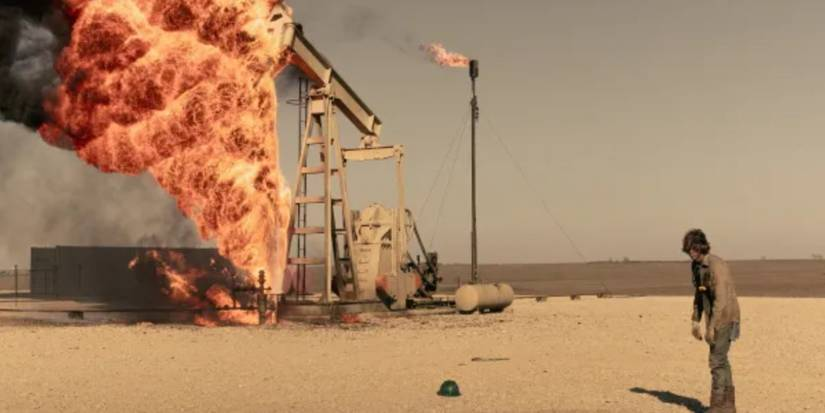
The lone figure against vast landscapes: Sheridan's recurring visual motif
- Early Films: Outsiders entering corrupt systems (Kate Macer, Jane Banner)
- Yellowstone Era: Insiders maintaining power against external threats (John Dutton)
- Landman: Middle management navigating between corporate power and ground-level reality (Tommy Norris)
Dialogue and Language
Sheridan's dialogue has become increasingly naturalistic and regional-specific:
- Occupational Authenticity: Characters speak the actual language of their professions
- Regional Specificity: Dialogue reflects genuine regional speech patterns, not Hollywood approximations
- Economic Efficiency: Fewer words carrying more meaning; silences that speak
- Humor as Survival Mechanism: Dark humor emerging from desperate situations
Critical Reception and Cultural Impact
Industry Recognition
Awards and Recognition
- ✓ Academy Award Nomination: Best Original Screenplay for Hell or High Water (2017)
- ✓ Cannes Film Festival: Un Certain Regard Award for Wind River (2017)
- ✓ Writers Guild of America: Multiple nominations for original screenplays
- ✓ SAG Awards: Cast ensemble nominations for Yellowstone
- ✓ Critics Choice Awards: Multiple nominations across film and television
Cultural Influence
Sheridan's work has influenced contemporary American storytelling in several measurable ways:
- Neo-Western Renaissance: Renewed interest in Western-set narratives with modern sensibilities
- Prestige Television Demographics: Proving that quality television can attract underserved rural and conservative audiences
- Authentic Regional Representation: Raising standards for how American regions outside coastal cities are portrayed
- Streaming Strategy: Demonstrating that linear television success can leverage streaming platforms
Future Trajectory and Legacy
Upcoming Projects
Sheridan shows no signs of slowing his prolific output, with multiple projects in various stages of development:
- 6666: Yellowstone spinoff focusing on the legendary Texas ranch
- The Madison: Another Yellowstone universe expansion
- Lioness Season 2: Continuing military thriller series
- Bass Reeves: Historical Western about the legendary Black U.S. Marshal
Evolving Themes
As Sheridan's career continues, several thematic threads appear to be deepening:
- Institutional Critique: More sophisticated examination of American institutions and their failures
- Economic Justice: Increasingly direct engagement with class and economic inequality
- Environmental Complexity: Moving beyond simple environmentalism to explore human-nature relationships
- Generational Responsibility: What we owe to past and future generations
Conclusion: The Sheridan Method
Taylor Sheridan's evolution from working actor to one of television's most powerful creators represents more than personal success—it demonstrates the viability of authentic American storytelling that refuses to condescend to its audience or simplify complex realities.
His work consistently explores the gap between American mythology and American reality, between the frontier ideals we celebrate and the brutal pragmatism required for survival. Whether following FBI agents into the drug war, brothers robbing banks to save their ranch, a family fighting to maintain their land empire, or oil workers risking their lives for energy that powers modern civilization, Sheridan's narratives force audiences to confront uncomfortable truths about power, survival, and the cost of American progress.
"Sheridan's greatest achievement isn't creating popular television—it's proving that authentic American stories, told without condescension or simplification, can find massive audiences hungry for narratives that reflect their lived experiences and moral complexities."
From Sicario to Landman, Sheridan's storytelling evolution reflects his increasing confidence in his vision and his willingness to tackle larger, more complex narratives. His work has redefined what American television can be, who it can serve, and what stories deserve to be told.
As his empire expands and his influence grows, Sheridan remains committed to the principles that defined his earliest work: authenticity over artifice, complexity over simplification, and respect for audiences too often dismissed by an industry focused on coastal demographics and simplified moral narratives.
The evolution continues, and American storytelling is richer for it.