Women in Oil and Gas: How Realistic Is Landman's Female Workforce?
From land departments and field safety teams to the rare female roughneck, the real Permian Basin is changing faster, and more unevenly, than the show suggests
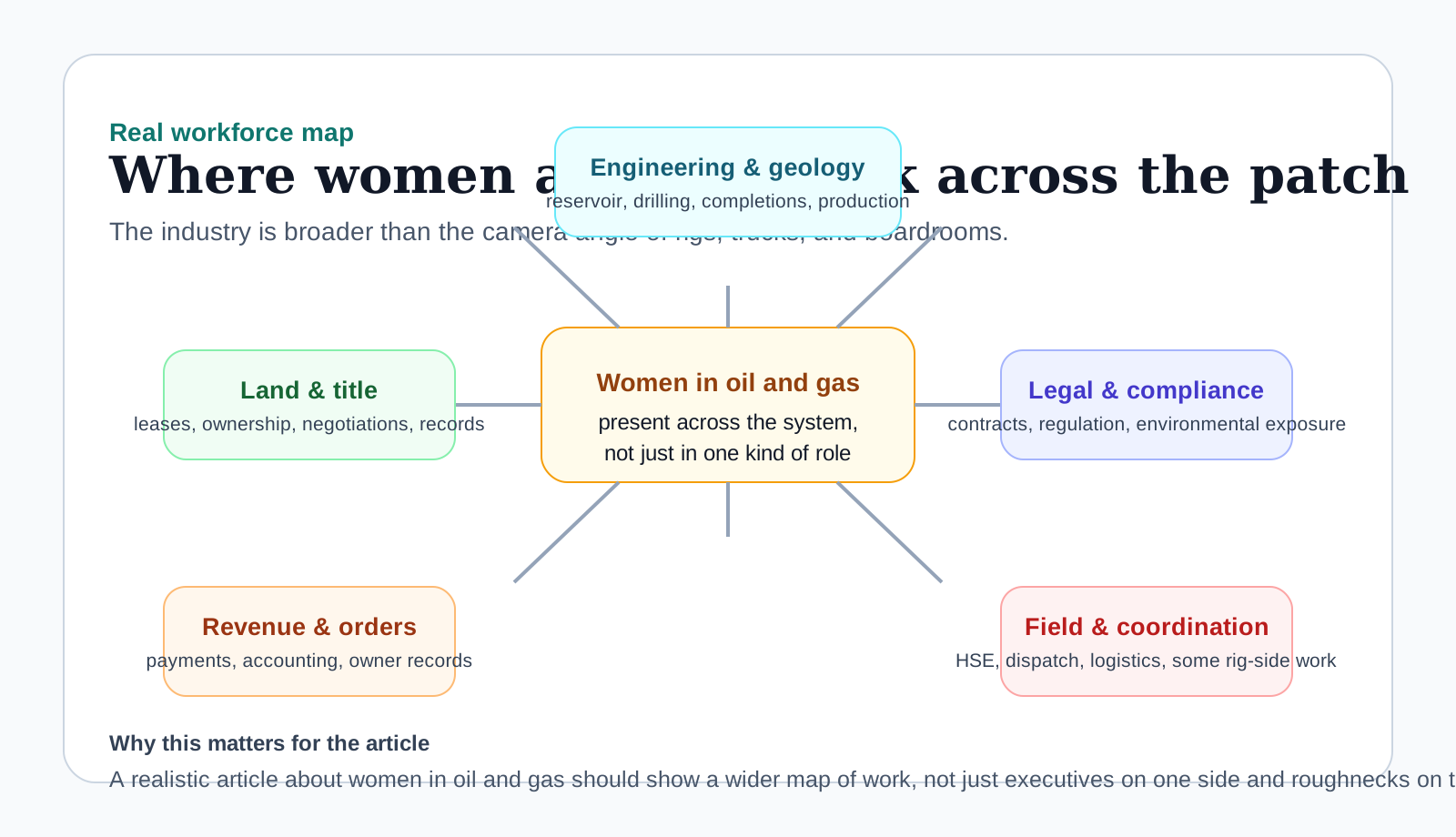
At 4:30 in the morning, before the heat turns West Texas metallic and cruel, the oil patch belongs to whoever is already through the gate. Pickup headlights swing across the caliche roads. Radios crackle. Frac pumps wake up. A safety meeting starts in half-light. If you imagine that scene after watching Landman, you probably picture a crowd of men and then, somewhere above them, a woman in a legal office or an executive suite. Is that realistic? Partly. Women really are still underrepresented in oil and gas, especially in the hardest field roles. But the real industry is broader than the show makes it look. Women are in land, geology, HSE, production engineering, trucking, control rooms, accounting, water logistics, legal teams, and yes, sometimes on the rig side too.
That gap between truth and television is exactly what makes this topic worth unpacking. Landman gets one important thing right: the modern Permian Basin is still culturally male, physically punishing, and organized around schedules and risks that filter people out. But it also leaves out a huge share of the women who keep the business moving. If you want to understand women in oil and gas, you have to look beyond the polished archetypes and into the actual machinery of the business: who gets hired, who stays, who leaves, who reaches line roles, and why the climb narrows so sharply near the top.
Key Reality in One Glance
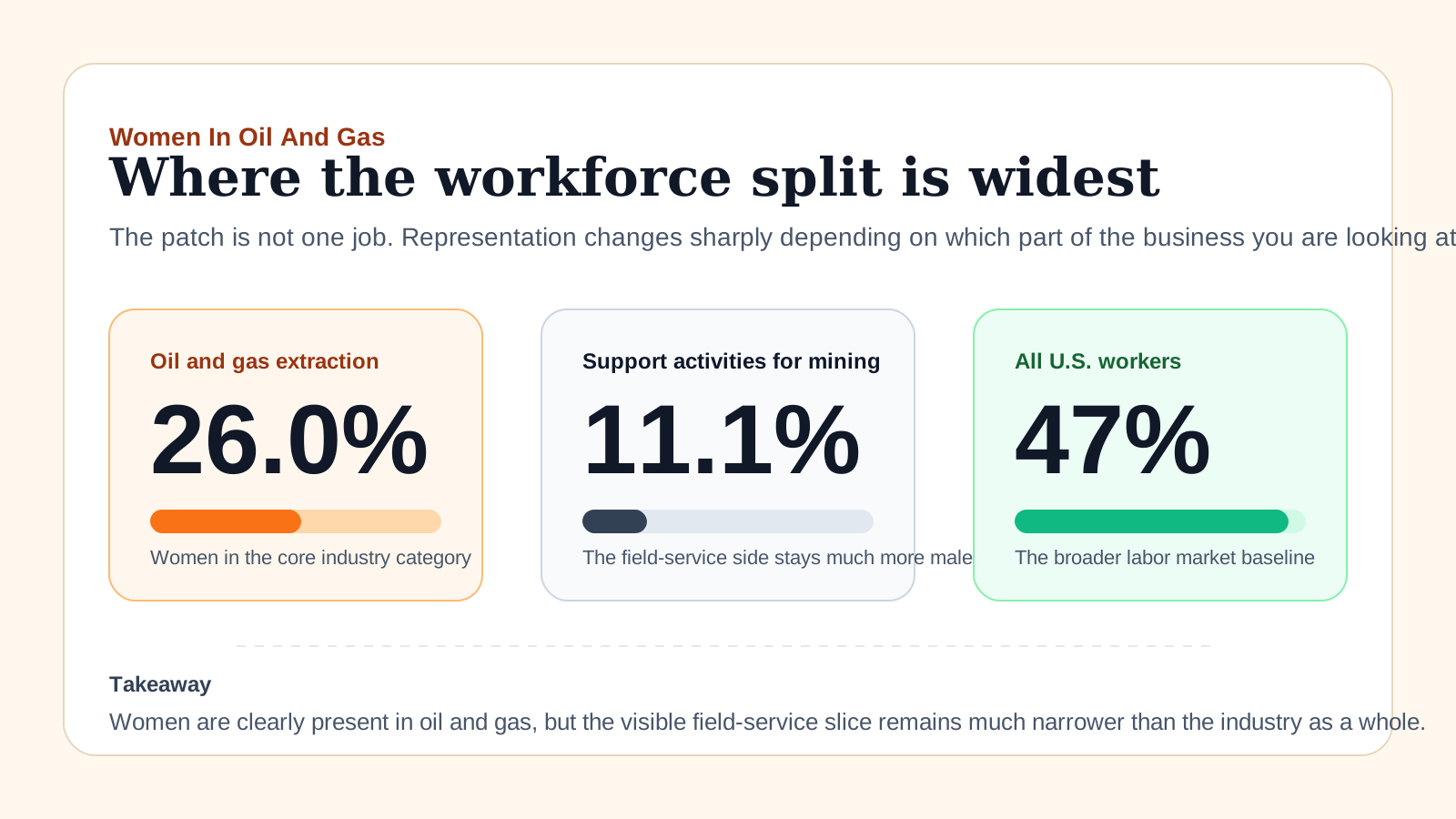
BLS household data for 2024 show women made up 26.0% of workers in oil and gas extraction, but just 11.1% in support activities for mining, the category that captures much of the field-service labor around drilling and completions.
That is the core reason Landman feels half-right. Women are present in the industry. They are just not distributed evenly across the jobs the camera prefers to show.
What Landman Gets Right About Women in the Patch
The show's most realistic choice is not that it centers women in power. It is that it places them in specific kinds of power. Cami Miller makes sense as a figure in ownership and executive influence. Rebecca Falcone makes sense as a lawyer navigating environmental risk, contracts, and corporate exposure. Those roles line up with how many women have entered and advanced in the sector: not always by climbing the roughest operational ladder first, but through legal, commercial, technical, and staff functions that keep the system legible.
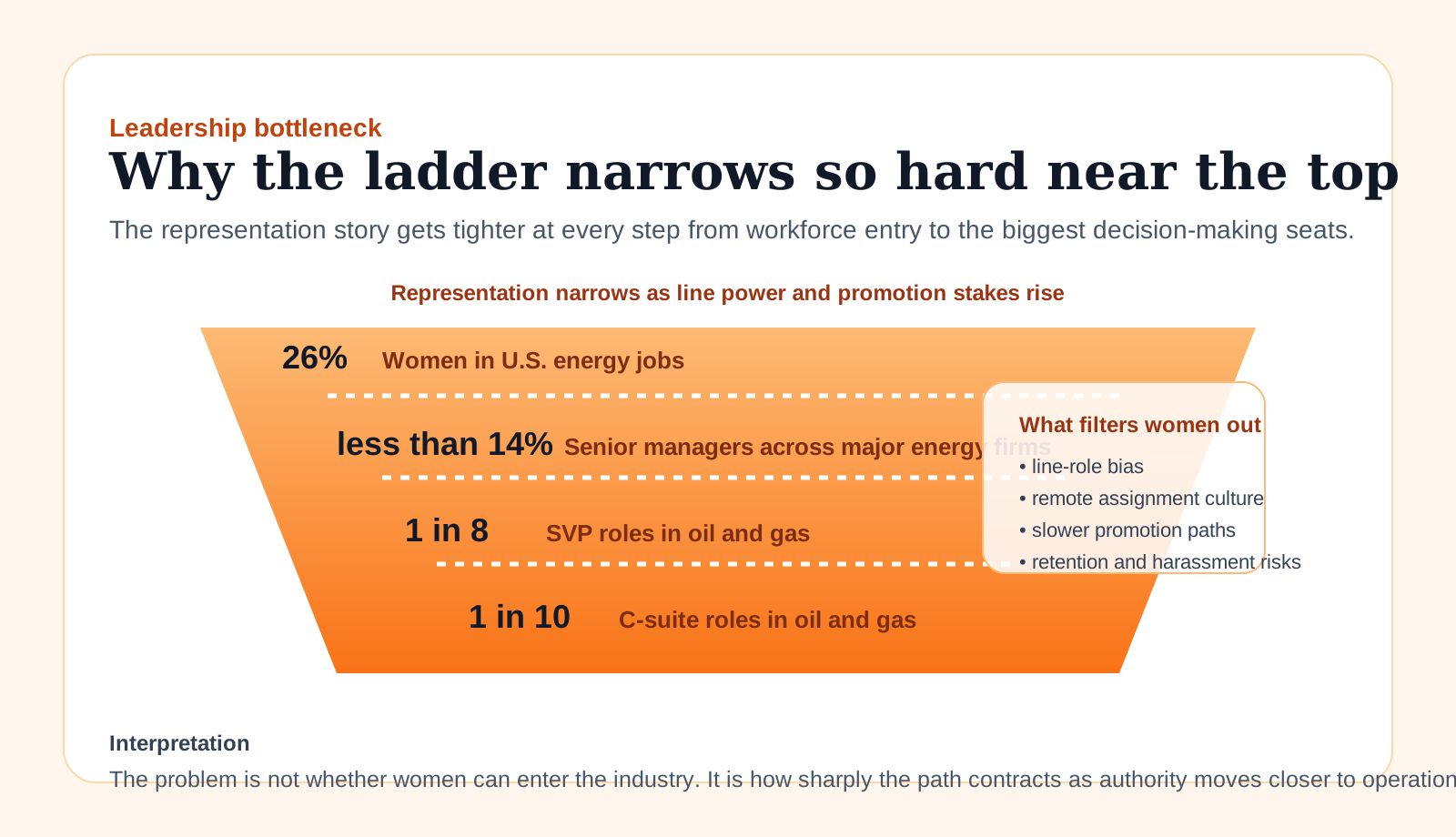
That does not mean women are absent from field operations in real life. It means the distribution matters. The 2024 U.S. Energy and Employment Report said women held 26% of all U.S. energy jobs, still far below their 47% share of the broader American workforce. The same report notes women held only 17% of new energy jobs added in 2023. In other words, the pipeline remains male-heavy even when total representation inches forward. That pattern helps explain why TV can show a few women with visible authority and still feel believable to viewers who know the industry.
Where the series narrows reality is in the range of roles it ignores. A more complete portrait of women in oil and gas jobs would include land analysts sorting mineral chains, division-order specialists tracking payments, HSE managers running incident reviews, petroleum engineers troubleshooting decline curves, geologists interpreting reservoirs, dispatchers moving water and sand, accountants reconciling production revenue, and field supervisors who spend their days somewhere between office screens and dusty lease roads. The real Permian is not just boardroom women and roughneck men. It is much more layered than that.
What the Real Workforce Actually Looks Like
The clearest way to understand the issue is to split the business into segments. Upstream oil and gas is not one job. It is a mesh of extraction companies, service firms, technical specialists, commercial teams, regulators, and contractors. That is why a single headline number can mislead. The BLS 2024 industry table puts women at 26.0% in oil and gas extraction itself, but support activities for mining, which includes many of the most visibly "oilfield" jobs, is much lower at 11.1%. The overall DOE energy workforce report lands on the same broad message: the sector is still overwhelmingly male.
That split matters for how people read the show. If your mental picture of the business is drilling rigs, frac spreads, wireline trucks, and midnight callouts, then women look rare because in those visible service-heavy spaces, they often still are. But if you widen the frame to include land work, lease administration, production engineering, legal review, and environmental compliance, the industry looks different. Women do not just "support" the patch from outside it. They are embedded in the systems that make drilling legal, financeable, insurable, and operationally coherent.
One useful example is the engineering side. The BLS Occupational Outlook Handbook for petroleum engineers says petroleum engineers earned a median annual wage of $141,280 in 2024 and often work both in offices and at well sites. That matters because it breaks the tired stereotype that women in the sector are confined to purely clerical functions. Some of the most important oil and gas jobs are analytical, technical, and field-adjacent rather than purely physical. Women who enter through geology, reservoir, drilling, completions, or production engineering are not orbiting the core business. They are part of the core business.
The long-tail search question that sits underneath all of this is simple: what jobs do women do in oil and gas? The honest answer is: almost all of them, just not in equal numbers. The real divide is not "can women work in oil and gas?" Of course they can. The divide is where representation remains thin, where retention is hardest, and where advancement still depends on line experience, remote assignments, and social acceptance in crews that historically never had to make space.
Where Women Commonly Show Up in the Real Patch
The show could be more realistic simply by showing women in the roles the industry quietly depends on every day:
- land and title work
- revenue and division orders
- production and reservoir engineering
- HSE and regulatory compliance
- water logistics, dispatch, and scheduling
- supply chain, vendor management, and field coordination
Why Field Operations Remain the Hardest Frontier
The most stubborn gap sits in the field-service world. That is not because women lack interest or skill. It is because the oilfield is still built around conditions that are hard on everyone and especially hard on anyone entering as an outsider. The BLS profile for oil and gas workers describes a job environment defined by remote locations, long shifts, overtime, and physically demanding schedules. OSHA's oil and gas hazards page adds the real list of risks: transportation incidents, caught-in equipment events, fires, explosions, toxic exposure, and struck-by hazards. This is the environment in which the industry's cultural habits were formed, and it still shapes who is welcomed and who is tested.
That pressure is not theoretical. The CDC's Fatalities in Oil and Gas Extraction Database review counted 470 worker deaths from 2014 through 2019, with the Permian Basin alone accounting for 148 of them. A later CDC report on severe work-related injuries counted 2,101 severe injuries in the industry from 2015 through July 2022. Those numbers matter because they explain why field access is not just a hiring question. It is a risk-management question, a training question, and a trust question inside crews where mistakes get people killed.
That is one reason Landman leans so heavily toward male roughnecks and female professionals elsewhere. It mirrors the most visible split in the real business. But it also risks freezing that split into destiny. In reality, some of the work that once depended almost entirely on brute-force crew culture is being partially reshaped by automation, instrumentation, digital monitoring, and tighter process controls. That does not erase the physicality of the work. It does mean the old excuse that the field is "just not a place for women" looks weaker every year.
The smarter interpretation is this: the field remains the hardest place to change, but not the impossible one. The same industry that now depends on remote monitoring, more standardized procedures, data-heavy engineering, and increasingly formal HSE systems has fewer rational grounds than ever for pretending capability belongs to one gender. What remains, more often than not, is culture.
The Part the Show Understands Best
When the series treats the patch as exhausting, dangerous, and socially hard-edged, it is not exaggerating much. Those conditions are a big part of why representation changes slowly. This is not a desk-bound industry with a branding problem. It is a high-risk sector with a culture problem layered on top.
The Hidden Barriers Women Describe Once They Get Inside
The hardest part of this conversation is that hiring is only the first gate. Retention is where the deeper story sits. SPE's 2023 diversity and inclusion survey found women reported gender bias, unequal treatment, and management behavior that limited their careers, while many men perceived the workplace as broadly fair. That split in perception is important. It means the industry's internal story about itself can be much more optimistic than the daily experience reported by the people who are most isolated inside it.
McKinsey's work on women in energy, resources, and infrastructure is even more blunt. In its ER&I pipeline research, women reported more incivility than women overall, and 43% said they had experienced some form of sexual harassment, versus 35% of women overall. The same report found 33% of women in ER&I often felt like the only person of their gender in the room. That "only" effect matters because it compounds pressure. You are no longer just trying to do the job. You are managing visibility, stereotype, caution, and sometimes other people's discomfort.
There is also a very concrete, recent reminder that these problems are not abstract culture-war talking points. In 2025, the U.S. Equal Employment Opportunity Commission announced a $697,500 settlement with Bigfoot Energy Services and Iron Mountain Energy over allegations that women at a Wyoming oilfield support operation faced a sexually hostile work environment, retaliation, and constructive discharge. That is exactly the sort of real-world case television almost never has time for. It is less cinematic than a blowout and more revealing about why retention breaks.
This is where Landman feels noticeably incomplete. The show understands structural power and family power. It understands class, money, danger, and masculine bravado. But it does not spend much time on the daily social friction that shapes whether women stay in the business long enough to build authority. If anything, its female professionals are too frictionless. Real women in oil and gas often carry more invisible negotiation than the show lets on.
Why the Ladder Narrows So Sharply at the Top
The pipeline problem becomes even clearer in leadership. According to the International Energy Agency's commentary on diversity in the energy sector, women account for less than 14% of senior managers across major energy firms, and less than 12% if utilities are removed. Oil and gas remains one of the sectors where technical credibility, line responsibility, and remote assignment history carry unusual weight in promotion decisions. That means barriers earlier in the career compound later.
McKinsey's oil-and-gas-specific analysis makes the point even sharper. In its study on the O&G talent gap, the firm found women accounted for only one in eight senior vice president roles and one in ten C-suite roles in oil and gas overall. It also found that for every 100 men promoted to the SVP level, only 40 women were. Women who do reach senior ranks are also more likely to leave: the article says women in O&G who make it to SVP are almost three times more likely than men to exit at that level.
Why? Part of the answer is career path design. Companies often prize so-called line roles: assignments directly tied to operations, production, field management, or P&L responsibility. Women can be channeled into staff paths because they are seen as strong collaborators, communicators, or organizers, which sounds flattering right up to the moment promotion decisions reward something else. McKinsey's broader 2024 Women in the Workplace report shows the same familiar pattern across energy, utilities, and basic materials: the pipeline leaks early and then narrows at each step up.
That is exactly why Cami Miller works as a character but also why she is not enough as representation. Yes, women can absolutely run large oil companies, shape capital decisions, or take control after a founder or CEO exits. The real industry has examples of that. But if television only shows women once they are already polished, exceptional, and insulated by wealth or law degrees, it quietly erases the long middle stretch where most careers are actually won or lost.
What the Show Misses About the Real Female Workforce
The biggest omission is ordinary competence. Realistic representation would not just add one woman roughneck for symbolism. It would show the non-glamorous, high-consequence roles women already hold in meaningful numbers. Think of the woman land professional who untangles ownership before drilling starts. The production accountant who catches a payment anomaly before it becomes litigation. The HSE lead who forces a shutdown nobody wants. The geologist defending a location. The engineer who has to explain why the numbers are lying. The dispatcher managing water and traffic in a county already stretched by boom conditions. These are not side roles. They are the connective tissue of the patch.
That omission is striking because the show has the background to know better. In a Backstage interview, co-creator Christian Wallace described sourcing real gear, explaining technical dialogue, and staying close to the occupational reality that inspired the series. That commitment to texture is visible all over Landman. But authenticity of setting is not always the same as completeness of workforce portrayal. A show can know how a radio sounds at dawn and still leave half the labor structure underdrawn.
That is why the best critique is not that Landman is wrong. It is that it is selective in a way television often is. It reaches for high-drama roles: crisis managers, lawyers, heirs, executives, wives, daughters, widows. The real oil and gas workforce includes all of those people, but it also includes women doing the routine work of keeping a dangerous industrial machine disciplined enough to function. Routine work is less cinematic. It is also where reality lives.
If Season 3 wanted a truer picture of women in the oil and gas industry, it would not need a speech about representation. It would only need to widen the camera. Show a woman leading a pre-job safety review. Show one handling division orders after a messy lease fight. Show one in completions engineering, field operations, or water management. Show the social tax, not just the title. That would feel more truthful than any inspirational monologue.
A Better Rule for Reading the Show
Do not ask, "Are there women in oil and gas?" Ask, "Which women, in which jobs, under what conditions, and who gets remembered by the camera?" That is where the real answer starts.
The Verdict: How Realistic Is Landman's Portrayal?
My realism score for women in oil and gas as portrayed in Landman is 6.8/10. That is a solid score, not a flattering one. The show understands the masculine texture of the patch, the rarity of women in the roughest field spaces, and the plausibility of women holding legal or executive influence. Where it falls short is in breadth. It still treats women as exceptional figures orbiting the main industrial machine rather than as workers, managers, and specialists inside the machine itself.
What Feels Real
- women are still underrepresented in the industry's most visible field roles
- legal, commercial, and executive roles are credible paths for female authority
- the patch remains culturally male and operationally hard-edged
- status often comes from surviving a system that was not designed for comfort
What Feels Too Narrow
- too few women in ordinary technical and operational roles
- almost no attention to retention, bias, or social friction inside crews
- too little sense of the middle career ladder where most women get filtered out
- the real female workforce is broader, less glamorous, and more indispensable than the show suggests
Could a woman be a decisive executive, lawyer, engineer, or land professional in a company like M-Tex? Absolutely. Could the modern Permian still feel like a place where many women are isolated, tested harder, and pushed toward certain lanes? Also yes. That double truth is the real story. Landman captures the second part well enough to feel authentic. It just has not yet shown enough of the first part to feel complete.
Frequently Asked Questions
Are there really women roughnecks and field workers in oil and gas?
Yes. Women absolutely work in field roles, but they remain a minority in the most visible service-heavy parts of the business. The BLS 2024 workforce table shows the sharpest gap in support activities for mining, which includes many oilfield service jobs. That is one reason television still defaults to male crews, even though the real workforce is broader than that image.
What jobs do women most often hold in the oil and gas industry?
Women work across land, legal, accounting, geology, production engineering, HSE, logistics, commercial analysis, and some field operations. The DOE energy workforce report and the BLS petroleum engineer profile both point to a sector where technical and field-adjacent roles matter as much as purely physical labor.
Is Cami Miller's kind of power realistic in real oil and gas companies?
Yes. Women do hold major ownership, legal, and executive roles in the real industry. What is less realistic is treating that as the main female experience. The IEA and McKinsey both show how thin representation becomes at senior levels, which means women like Cami exist, but they are still exceptions rather than a fully normalized pattern.
Why are there still so few women in field operations?
The biggest reasons are structural and cultural: remote schedules, long shifts, dangerous conditions, old crew norms, and promotion systems that reward surviving those environments. OSHA and the CDC fatality data make clear this is an unusually hazardous industry, which slows change wherever the culture is already rigid.
Is harassment still a real issue in oilfield work?
Yes. This is not just reputation damage or online debate. In 2025, the EEOC announced a settlement involving Bigfoot Energy Services and Iron Mountain Energy over allegations of sexual harassment and retaliation. McKinsey's ER&I research also found unusually high rates of incivility and harassment reported by women in the sector.
Does Landman understand the industry well enough to improve this portrayal later?
Probably yes. Christian Wallace has spoken openly about grounding the show in real occupational detail, as described in his Backstage interview. The show already gets a lot of texture right. It would not need to reinvent itself to portray women more accurately. It would just need to widen the camera to include the less glamorous but very real jobs women already do across the patch.
Sources
- Household Data Annual Averages Table 18: Employed persons by detailed industry, sex, race, and Hispanic ethnicity - U.S. Bureau of Labor Statistics
- 2024 U.S. Energy and Employment Report - U.S. Department of Energy
- Petroleum Engineers - Occupational Outlook Handbook, U.S. Bureau of Labor Statistics
- Oil and Gas Workers - Occupational Outlook Handbook, U.S. Bureau of Labor Statistics
- Fostering Diversity and Inclusion in the Energy Sector - International Energy Agency
- How women in the oil-and-gas industry can fill the talent gap - McKinsey & Company
- Empowering Talent: Women in Energy, Resources, and Infrastructure - McKinsey & Company
- Women in the Workplace 2024 - McKinsey & Company and LeanIn.Org
- 2023 SPE Diversity and Inclusion Survey: Driving Equality in the Energy Industry - Society of Petroleum Engineers
- Bigfoot Energy Services and Iron Mountain Energy Agree to Pay $697,500 to Settle EEOC Sexual Harassment and Retaliation Suit - U.S. Equal Employment Opportunity Commission
- Oil and Gas Extraction Hazards - OSHA
- Common Wellsite Incidents and Fatalities - OSHA
- Fatalities in Oil and Gas Extraction Database, 2014-2019 - CDC MMWR
- Severe Work-Related Injuries in the Oil and Gas Extraction Industry - CDC MMWR
- Landman Co-Creator Christian Wallace Drills Down to the West Texas Truth - Backstage