In the fractured media landscape of January 2026, a two-minute scene from Landman achieved what most streaming content never will: it transcended the platform. The clip from Episode 9, “Plans, Tears and Sirens,” didn’t just go viral—it detonated across social media with the force of a cultural bomb, generating millions of views, thousands of arguments, and a case study in how modern entertainment has become inseparable from political warfare.
The metrics tell the story. A single post from the conservative news account @RedWave_Press, captioned “Paramount’s Landman OBLITERATES the pronouns argument,” racked up 1.8 million views on X within days.
Political commentator Bo Loudon’s post, framing the scene as a “pretty blonde actress politely schooling a liberal character,” hit 2.6 million views.
Across platforms—from Reddit threads with hundreds of comments to TikTok reactions to conservative media celebrations—the scene achieved something that advertising budgets can’t buy: organic, passionate, and deeply polarized engagement.
But what transformed this from a standard viral moment into a multi-platform cultural event was an unexpected amplifier: Michelle Randolph’s relationship with Glen Powell, the charismatic star of Top Gun: Maverick and one of Hollywood’s fastest-rising leading men. Randolph, who plays Ainsley Norris in the scene, suddenly wasn’t just an actress in a Paramount+ drama—she was “Glen Powell’s glamorous girlfriend,” as the Daily Mail put it, adding a layer of celebrity gossip and aspirational glamour to the ideological warfare.
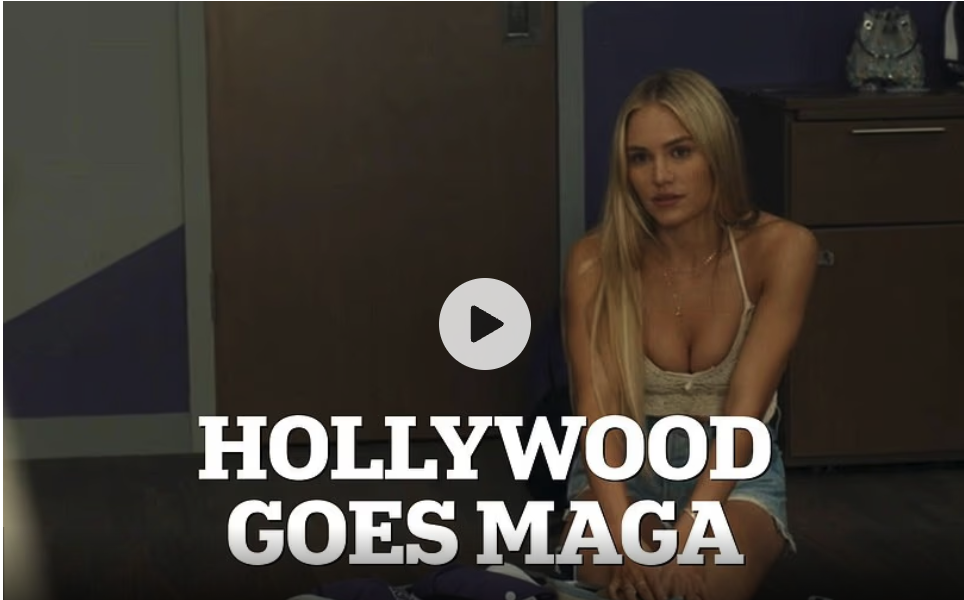
The intersection of politics, entertainment, and celebrity romance created a perfect storm of shareability.
The MAGA crowd, in particular, embraced the moment with an enthusiasm that bordered on euphoria. Conservative social media exploded with praise, seeing the scene as a long-overdue Hollywood pushback against progressive orthodoxy. “Hollywood has made fun of Conservatives and Christians for years now… it’s nice to finally see the shoe on the other foot for once,” wrote one widely shared comment.
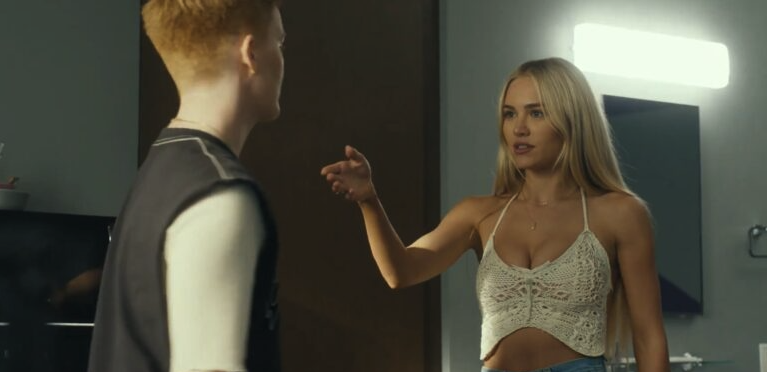
Another declared it “one of the best episodes of the year,” while multiple users expressed shock and delight that such content could exist on a mainstream streaming platform.
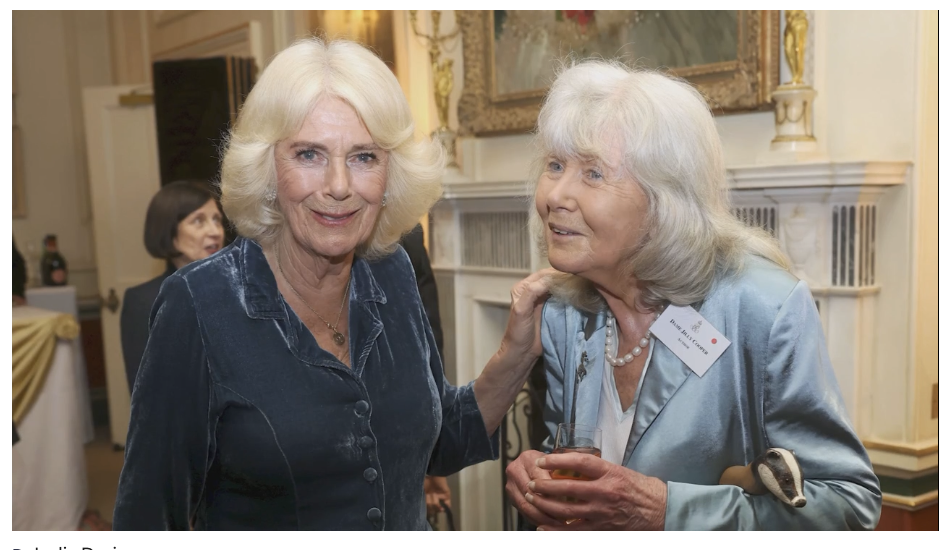
What makes these numbers particularly significant is their velocity and cross-platform reach. This wasn’t a scene that needed algorithmic boosting or paid promotion—it spread through genuine user enthusiasm, generating what marketing executives call “earned media.” The clip migrated from X to Reddit, from conservative news sites to mainstream entertainment coverage, from YouTube reaction videos to political commentary shows. Each share, each argument, each outraged or delighted response became free advertising for Landman and, by extension, Paramount+.
The Sheridan Strategy: Building a Conservative Entertainment Empire
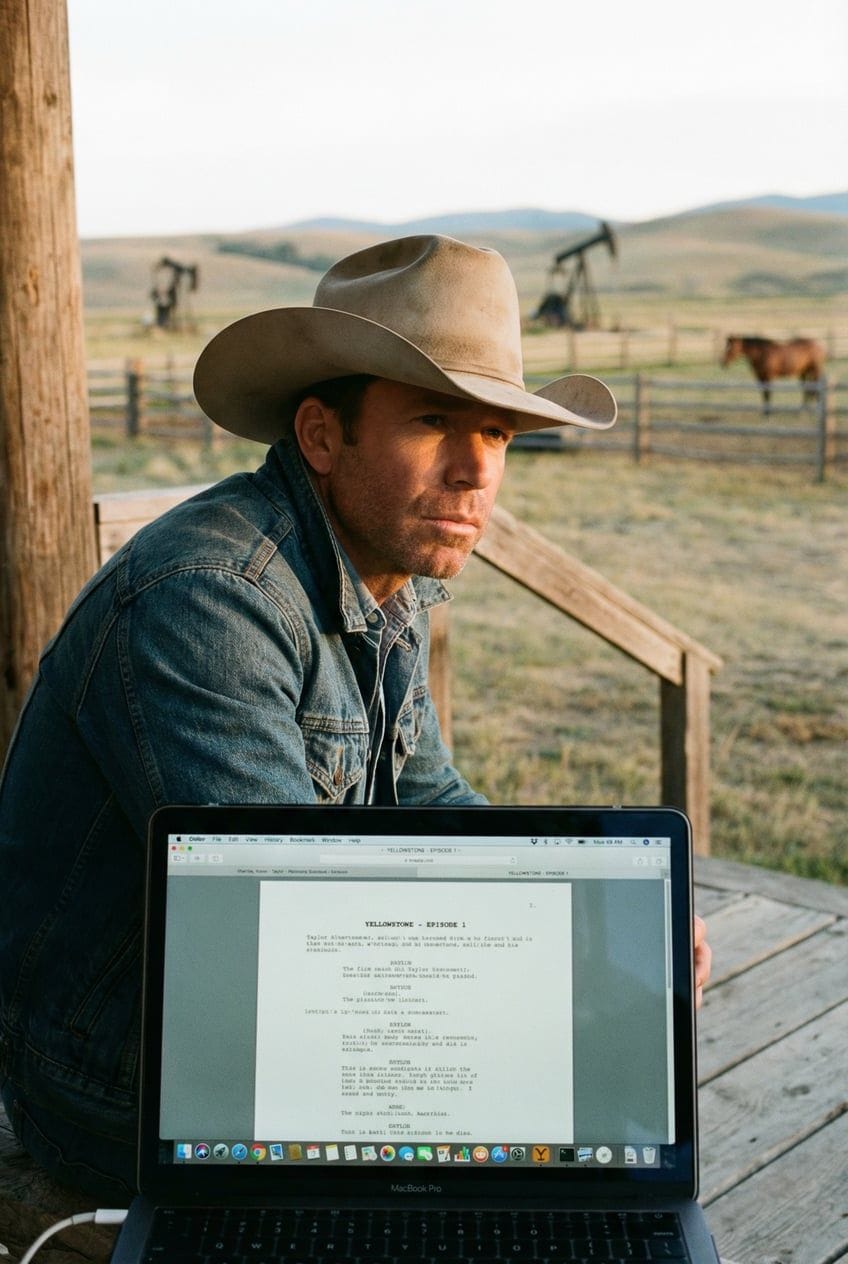
To understand why this scene exists at all, one must understand Taylor Sheridan—not just as a writer and showrunner, but as a cultural strategist who has identified and is methodically exploiting a massive gap in the entertainment marketplace. The pronoun scene wasn’t an accident, an improvisation, or a one-off provocation. It was the latest salvo in a deliberate, sustained campaign to position Sheridan’s expanding universe of shows as the entertainment home for conservative and culturally traditional Americans who feel alienated by Hollywood’s dominant progressive ethos.
Sheridan’s pattern is now unmistakable. Earlier in Landman Season 2, Episode 5, the show took a direct shot at The View, the daytime talk show that has become a favorite punching bag for conservative media. In that episode, a character is shown mockingly watching the program, leading to a scene that conservatives celebrated as a rare moment of mainstream entertainment validating their contempt for liberal media personalities. Then, in Episode 9, Sheridan doubled down with a callback to that moment, demonstrating that these weren’t isolated jokes but recurring themes.
The pronoun scene represents an escalation of this strategy. Where the The View references were passing jabs, the Ainsley-Paigyn conflict was a five-minute subplot dedicated entirely to dramatizing conservative frustrations with progressive social norms. The character of Paigyn was constructed as what critics called “a piñata stuffed with everything that makes his audience’s blood pressure spike”—vegan, non-binary, from Minneapolis (a city associated with progressive politics), ferret-owning, meditation-practicing, and armed with a vocabulary full of trigger warnings and “safe space” rhetoric.
Critics from Scraps from the Loft argued that “Paigyn is a type, not a person—drawn by someone never curious about why young people talk this way. Ridicule without curiosity produces propaganda, not comedy.” But from a strategic perspective, that’s precisely the point. Sheridan isn’t trying to bridge cultural divides or foster understanding—he’s creating content that validates the worldview of an audience that feels unheard and mocked by mainstream entertainment. He’s saying: “I see you, I understand your frustrations, and I’m willing to put them on screen.”
This approach has built Sheridan what amounts to a conservative entertainment empire. His shows—Yellowstone, 1883, 1923, Tulsa King, and now Landman—collectively dominate streaming viewership in a way few creators have ever achieved. He has become what one commentator called the voice of an audience that mainstream Hollywood has ignored or disdained. His characters embody traditional masculinity, celebrate blue-collar work, distrust institutions, and often express skepticism toward progressive social movements—all while being packaged in high-production-value dramas that can compete aesthetically with any prestige television.
The timing of this strategy is crucial. In 2026, America is more politically polarized than at any point in recent history, and that polarization extends deeply into cultural consumption. Conservatives increasingly seek out explicitly conservative or “anti-woke” entertainment, creating a market opportunity that Sheridan has seized with both hands. As one analyst noted, “Sheridan knows the audience he’s catering to. That couldn’t be anymore obvious if he tried.” The pronoun scene wasn’t designed to win over progressives or create nuanced dialogue—it was designed to go viral among conservatives, which it did spectacularly.
The Business of Polarization: Why Controversy Is the New Currency
In the streaming era, where hundreds of shows compete for attention and traditional advertising has limited effectiveness, controversy has become a valuable commodity. The Landman pronoun scene demonstrates a uncomfortable truth about modern media economics: polarization drives engagement, and engagement drives subscriptions, and subscriptions are all that matter.
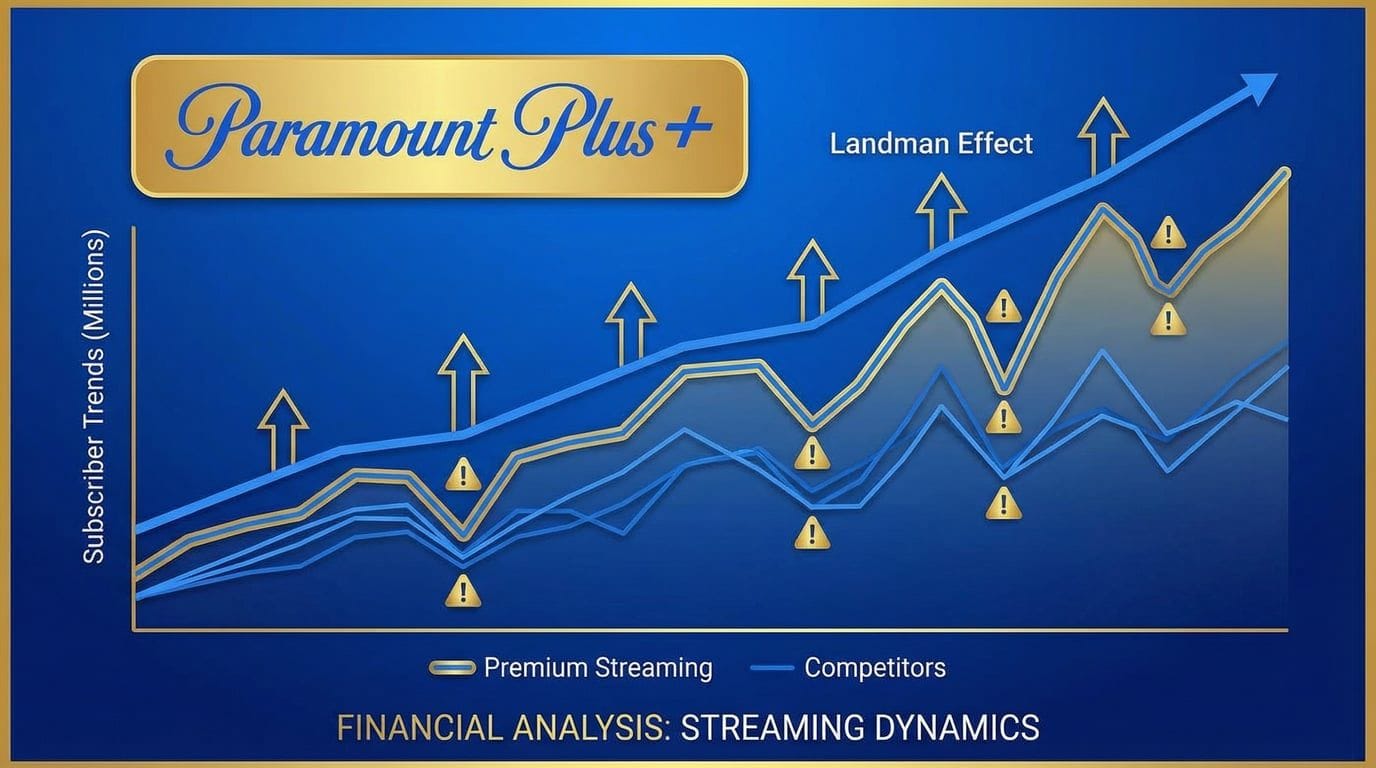
Consider the business equation. Landman Season 2 premiered with 9.2 million views in its first two days, setting a Paramount+ record and becoming the platform’s most-watched original premiere. The show has consistently ranked as one of the top-performing series on the platform, and while Paramount+ doesn’t release detailed subscriber data, industry analysts note that the Sheridan universe of shows—particularly Yellowstone and now Landman—has been crucial to the platform’s ability to compete with larger rivals like Netflix, Disney+, and Max.
The viral pronoun scene arrived in the penultimate episode of Season 2, precisely when streaming platforms most need social media buzz to drive viewership for season finales and renewals. The timing wasn’t accidental. By generating millions of organic social media impressions in the week before the finale, the scene functioned as free marketing that reached audiences far beyond Paramount+'s existing subscriber base. Every outraged progressive sharing the clip in disbelief, every delighted conservative praising Sheridan’s courage, every think piece analyzing the cultural implications—all of it served as advertising for the show and the platform.
This represents a fundamental shift in how streaming platforms think about content. In the Netflix era of 2015-2020, the goal was broad appeal: create shows that offend no one and might be watched by everyone. But in the fragmented market of 2026, where over a dozen major streaming platforms compete for attention, broad appeal increasingly means mediocrity. Platforms are discovering that passionate niche audiences—even if that niche is 20-30% of the population—can sustain a streaming service more effectively than lukewarm universal approval.
The conservative audience that Sheridan has cultivated is particularly valuable for several reasons. First, it’s been underserved by Hollywood for decades, creating pent-up demand. Second, it’s affluent—the West Texas oil workers and ranchers depicted in Sheridan’s shows may be the subject matter, but the audience includes substantial numbers of middle- and upper-class suburbanites who identify with the shows’ cultural values. Third, and perhaps most importantly, it’s loyal. Conservative viewers who feel Paramount+ is “on their side” are more likely to maintain subscriptions through content droughts and more likely to subscribe to multiple Sheridan shows.
The Daily Mail noted how one supporter asked, “Is wokeism beginning to lose control of Hollywood?” in response to the scene, framing it as part of a larger cultural shift. Whether or not that’s true, the question itself reveals the emotional investment conservative viewers have in content they perceive as culturally aligned with their values. That investment translates directly into business value for Paramount+.
Compare this to other streaming platforms’ approaches to political content. Netflix, the market leader, has largely tried to avoid explicit political positioning, though it has leaned progressive in much of its content. Disney+ has faced conservative backlash over LGBTQ+ representation in its family programming. Max (formerly HBO Max) has positioned itself as the home of prestige drama that tends toward liberal coastal sensibilities. Paramount+, through Sheridan, has effectively claimed the conservative lane—a positioning that becomes more valuable as polarization intensifies.
The Corporate Context: Paramount-Skydance and the Rightward Shift
The Landman pronoun controversy cannot be understood in isolation from the broader corporate transformation of Paramount. The merger between Paramount Global and Skydance Media, completed in 2025 under the leadership of David Ellison, has brought significant changes to the company’s content strategy and political positioning—changes that provide crucial context for understanding why this particular scene was greenlit and celebrated rather than softened or cut.
Under Ellison’s leadership, Paramount has undergone what many observers describe as a rightward shift, particularly in its news division. The hiring of Bari Weiss, a conservative-leaning columnist and opinion writer, as editor-in-chief of CBS News was a watershed moment. Weiss, who had built The Free Press as an alternative media outlet critical of mainstream journalism’s progressive orthodoxy, now oversees CBS News—a development that shocked many in the industry. The appointment was accompanied by the resignation of the head of CBS News’s Standards and Practices department and the departure of veteran anchor John Dickerson, who had criticized the network’s $16 million settlement with Trump over a 60 Minutes dispute.
These changes reflect a broader strategic calculation by Paramount-Skydance: positioning itself as a more conservative-friendly alternative to competitors perceived as liberal bastions. The company has faced criticism that its decisions, including the settlement with Trump and the cancellation of The Late Show with Stephen Colbert (which occurred shortly after Colbert criticized the Trump settlement), represent capitulation to political pressure. Congressional Democrats Jamie Raskin and Frank Pallone even launched an investigation into whether the merger and subsequent decisions were influenced by Trump administration pressure.
The timing is significant: Trump’s influence on the entertainment industry in his second term has been more direct and aggressive than in his first. His public complaints about media content, threats regarding streaming mergers and acquisitions (including Warner Bros. Discovery’s attempt to merge with Netflix), and the broader political climate have created an environment where media companies are acutely aware of the need to avoid antagonizing the White House.
In this context, the Landman pronoun scene takes on additional meaning. It’s not just content—it’s a signal. It tells conservative audiences and the Trump administration that Paramount+ is a “friendly” platform, one willing to produce content that validates conservative cultural grievances. It’s brand positioning through culture war engagement, and the viral success of the scene validates the strategy from a business perspective.
The appointment of Kenneth R. Weinstein, former CEO of the conservative Hudson Institute think tank, as ombudsman for CBS News, reporting directly to Paramount-Skydance executives rather than CBS News management, further underscores this strategic direction. Critics have noted this is an unusual structure for a news ombudsman, typically a public-facing role independent of corporate management, suggesting it’s designed more for internal corporate oversight to ensure conservative-friendly content than for public accountability.
This corporate backdrop matters because it reveals that the Landman pronoun scene isn’t an isolated creative decision by Taylor Sheridan—it’s part of a company-wide strategy to reposition Paramount as a home for content that challenges progressive orthodoxy. The scene works in concert with changes at CBS News, the hiring of conservative-aligned executives, and legal strategies that prioritize avoiding conflict with the Trump administration.
Beyond the Dorm Room: What This Moment Signals
The viral explosion of the Landman pronoun scene represents something more significant than one controversial television moment—it’s a data point in a larger transformation of how major entertainment companies relate to conservative audiences and conservative political power.
For decades, the conventional wisdom in Hollywood was that cultural liberalism was both morally correct and good business. Progressive social values, the thinking went, were the future, and content should reflect and accelerate that future. Conservative viewers might grumble, but they’d keep watching because there were no alternatives. This assumption shaped everything from casting decisions to storyline choices to marketing strategies.
That era is ending. The success of Landman, the Daily Wire’s expansion into entertainment production, the emergence of conservative-focused streaming platforms, and the mainstream success of creators like Sheridan have demonstrated that there’s substantial money to be made in serving conservative audiences with content that validates their worldview. As one RedState commentator noted about the scene, “Sheridan actually wrote the common person into the scene, behaving as many normal people would.” For conservative viewers, being represented as “normal” rather than caricatured or mocked is itself a major shift.
The “anti-woke” entertainment movement, which was marginal and guerrilla in 2020, has by 2026 become a significant force in mainstream media. This isn’t just about independent creators or alternative platforms—it’s about major studios and networks producing content that explicitly challenges progressive cultural positions. The Landman scene wasn’t released on a conservative streaming service or a niche platform; it aired on Paramount+, a major streaming service owned by a Fortune 500 media conglomerate. That’s what makes it significant.
The scene also demonstrates how culture war content functions differently in the streaming era than it did in traditional broadcast television. A broadcast network airing this scene would face immediate advertiser pressure, organized boycotts, and internal corporate concern about brand damage. But streaming services operate on a subscription model where the primary metric is engagement, not avoiding offense. If conservative subscribers are passionate enough to maintain or add subscriptions, and the controversy generates enough buzz to attract new viewers, the business equation works regardless of how many people are offended.
This creates a race to the extremes: platforms compete for passionate niche audiences by producing content that deliberately provokes the other side. The outrage becomes part of the marketing. Every progressive critic declaring the scene “pure rage bait” (as Reddit users did) serves as social proof for conservatives that the content is authentically “anti-woke.” Every conservative celebrating it as “politely schooling liberals” drives more progressive critics to write about it, generating more buzz.
The long-term implications are troubling for anyone hoping for cultural common ground. As streaming platforms discover they can build sustainable businesses around polarizing content, the economic incentives increasingly point toward fragmentation rather than consensus. Why make content that might appeal to 70% of Americans when you can make content that creates passionate loyalty in 35% of Americans—loyalty strong enough that they’ll subscribe, stay subscribed, and actively promote your content through social media?
The Randolph Factor: Glamour, Politics, and the “Pretty Blonde Actress”
Michelle Randolph’s role in the viral success of the Landman pronoun scene deserves particular attention, not because of her performance (which was serviceable but unremarkable), but because of what her casting and subsequent celebrity reveal about the political messaging embedded in the scene’s construction.
The repeated framing of Randolph as a “pretty blonde actress” in conservative media coverage is deliberate and significant. This description appears in nearly every conservative article and social media post celebrating the scene, often paired with descriptions of Paigyn’s appearance (short red hair, androgynous). The visual contrast is the message: conventional femininity challenging non-binary identity, traditional beauty standards versus gender non-conformity, the “normal” versus the “woke.”
Randolph’s relationship with Glen Powell amplified this effect exponentially. Powell, who has carefully cultivated an image as a charismatic, all-American leading man—the heir to Tom Cruise’s brand of movie-star masculinity—represents aspirational conservative masculinity. His relationship with Randolph, first publicized in 2025, added a layer of celebrity glamour and romantic appeal to the pronoun controversy. As the Daily Mail headlined, “MAGA goes wild for new scene in Landman with Glen Powell’s glamorous love Michelle Randolph.”
This coupling—a beautiful actress challenging progressive orthodoxy, romantically linked to a male movie star embodying traditional masculinity—became its own form of political messaging. It suggested that conservative values are compatible with glamour, success, and desirability. For an audience that often feels culturally marginalized, seeing someone they perceive as embodying conventional success validate their views carries particular weight.
Randolph has spoken about playing divisive characters in Sheridan’s universe (she also appeared in 1923), noting that audiences are designed to have strong reactions to the women she portrays. In coverage of her approach, she emphasized that her characters’ love for family is key to understanding them, even when their behavior is problematic. This framing—prioritizing family and emotional authenticity over political correctness—aligns perfectly with the cultural messaging Sheridan wants to convey.
The “pretty blonde actress” framing also serves to defang potential criticism. If Ainsley were presented as frumpy, unlikable, or socially awkward, the scene’s cultural message would be different—it would be easier to dismiss as the views of an unsympathetic character. But by having these views expressed by an attractive, sympathetic character who audiences are encouraged to root for, Sheridan makes the conservative position more appealing and harder to criticize without appearing to be attacking the actress herself.
The Great Divide: When Critics and Audiences Inhabit Different Realities
Perhaps nothing illustrates the cultural fragmentation of 2026 America more clearly than the chasm between critical reception of the Landman pronoun subplot and its popular reception among the show’s core audience.
Screen Rant called Episode 9 an “egregious sophomore slump” and a “messy misfire,” specifically targeting the Ainsley-Paigyn storyline as “forcefully antagonistic” and “politically charged” in ways that detracted from the show’s narrative. Scraps from the Loft dismissed it as a “Fox News fever dream” and argued that “ridicule without curiosity produces propaganda, not comedy.” CBR accused the show of falling into the “tragic queer” trope, creating a non-binary character solely to be punished by the narrative.
The critical consensus was clear: the scene was lazy, politically motivated, creatively bankrupt, and potentially harmful in its representation. Vulture found the storyline “unbearable,” Movie Web called it a “controversial episode” that “isn’t landing with fans,” and multiple critics noted the character of Paigyn was such an obvious caricature that it broke suspension of disbelief.
Yet among the show’s actual audience—the people watching and subscribing to Paramount+—the response was overwhelmingly positive. Social media was flooded with praise. “Landman is such a great show in general. This makes it 10x better,” wrote one viewer. “One of the best episodes of the year,” declared another. Conservative commentator Megyn Kelly, while admitting she doesn’t watch the show, praised it for “taking on issues of the day from a non-woke perspective.”
This disconnect reveals a fundamental truth about modern media criticism: professional critics and popular audiences increasingly inhabit different cultural universes with different values, different reference points, and different criteria for quality. Critics value nuance, complexity, empathy for marginalized groups, and progressive social values. Many Landman viewers value authenticity to their own lived experience, validation of their cultural frustrations, and content that doesn’t lecture them about how they should think.
When critics say the Paigyn character is a caricature, they mean it as devastating criticism—in their world, sophisticated media creates complex, sympathetic characters from all backgrounds. When conservative viewers hear the same description, many respond with a shrug: “I’ve met people exactly like that at college” or “That’s exactly how those people behave.” The question of whether Paigyn is realistic becomes secondary to whether the character resonates with the audience’s existing beliefs about progressive culture.
This divide has profound implications for the entertainment industry. If critical acclaim has become disconnected from audience enthusiasm, what role do critics play? If a show can be nearly universally panned by professional reviewers while generating record viewership and passionate fan loyalty, what does that tell us about the cultural authority of criticism?
The Landman phenomenon suggests that major entertainment companies are increasingly willing to prioritize audience engagement over critical approval, particularly when targeting conservative viewers who have learned to distrust mainstream media critics. As one fan wrote on social media, “Hollywood has made fun of Conservatives and Christians for years now… it’s nice to finally see the shoe on the other foot for once.” For that viewer, critical condemnation isn’t a bug—it’s a feature, proof that the content is genuinely challenging the progressive media establishment.
Conclusion: The Streaming Future Is Fragmented
The Landman pronoun controversy will be remembered not for its artistic merit—even its defenders would struggle to claim it as sophisticated storytelling—but for what it reveals about the entertainment industry’s future. As streaming platforms proliferate and compete for passionate audiences, the economic incentives increasingly favor polarization over consensus, provocation over nuance, and cultural warfare over bridge-building.
Taylor Sheridan has proven that there’s substantial money to be made in creating high-production-value content that validates conservative cultural grievances. Paramount+, under its new Skydance leadership, has demonstrated its willingness to position itself as a home for such content, even at the cost of progressive criticism and potential subscriber losses among liberal viewers. The viral success of a scene that professional critics nearly universally condemned shows that traditional media gatekeepers have lost their ability to define quality or determine success.
In 2026, we live in an entertainment landscape where the same piece of content can be celebrated as “the best episode of the year” by one segment of the audience and condemned as “propaganda” by another—with both groups claiming to represent common sense and mainstream values. The Landman pronoun scene didn’t create this divide, but it did expose it with unusual clarity, generating millions of dollars in free publicity through the simple mechanism of making one half of America feel seen and the other half feel attacked.
The future this points toward is one of increasing fragmentation, where entertainment companies build sustainable businesses around passionate niche audiences rather than broad consensus. It’s a future where controversy is currency, where the outrage of your opponents serves as advertising to your supporters, and where the ability to generate viral moments of cultural combat becomes more valuable than critical acclaim or universal appeal.
For better or worse, the streaming wars are no longer just about content libraries, pricing strategies, or user interfaces. They’re about cultural identity, political positioning, and the fundamental question of which version of America different audiences want to see reflected on their screens. The Landman pronoun scene went viral because it offered a clear answer to that question—and in doing so, showed us the template for entertainment in an age of irreconcilable cultural division.