In the hyper-polarized landscape of 2026 America, it’s rare for a single scene from a television show to slice through the noise and dominate the national conversation. Yet, in mid-January, Taylor Sheridan’s Paramount+ series Landman did just that. A two-minute clip from the penultimate episode of its second season, titled "Plans, Tears and Sirens," erupted online, generating tens of millions of views across social media platforms. The scene, depicting a tense dorm-room encounter between a West Texas oil heiress and her non-binary roommate, became an instant cultural flashpoint.

On one side, conservative commentators and influencers hailed it as a triumphant moment, with a viral post from the account RedWave Press declaring that Landman "OBLITERATES the pronouns argument." They saw it as a common-sense takedown of "woke" ideology, a long-overdue rebuttal from mainstream entertainment. On the other side, progressive viewers and critics decried it as a lazy, mean-spirited caricature—what one Reddit user called "pure rage bait." They argued it relied on tired stereotypes, created a strawman to represent LGBTQ+ identity, and ultimately amounted to little more than thinly veiled propaganda.
The firestorm was not accidental. It was a meticulously crafted moment from Taylor Sheridan, a showrunner who has built an empire by understanding and catering to an audience that often feels ignored by Hollywood. The scene was more than just a debate about grammar; it was a Rorschach test for modern America, a reflection of the deep and often unbridgeable divides between generations, geographies, and worldviews. It raised critical questions about representation, privilege, and the role of art in a culture war. Was this a brilliant piece of social commentary, a lazy pander to a political base, or something more complicated? To understand why this brief exchange in a Texas Christian University dorm room became one of the most talked-about television moments of the year, we must unpack the scene, the characters, the creator, and the culture that made it all possible.
The Scene: "This Is My Safe Space"
The controversial moment arrives as Ainsley Norris (Michelle Randolph), the bubbly, beautiful, and unapologetically privileged daughter of oilman Tommy Norris, moves into her dorm for a pre-semester cheerleading camp at TCU. She enters to find her new roommate, Paigyn (played by non-binary actor Bobbi Salvör Menuez), a sports medicine major from Minneapolis with short, ginger hair and an intense demeanor. The culture clash is immediate and absolute.
The conversation ignites when Paigyn asks the now-standard Gen-Z introductory question: "So what are your pronouns?"
Ainsley, embodying the straightforward, what-you-see-is-what-you-get ethos of her West Texas upbringing, replies with a slight laugh, "My pronouns? I’d hope that was pretty clear?"
Paigyn is unamused. "Yeah, I don’t make assumptions," they reply coolly. "You could identify as a sunflower… I use ‘they/them.’"
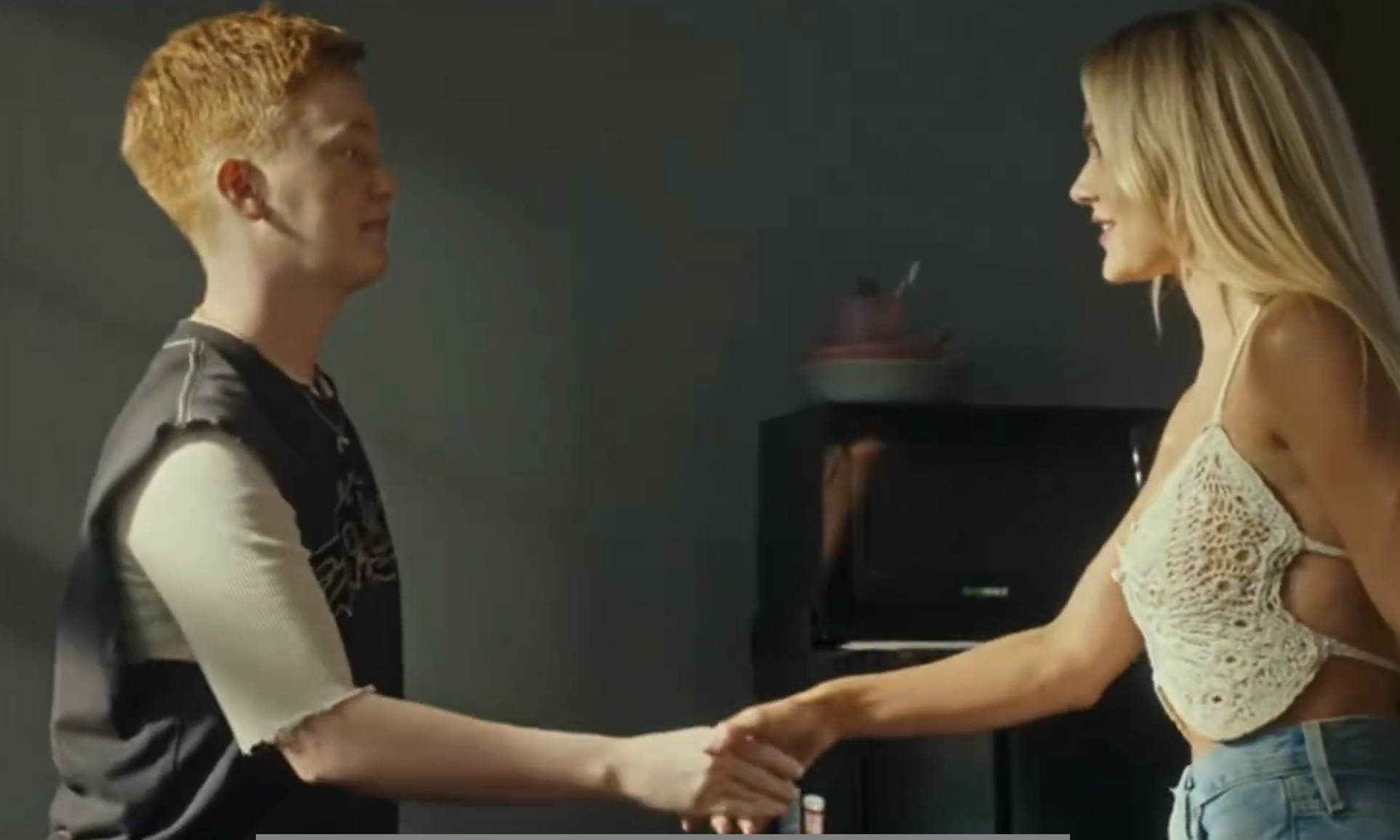
This is the spark. Ainsley, leaning in with a mix of genuine curiosity and subtle provocation, probes further. "You know I’ve always been curious. Why ‘they/them’? Because there’s just one of you, and those are plural pronouns. I just never really understood the hoopla with pronouns." The core of the conservative argument against singular "they" is thus voiced, not by a grizzled oilman, but by a seemingly apolitical college cheerleader.
The tension escalates as Paigyn lays down the rules of their shared space. The room is to be a "safe space," meticulously crafted to support Paigyn's mental health. This includes a litany of demands: no meat products in the room (Paigyn is vegan), no loud music, and no air freshener—a particularly irksome rule given that Paigyn reveals they own a pet ferret, which Ainsley mistakes for a weasel. Paigyn also declares certain words, like "penetrate," as "triggering" because of their connection to the patriarchy.
The exchange encapsulates a specific brand of generational conflict. Ainsley’s perspective is rooted in a world of observable facts and traditional social codes. Paigyn’s is based on internal identity and the need for external validation and accommodation. Ainsley later vents to her mother, articulating the core of the conflict from her point of view: "So she's telling me—they are telling me what to call them and all the things that they need to feel comfortable. But they're not asking what I need to feel comfortable." Her argument centers on a perceived lack of reciprocity and a challenge to the grammatical rules she takes for granted. The scene doesn't end with understanding or compromise. Instead, Ainsley is "rescued" by her mother, who uses her wealth and influence to bypass the problem entirely, a resolution that proved just as controversial as the initial debate.

The Characters: Oil Princess vs. Woke Caricature
To understand the scene's impact, one must understand who Ainsley and Paigyn represent, both within the show's narrative and in the broader culture.
Ainsley Norris is the quintessential Taylor Sheridan female archetype, filtered through the lens of Gen Z. She is the daughter of immense wealth and power, a product of the West Texas oil patch who has been shielded from most of life's hardships. As the Landman Wiki notes, her character is often seen as being defined by being "blonde and having a pretty face," yet the show has also established her as academically gifted enough to get into TCU, despite a comically awkward admissions interview.

She is direct, sometimes to the point of being tactless, but not overtly malicious. In the pronoun debate, she positions herself not as a bigot, but as a pragmatist questioning a social norm she finds illogical. "I don’t care what someone’s pronouns are," she claims, before adding the crucial qualifier: "But using a plural pronoun for one person is just kind of incorrect [according to] the English language." For a significant portion of the audience, Ainsley acts as their avatar—a stand-in for anyone who feels bewildered or put-upon by the "evolving nature of pronoun usage." Her character allows Sheridan to voice a culturally conservative viewpoint without having it come from a stereotypical "angry old man."
Paigyn Meester, on the other hand, is constructed as Ainsley's polar opposite. As Screen Rant described the character, Paigyn is "liberal, non-binary, assertive, put together, and wildly annoying in a very different way" from Ainsley. The character is an amalgamation of nearly every stereotype associated with "woke" youth culture, what Texas Monthly called a collection of trigger warnings and dietary restrictions stacked in a human shape." They are a vegan sports medicine major from Minneapolis who owns a ferret, meditates, and uses the language of therapy and social justice to control their environment. For many critics, Paigyn is not a person but a political effigy, a "scathing caricature" designed to be unlikable and to validate the frustrations of the show's target audience. This portrayal is complicated by the fact that the actor, Bobbi Salvör Menuez, is non-binary in real life, a casting choice that adds a complex layer of authenticity to what is otherwise seen as a deeply inauthentic character.
Taylor Sheridan's Cultural Commentary
This scene did not occur in a vacuum. It is quintessential Taylor Sheridan, a showrunner who has mastered the art of embedding politically charged commentary within his popular neo-Western dramas. His work, from Yellowstone to Landman, often operates with what Variety calls a "plausibly deniable, politically ambiguous MO." He creates characters who espouse conservative or libertarian viewpoints but frames them as pragmatic, common-sense reactions to a world gone mad.
Landman, co-created with Christian Wallace (whose podcast Boomtown inspired the series), has been particularly direct in its cultural commentary. Earlier in Season 2, the show took a swipe at the daytime talk show The View, a favorite target of conservative media. The pronoun scene is a direct escalation of this strategy, moving from a passing joke to a central plot point designed to ignite debate. Sheridan seems to delight in poking the bear of liberal sensibilities. As one commentator noted, "Sheridan knows the audience he's catering to. That couldn't be anymore obvious if he tried."

His approach often involves presenting a "traditional" worldview as being under siege by modern progressive norms. In Yellowstone, it's the ranching way of life threatened by developers and environmentalists. In Landman, it's the gritty, masculine world of the oil patch—and by extension, its associated cultural values—clashing with everything from renewable energy initiatives to, in this case, gender identity politics. Critics like the Los Angeles Times have accused Sheridan of embracing "fossil fuel propaganda" and creating boring television when he lets his "polemics" get in the way of his storytelling. Yet, for his massive audience, these polemics are a feature, not a bug. They feel seen and validated. The Paigyn scene is perhaps the most potent example of this strategy: creating a character so embodying a specific cultural caricature that the protagonist's rejection of them feels not just justified, but heroic.
The Viral Explosion: Two Americas, One Scene
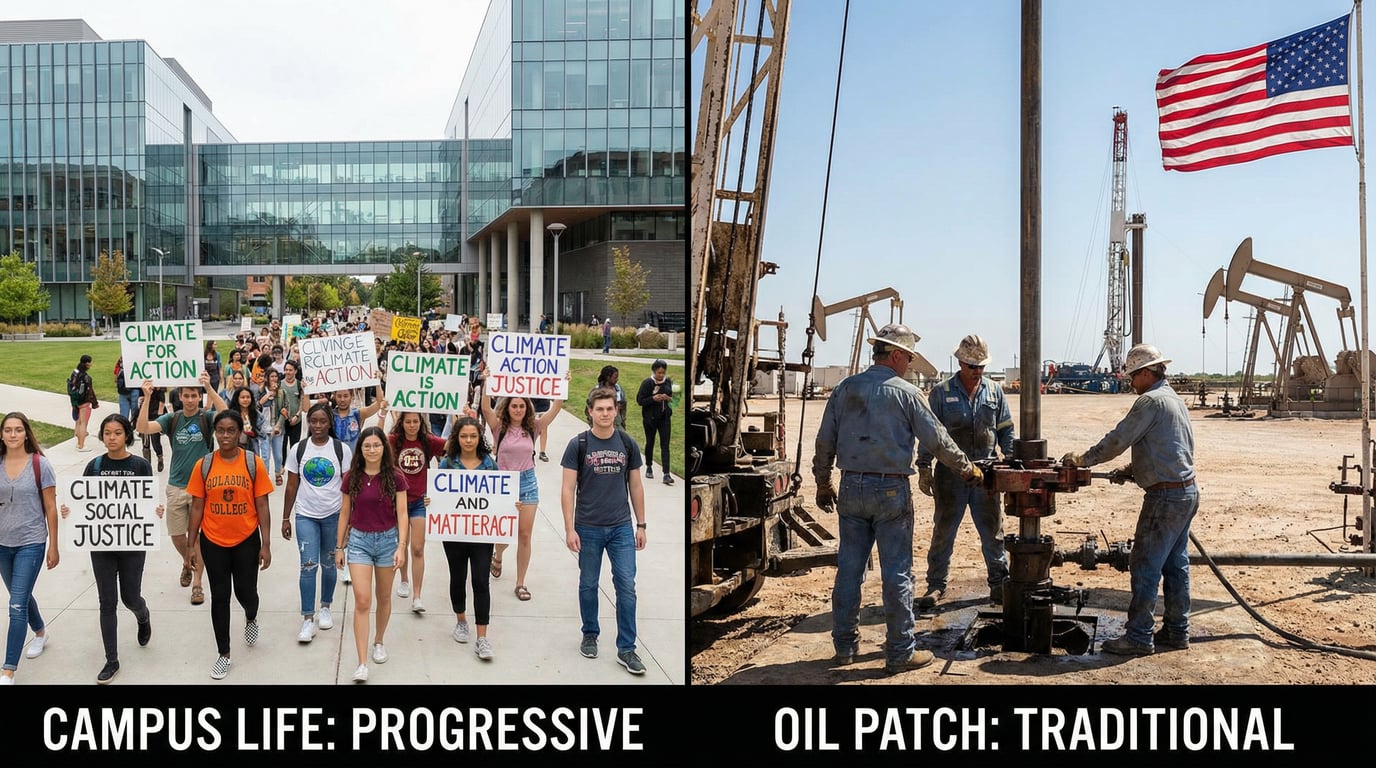
The online reaction to the scene was immediate and starkly divided, perfectly illustrating the cultural chasm in 21st-century America. The clip became a rallying cry for one side and a symbol of everything wrong with media for the other.
Conservative media and influencers seized upon it with glee. The X post from @RedWave_Press, viewed over 1.8 million times, set the dominant narrative: "Paramount’s Landman OBLITERATES the pronouns argument." citation The sentiment was that Ainsley, the "pretty blonde actress," had "politely schooled a liberal character" on basic grammar and common sense. For this segment of the audience, the scene was a cathartic release. A fan on X, quoted by Whiskey Riff, wrote, "Idk who watches the Landman series here, but the episode today with Ainsley’s dorm they/them roommate who came from MN was the epitome of todays actual screwed up society. Loved that it showcased what these morbid people are really like!!" Another user added, "Hollywood has made fun of Conservatives and Christians for years now… it’s nice to finally see the show on the other foot for once." This perspective saw the scene not as an attack, but as a long-overdue balancing of the scales.
Conversely, criticism was just as swift and fierce, particularly on platforms like Reddit. Many viewers found the portrayal of Paigyn to be so over-the-top that it broke their suspension of disbelief. "Paygin was just some sort of lib-bashing caricature that they dreamed up for no real reason," wrote one Reddit user. "I went to art school and maybe some people exist who have some of those traits but no one who has all of them on steroids." Others were simply exhausted by the culture-war theatrics, with one OutKick commenter noting, "Wait you guys actually watched Ainsley scenes at college? I fast forwarded right past lol." For these viewers, the scene was a cheap shot, a clumsy and uninspired foray into political commentary that detracted from the show's core narrative about the oil industry. It was seen as "pure rage bait," designed to provoke a reaction rather than tell a compelling story.
Critical Reception: "Messy Misfire" or Masterful Trolling?
Professional television critics were largely unimpressed with the subplot, many seeing it as a low point for the series. Screen Rant delivered one of the most scathing reviews, calling the episode an "egregious sophomore slump" and a "messy misfire." The review specifically targeted the Ainsley-Paigyn storyline as "forcefully antagonistic" and "politically charged," questioning why it took nine episodes to get Ainsley to a college setting only to have her leave immediately.
Vulture's recap found the storyline "unbearable," describing Paigyn as a "grumpy non-binary sports medicine student" and questioning the narrative logic of spending so much time on a temporary conflict. Scraps from the loft was even more dismissive, labeling the scene a "Fox News fever dream" and arguing that "Ridicule without curiosity produces propaganda, not comedy." The review concluded that Paigyn was a "type, not a person," existing solely to be insufferable.
This critical consensus highlights a disconnect between the show's creators and the traditional arbiters of television quality. While critics looked for nuanced character development and coherent storytelling, Sheridan appeared more interested in landing a cultural punch. The negative reviews did little to dampen the enthusiasm of the show's core audience, who saw the critics' disdain as further proof that Sheridan was "one of them," someone willing to speak uncomfortable truths that the coastal elite would rather ignore. The critical panning, in a way, only amplified the scene's success within its intended demographic.
The Privilege Question: When Money Solves Everything
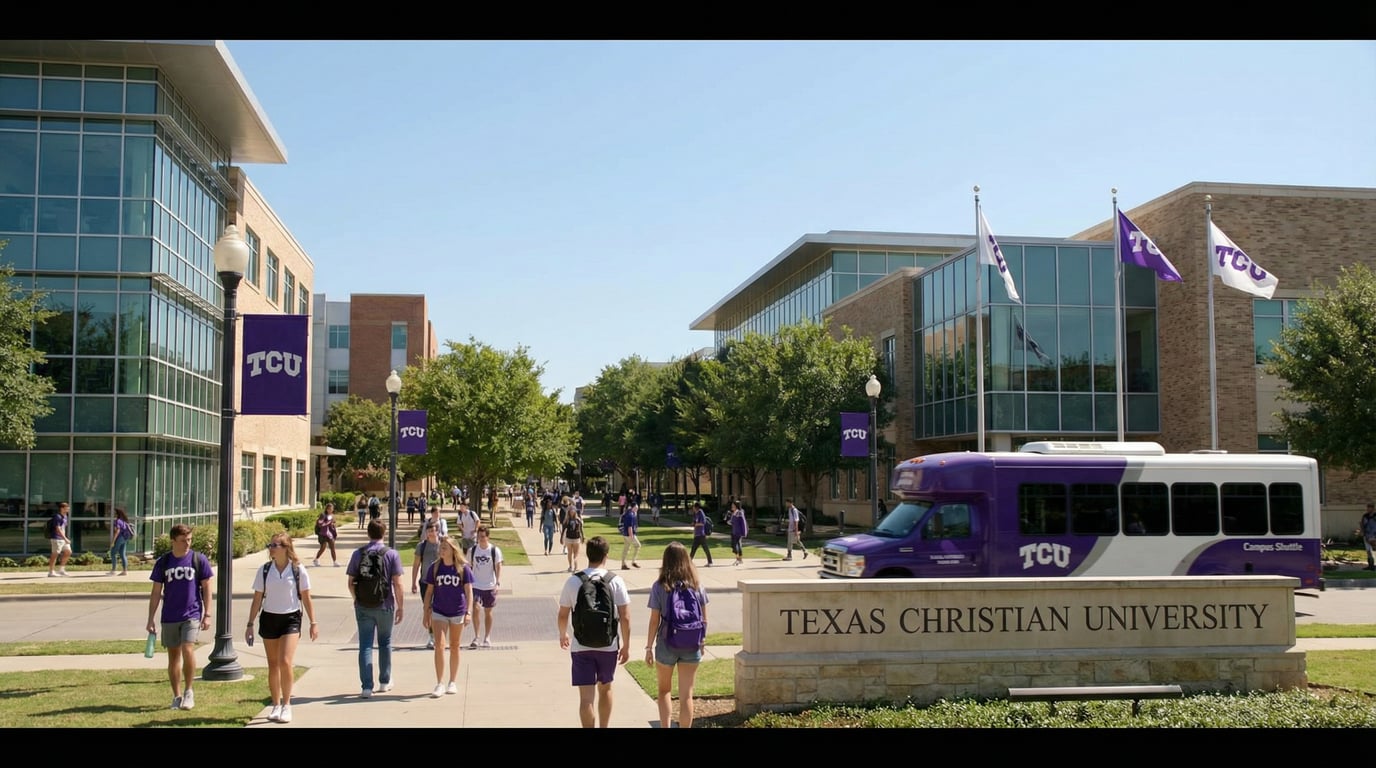
Perhaps the most telling aspect of the entire storyline was its resolution. The conflict is not resolved through dialogue, empathy, or personal growth. Ainsley doesn't learn to coexist with someone different, nor does Paigyn soften their rigid demands. Instead, the problem is simply erased with money and influence.
After her frustrating encounter, Ainsley calls her mother, Angela (Ali Larter). In a move that defines the Norris family ethos, Angela sweeps into action. She confronts the university housing advisor, Greta Stidham, and when told that no other housing is available, she fabricates a medical reason—"allergies"—to get a waiver for Ainsley to live off-campus. Ainsley is promptly moved into a luxurious suite at a fancy hotel, where she invites the entire cheer team to lounge by the rooftop pool. "This is what college should be like," Ainsley declares, basking in her restored comfort.
This resolution is deeply revealing. It underscores the immense privilege that shields the Norris family from the kinds of everyday friction and compromise most people face. For them, a difficult roommate isn't a character-building challenge; it's an inconvenience to be eliminated. The message, whether intentional or not, is that wealth is the ultimate "safe space." This narrative choice was criticized by some as a missed opportunity for character development. As Screen Rant noted, the subplot reinforces that "Ainsley is a spoiled brat who isn't used to not getting her way."
Angela’s parting shot at Paigyn, delivered to Ainsley by the hotel pool, is equally telling: "She just doesn't like herself. Instead of fixing the things she doesn't like, she blames it on everyone else." This line serves as the show's final judgment on Paigyn, reducing their identity and beliefs to a simple case of self-loathing. It's a psychologically simplistic and dismissive diagnosis that absolves Ainsley of any need for introspection.
Representation vs. Caricature: The "Tragic Queer" Trope
The portrayal of Paigyn, Landman's first and only non-binary character, raises significant questions about the nature of representation in media. Was this a good-faith, if clumsy, attempt to introduce an LGBTQ+ character, or was it a deliberate act of creating a strawman for the protagonist to knock down?
Critics like CBR argued that the storyline leaned heavily on the harmful "tragic queer" stereotype, a trope where LGBTQ+ characters are depicted as unhappy, resentful, and ultimately denied a happy ending, often to further the story of a straight protagonist. Paigyn is not presented as a well-rounded individual who happens to be non-binary; their entire personality is a checklist of negative stereotypes associated with progressive youth. They are joyless, demanding, and passive-aggressive. The narrative "punishes" them by having Ainsley abandon them, reinforcing the idea that their identity and beliefs lead to isolation.
The casting of Bobbi Salvör Menuez, a non-binary actor, adds a fascinating and complicated dimension. On one hand, it can be seen as a progressive step, providing a role for a gender-nonconforming performer. On the other hand, it places the actor in the uncomfortable position of embodying a deeply unflattering caricature of their own community. It blurs the line between representation and exploitation. Is the show giving a platform to a non-binary actor, or is it using their identity to lend a veneer of authenticity to a scene that is fundamentally hostile to that identity?
For many LGBTQ+ viewers and allies, the portrayal was a significant step backward. Instead of fostering understanding, the scene appeared designed to sow division and ridicule. By making its sole non-binary character an insufferable antagonist, the show sends a powerful message about the validity and social acceptability of that identity. It confirms the biases of a skeptical audience rather than challenging them, which may be good for ratings but is damaging to the cause of authentic representation.
Conclusion: A Cultural Touchstone
The Landman pronoun scene will be remembered as a defining moment for the series and a perfect encapsulation of the American culture war in the mid-2020s. As a piece of television craftsmanship, it was widely seen by critics as a failure—a clunky, unsubtle, and narratively pointless detour. It sacrificed character depth and believable conflict for a cheap political shot.
However, as a piece of cultural communication, it was a resounding success for its target demographic. It "owned the libs" in a way rarely seen in mainstream scripted television, providing a moment of catharsis for an audience that feels increasingly alienated by modern social norms. Taylor Sheridan proved once again that he has an uncanny understanding of the cultural resentments simmering in a large part of the country and knows exactly how to translate them into viral, must-see TV.
In the end, the scene accomplished what it likely set out to do: it generated enormous buzz, delighted its base, and enraged its detractors. But it did so at a cost. It flattened a complex issue into a simple binary of common sense vs. absurdity. It chose caricature over character, and propaganda over art. It reinforced the idea that the answer to cultural friction is not empathy or understanding, but withdrawal and insulation, provided you have the money to afford it.
The legacy of the scene is therefore a dual one. It stands as a monument to Taylor Sheridan's commercial instincts and his finger-on-the-pulse connection with his audience. But it also serves as a cautionary tale about the dangers of television that seeks to fight cultural battles rather than explore the human condition. In a nation already fractured by division, Landman chose to pour gasoline on the fire, and while the spectacle was certainly bright, the landscape it left behind was more scorched than illuminated.