Bella Morrell
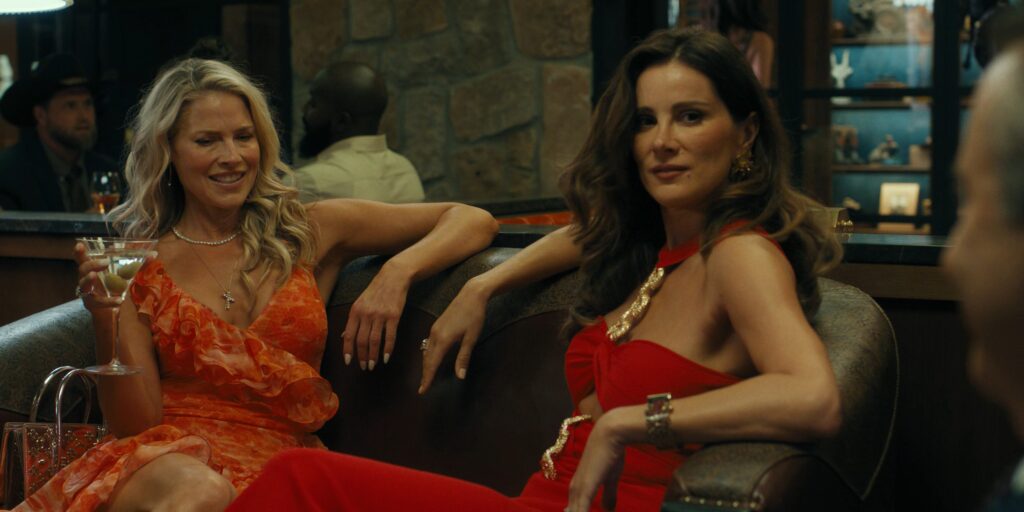
Character Overview
Bella Morrell is the elegant Italian wife of cartel boss Gallino, portrayed by Stefania Spampinato (best known as Dr. Carina DeLuca from Grey's Anatomy) in Landman Season 2. Sophisticated, charming, and deeply embedded in her husband's criminal empire, Bella humanizes the cartel leader while adding a layer of European refinement to West Texas's brutal oil-and-drugs underworld. Her surname's connection to Cooper Norris's alias "Dan Morrell" hints at dangerous secrets linking the Norris family to cartel operations.
Biography
Bella Morrell enters Landman Season 2 as the kind of character who makes everyone nervous precisely because she seems so normal. Portrayed by Stefania Spampinato—beloved by millions for playing Dr. Carina DeLuca in Grey's Anatomy and Station 19—Bella is the elegant, sophisticated Italian wife of Danny "Gallino" Morrell, the Cuban-American cartel leader who spared Tommy Norris from torture in Season 1's finale. While Gallino represents raw cartel power and calculated violence, Bella represents something equally dangerous: the civilized face of organized crime, the person who makes brutality seem reasonable and murder seem like business necessity.
Bella and Gallino appear in Season 2 as a couple who seamlessly blend into respectable West Texas society. They charm Angela Norris and Cami Miller—two women who've spent Season 1 navigating the oil industry's moral compromises and now find themselves socializing with actual cartel operators without fully understanding who they're dealing with. This is Bella's specialty: making her husband's criminal empire invisible by wrapping it in European sophistication, old-world charm, and the performance of legitimate business.
The Morrell surname creates immediate intrigue for viewers who remember Season 1's revelations. Cooper Norris, Tommy's son, has been secretly partnering with Gallino to finance his drilling operations through a shell company called Sonrisa, using the alias "Dan Morrell." Now Gallino appears with a wife named Bella Morrell. This isn't coincidence—it's strategic identity construction. The Morrell name gives Gallino's operations legitimate-sounding cover, allows Cooper to hide his cartel partnership from his family, and creates plausible deniability for transactions that can't withstand legal scrutiny.
Bella's role in this arrangement remains deliberately ambiguous. Is she an active participant in the cartel's oil industry infiltration, helping her husband expand into energy sector money laundering? Is she the respectable front that legitimizes Danny's presence in West Texas business circles? Or is she something more complex—a woman who knows exactly what her husband does but maintains willful ignorance to preserve the comfortable life his violence provides? Taylor Sheridan rarely gives simple answers, and Bella likely occupies all these spaces simultaneously.
Stefania Spampinato: From Seattle Medicine to West Texas Cartels
Casting Stefania Spampinato as Bella Morrell is brilliant precisely because audiences know and love her from Grey's Anatomy, where she played Dr. Carina DeLuca—a compassionate OB-GYN, bisexual icon, and beloved character whose romance with firefighter Maya Bishop became one of television's most celebrated LGBTQ+ relationships. Spampinato spent years portraying someone fundamentally good, ethical, and committed to saving lives. Now she plays the wife of a cartel boss responsible for countless deaths. The cognitive dissonance is intentional and effective.
Spampinato was born in Catania, Sicily, on July 17, 1982, and her Italian heritage makes her perfect for Bella. She didn't just study acting—she trained extensively in dance, spending over a decade performing internationally in Paris, Tokyo, Shanghai, Mumbai, and Berlin, collaborating with stars like Joaquin Cortez, Kylie Minogue, and Leona Lewis. This background gives her physical grace and performance sophistication that Bella requires. The character isn't just Italian; she embodies a specific kind of European elegance that stands in stark contrast to West Texas's rough-edged oil culture.
Spampinato moved to Los Angeles in 2011 to pursue acting seriously, landing roles in Glee and Satisfaction before joining Grey's Anatomy in 2017. Her character Carina became so popular that she transitioned to series regular and crossed over to Station 19, where she remained until the show concluded in 2024. Along the way, she appeared in James Mangold's Oscar-winning Ford vs Ferrari, starred in the Italian comedy Il Giorno più bello del mondo (2019), and made her directorial debut with Zita Sempri at the 2022 Taormina Film Festival. She also directed a critically acclaimed Station 19 episode, demonstrating creative range beyond acting.
What makes Spampinato compelling in this role is her ability to convey warmth and danger simultaneously. Carina DeLuca was warm, passionate, emotionally open—qualities that made audiences love her. Bella needs those same qualities to charm Angela and Cami, to make cartel association seem harmless, to disguise criminal intent behind genuine-seeming friendship. But Spampinato must also suggest the steel beneath the elegance—the woman who knows her husband's business involves murder and chooses to stay anyway, who understands that charm is a weapon as effective as violence when deployed strategically.
The Morrell Name: Identity, Deception, and Family
The surname Morrell functions as a through-line connecting multiple Season 2 storylines. Cooper uses "Dan Morrell" as his business alias when partnering with Gallino, believing this protects his family from discovering his cartel involvement. But if Gallino's actual surname is Morrell—or if he adopted it specifically for his West Texas operations—then Cooper's "clever" alias actually binds him more visibly to cartel operations rather than hiding the connection.
This creates fascinating possibilities. Did Gallino suggest the Morrell name to Cooper, making the younger man think it was random when it actually served cartel purposes? Does using the Morrell name legally entangle Cooper in shell companies and financial arrangements that could implicate him if authorities investigate? Is Bella's presence as "Mrs. Morrell" a message to Cooper—a reminder that he's now family in ways he didn't anticipate and can't escape?
The family theme matters because organized crime operates on family logic. Gallino isn't just Cooper's business partner; he's positioning himself as quasi-paternal figure—providing capital Cooper's actual father can't or won't supply, teaching him the oil business through cartel-funded operations, and potentially offering the acceptance and respect Cooper desperately craves. Bella's role as Gallino's wife reinforces this family structure. She's not just Danny's spouse; she's the matriarch of an organization Cooper has unwittingly joined.
This complicates how Tommy Norris must eventually respond. When he discovers Cooper's partnership (and he will—secrets never last in Sheridan's shows), he won't just be dealing with his son's poor judgment or financial desperation. He'll be navigating a situation where a cartel boss sees Cooper as quasi-family, where Bella has been charming Angela and Cami while her husband funds operations that could get Cooper killed or imprisoned, and where the Morrell name legally connects multiple parties in ways designed to make extraction nearly impossible.
Bella's Strategic Role: Charm as Cover
Bella's primary function in Gallino's operation is making the cartel seem non-threatening. When she and Danny socialize with Angela and Cami, they present as successful international business people—perhaps oil investors, maybe import-export entrepreneurs, definitely wealthy and cultured. Bella's Italian heritage provides perfect cover: she can be the cosmopolitan European wife of a Cuban-American businessman expanding into Texas energy markets. Nothing about this story raises immediate red flags.
This social integration serves multiple criminal purposes. First, it provides cover for money laundering—cartel cash "invested" in legitimate oil operations gets cleaned through drilling revenues, equipment purchases, and operational expenses. Second, it creates relationship leverage. If Angela and Cami consider Bella and Danny friends, they're less likely to ask uncomfortable questions about financing sources or business backgrounds. Third, it positions the cartel inside West Texas's social networks, where business deals happen through relationships rather than formal processes.
Bella likely excels at this work because she's genuinely charming, not performing charm cynically. She probably does like Angela and Cami as people. She probably enjoys their company and finds aspects of their lives interesting. But she also knows her husband's business requires Texas connections, that maintaining those connections protects both their financial interests and physical safety, and that female friendships provide access male business relationships can't replicate.
This dual consciousness—genuine affection coexisting with strategic manipulation—makes Bella more complex than simple villain. She's not pretending to be nice while secretly hating everyone. She's actually nice, actually capable of real friendship, actually interested in the people she meets. But those authentic qualities serve criminal purposes, and she's aware of and comfortable with that instrumentality. It's a kind of moral compartmentalization common among people embedded in organized crime: authentic human connection and ruthless business calculation existing simultaneously without contradiction.
Italian Identity and Cultural Contrast
Bella's Italian heritage creates interesting cultural dynamics in West Texas. Italy carries associations with sophistication, culture, history—things West Texas oil country generally lacks and sometimes resents. When Bella speaks with an Italian accent, references European customs, or approaches situations with old-world sensibility, she embodies everything the Norris family's working-class pragmatism distrusts about "fancy" educated cosmopolitanism.
But Bella also represents a culture where family loyalty is absolute, where certain kinds of violence are understood as necessary, and where business and crime have blurred boundaries for generations. Southern Italian organized crime (Cosa Nostra, 'Ndrangheta, Camorra) pioneered many of the structures modern cartels still use. If Bella comes from that cultural tradition—and Spampinato's Sicilian birthplace suggests she might—then her marriage to a Cuban-American cartel boss makes perfect sense. They share understanding that family comes first, that certain business requires violence, and that law is something to navigate rather than obey.
This cultural background also explains potential emotional complexity. Women in Italian organized crime families often navigate impossible positions—loving husbands and fathers who are also murderers, raising children in criminal environments while trying to protect them from worst consequences, maintaining respectable social facades while knowing the family fortune comes from drug trafficking, extortion, or worse. Bella likely carries similar contradictions: genuine affection for Danny alongside awareness of his brutality, desire for security and comfort paid for by suffering she doesn't directly witness, and strategic use of feminine charm to protect a lifestyle built on violence.
Spampinato's Sicilian heritage and ability to embody Italian cultural authenticity makes these layers believable. She's not playing "generic European sophisticate"—she's playing someone with specific cultural background that shapes how Bella navigates cartel life, marriage, and relationships with American women who don't understand the world she comes from.
The Angela and Cami Connections
Bella's relationships with Angela and Cami will likely drive significant Season 2 drama. Angela is Tommy's ex-wife, trying to provide her children with stability and normalcy despite their father's dangerous profession and the oil industry's moral compromises. Cami is Monty's widow, now running M-Tex Oil and navigating corporate politics, legal challenges, and personal grief. Neither woman has experience with actual organized crime, though both have dealt with industry corruption and violence.
When Bella and Danny charm these women—inviting them to dinners, discussing business opportunities, offering friendship and social connection—Angela and Cami probably don't recognize what's happening. They see successful international couple who seem interested in Texas oil markets. They appreciate Bella's sophistication, her genuine warmth, her ability to discuss culture and family alongside business. They might see her as friend and ally in male-dominated industry.
The dramatic tension comes from the audience knowing what Angela and Cami don't: Bella's husband is financing Cooper's operations through cartel money, creating legal and physical danger for the entire Norris family. Every pleasant conversation, every friendly dinner, every moment of genuine connection between Bella and these women deepens their unwitting entanglement in criminal operations. When the truth emerges—and it will—the betrayal will be both professional and personal.
But the complexity comes from Bella's perspective. Does she feel guilty befriending women her husband's operations endanger? Or does she see this as business necessity, separating personal feelings from professional requirements? Does she warn them subtly, dropping hints they don't recognize? Or does she maintain plausible deniability, telling herself she's not responsible for what Danny does and therefore owes no explanations?
Taylor Sheridan specializes in these moral gray zones where likable people do terrible things and terrible people demonstrate genuine humanity. Bella will likely occupy that space—charming enough that audiences like her despite knowing she's complicit in cartel operations, sympathetic enough that her motivations make sense, but dangerous enough that her presence creates constant tension.
Season 2 Trajectory and Long-Term Role
Bella's recurring status suggests ongoing importance beyond introduction scenes. Possible developments include:
**The Morrell Revelation**: When Tommy or Angela discovers Cooper's partnership with Gallino, the Morrell name connection will become crucial. Bella's presence as "Mrs. Morrell" might be what makes Tommy realize the scope of Cooper's entanglement—this isn't just a business deal, it's embedding Cooper in a criminal family structure.
**Cartel Escalation**: If Gallino's cartel operations in West Texas escalate or come under law enforcement pressure, Bella might face choices about loyalty versus self-preservation. Does she stand by Danny regardless of consequences? Does she leverage her Italian connections for escape routes? Does she try protecting people she's befriended even when it conflicts with cartel interests?
**Family Complications**: If Bella and Danny have children or family members, that adds layers. Does Bella have children from Danny or a previous relationship? How does she navigate motherhood while being married to a cartel boss? Do family obligations ever conflict with criminal business requirements?
**Cultural Mediator**: Bella might serve as bridge between Danny's Cuban-American cartel culture and West Texas oil culture, helping her husband understand social dynamics and business customs that differ from his criminal background. This would make her strategically essential, not just decorative spouse.
**Moral Reckoning**: The most interesting possibility is Bella experiencing genuine moral conflict. Maybe she develops real friendship with Angela or Cami that makes her uncomfortable with her husband's operations affecting them. Maybe she sees Cooper—young, desperate for approval, in over his head—and recognizes the pattern of how cartels recruit and destroy young men. Maybe her conscience, long suppressed by material comfort and willful ignorance, finally awakens when faced with specific human consequences.
Whether Bella grows, breaks, or doubles down on cartel loyalty will determine if she becomes a tragic figure, a villain, or something more complex. Spampinato's dramatic range—demonstrated across eight seasons of Grey's Anatomy and Station 19—suggests she can handle any direction the character takes.
Representation: Women in Organized Crime
Bella represents a character type television often simplifies: the cartel wife. She's not just arm candy or victim or secret mastermind—she's a complex figure who chose this life (or had it chosen for her by family circumstance) and now navigates its contradictions daily. This matters for representation because women in organized crime families face unique pressures that simplistic portrayals miss.
Bella likely understands that leaving Danny isn't really an option. Cartel wives who divorce or defect often face violence—from their ex-husbands, from rival cartels seeing vulnerability, from authorities offering witness protection that means abandoning family and identity forever. Staying means accepting moral compromises, living with violence peripherally, and using charm and social skills as survival tools. It's a constrained agency: real choices within fundamentally limited options.
Spampinato's portrayal will determine whether Bella becomes humanized beyond stereotype. Can she show us a woman who genuinely loves her criminal husband while recognizing his monstrosity? Can she navigate real friendship with women she's partially deceiving without making the deception feel cartoon villainy? Can she suggest an interior life—regrets, rationalizations, moral negotiations—that makes her comprehensible even when her choices are indefensible?
The Italian immigrant dimension adds further complexity. If Bella comes from organized crime culture, marrying Danny might have been strategic alliance between families, not romance. She might have grown to love him, or she might maintain dutiful partnership without passion. Her immigrant status—even as wealthy European rather than desperate refugee—creates vulnerability: deportation risk if criminal connections surface, isolation from family back home, dependence on Danny's protection and resources in a foreign country.
These layers make Bella potentially one of Landman's most intriguing characters—a woman whose surface elegance conceals complicated realities about gender, crime, immigration, marriage, and moral compromise. Whether the show develops that potential or reduces her to decorative mob wife remains to be seen, but Spampinato's casting and her character's recurring status suggest Sheridan recognizes the dramatic possibilities.
Personality
Bella Morrell's personality is defined by strategic duality—the ability to be simultaneously authentic and calculated, genuinely warm while serving ulterior purposes, truly kind yet complicit in violence. This isn't hypocrisy or performance; it's the sophisticated compartmentalization of someone who's learned to navigate organized crime culture where human connection and ruthless business coexist without contradiction.
Her warmth is real. When Bella charms Angela and Cami, expresses interest in their lives, or shares aspects of Italian culture, she's not faking enthusiasm. She actually enjoys meeting new people, finds cross-cultural exchange genuinely interesting, and possesses natural social grace that makes others comfortable. But this authentic warmth serves strategic purposes—building relationships her husband's operations require, creating social cover for criminal business, and establishing trust that could prove useful later. Both things are simultaneously true: Bella genuinely likes these women AND is cultivating them for cartel purposes.
This duality requires extraordinary emotional intelligence and self-control. Bella must track multiple narratives simultaneously—what she actually knows, what she pretends to know, what Danny has told different people, what story they're selling to Texas society. She must modulate her reactions: show appropriate surprise at news she already heard from Danny, express convincing ignorance about business dealings she helped plan, and maintain plausible deniability while signaling to her husband through subtle cues that she understands exactly what's happening. It's like playing three-dimensional chess while making it look like casual conversation.
**Old-World Sensibility Meets New-World Ruthlessness**
Bella embodies a specific kind of European sophistication shaped by Italian cultural values and organized crime realities. She likely grew up understanding that family loyalty transcends law, that certain kinds of violence are regrettable necessities, and that maintaining respectable facades protects family interests more effectively than open criminality. This cultural background makes her perfect partner for Gallino's operations: she intuitively grasps the performance aspects of criminal legitimacy.
Her old-world sensibility manifests in how she navigates social situations. She probably has exquisite manners, appreciation for art and culture, ability to discuss wine or cuisine with genuine knowledge, and social polish that comes from European upbringing emphasizing these refinements. But she wields these qualities strategically. When she discusses Italian culture with Angela, she's bonding through shared femininity and creating narrative where she and Danny are cultured internationals, not criminal operators.
This European identity also creates cultural distance from American middle-class morality. Bella likely doesn't share American faith in law enforcement legitimacy or government institutions. From Italian perspective (especially Southern Italian experience with Mafia states), official power and criminal power are competing forces, neither particularly moral, both requiring navigation. This worldview makes her comfortable with Danny's operations in ways American women raised trusting institutional authority might struggle with.
**The Calculation Beneath the Charm**
Bella's charm, while genuine, is always purposeful. She likely assesses every social interaction strategically: What does this person know? What might they suspect? How can this relationship serve our interests? What vulnerabilities can I identify for future leverage? This isn't paranoia—it's survival consciousness developed through years of life where carelessness means death or imprisonment.
This calculated awareness extends to self-presentation. Bella probably curates everything—her wardrobe choices signal wealth without ostentation, her accent remains charmingly Italian without being incomprehensible, her knowledge displays sophistication without intimidating less-educated company. She's performing "respectable cosmopolitan wife" precisely because that performance protects her husband and, by extension, herself. The performance being calculated doesn't make it fake; it makes it professional.
But calculation has costs. Bella likely experiences loneliness—the isolation of never fully relaxing, never having friendships where she can be completely honest, never sharing her full reality with anyone except Danny. Does she have genuine friends who know what her husband does and accept it? Or does every relationship exist partly in service to business, making authentic connection impossible? This loneliness might be her most profound vulnerability.
**Loyalty and Its Limits**
Bella's loyalty to Danny appears absolute, but loyalty always has boundaries—the question is where Bella draws hers. She probably accepts that her husband orders violence, launders money, and runs criminal operations. She's married to a cartel boss; these aren't surprises. But does she have lines? Are there things Danny could do that would break her loyalty—killing innocent children, betraying family, or putting her at unacceptable risk?
Her loyalty likely stems from multiple sources beyond simple love. There's practical dependency: her lifestyle, security, and social position derive from Danny's criminal success. There's cultural conditioning: if she grew up in organized crime culture, leaving your husband—especially to cooperate with authorities—represents ultimate betrayal. There's genuine partnership: she and Danny probably make decisions together, function as team, and share understanding of their world that outsiders can't comprehend.
But loyalty doesn't mean blindness. Bella likely sees Danny's flaws, recognizes his capacity for cruelty, and maintains realistic assessment of the violence he's capable of. She's chosen to stay anyway, which is different from not knowing. This choice requires continuous moral negotiation—rationalizing his actions, compartmentalizing her knowledge, and maintaining narrative where their life together makes sense despite its criminal foundation.
**Maternal Instinct and Moral Ambiguity**
If Bella has children (or wants them), that adds profound moral complexity. How does she reconcile being a good mother with being married to someone whose business destroys families? If her children grow up in cartel culture, does she try protecting them from knowing what their father does, or does she prepare them to inherit the family business? Does she rationalize that providing material security and loving parenting compensates for moral compromises?
Even without children, Bella might display maternal instincts toward younger people in their orbit. When she encounters Cooper—young, eager, clearly in over his head with Danny's cartel—does she see him as business asset or recognize him as someone's son being drawn into a life that could destroy him? Does she feel protective? Guilty? Responsible? Or does she maintain emotional distance, seeing him as Danny's concern rather than hers?
These maternal feelings, if they exist, create potential for growth or moral reckoning. Maybe Bella can rationalize her husband's business abstractly but struggles when faced with specific young person being corrupted. Maybe she sees Angela's worry about Cooper and recognizes the maternal fear Bella herself would feel if her own children faced similar dangers. These connections could humanize her beyond cartel operations, showing the woman behind the sophisticated performance.
**The Weight of Knowledge**
Bella carries heavy knowledge: she knows Danny orders murders, knows their money comes from drug trafficking and violence, knows that people like Cooper are being ensnared in operations designed to exploit and control them. Living with this knowledge while maintaining charming, normal facade requires extraordinary psychological compartmentalization.
This burden likely manifests in ways Bella doesn't fully acknowledge. Maybe she drinks more than healthy. Maybe she has difficulty sleeping. Maybe she throws herself into cultural pursuits—art collecting, opera, Italian cultural preservation—that provide meaning beyond criminal context. Maybe she has deeply Catholic faith that offers confession and forgiveness even while she continues participating in the life that generates sins to confess. These coping mechanisms would make her recognizable, sympathetic, human.
The question is whether this weight ever becomes unbearable. Does Bella hit breaking point where moral compromises accumulate into something she can't rationalize anymore? Or has she developed such effective compartmentalization that the weight no longer registers? Taylor Sheridan's characters typically face reckoning—the moment when accumulated sins demand accounting and comfortable rationalizations collapse. Whether and when Bella faces hers will determine her ultimate trajectory.
Memorable Quotes
"In Italy, we understand that family comes first—always."
"My husband is a businessman. What he does, he does for us."
"You Americans think everything is so simple. Black, white. Good, bad. Life is more complicated."
"Danny protects what's his. That includes me."
"The oil business and our business—they're not so different, no?"
Key Relationships
- Gallino (husband)
- Cooper Norris (connected through Morrell name)
- Angela Norris (acquaintance)
- Cami Miller (acquaintance)
- Tommy Norris (indirect)
Character Analysis
Bella Morrell represents a crucial element in Taylor Sheridan's exploration of the modern American oil industry. Through Stefania Spampinato's nuanced performance, the character embodies the complexities and contradictions inherent in this high-stakes world.
The character's role as gallino's italian wife provides insight into the various layers of the oil business, from the personal relationships that drive decision-making to the broader economic and environmental implications of the industry.
🎬 Behind the Scenes
- Stefania Spampinato is best known for playing Dr. Carina DeLuca in Grey's Anatomy (2017-2024) and Station 19 (2020-2024)
- Born in Catania, Sicily on July 17, 1982, Spampinato brings authentic Italian heritage to Bella's character
- She trained extensively in dance for over 10 years, performing internationally with stars like Joaquin Cortez, Kylie Minogue, and Leona Lewis
- Bella shares the surname "Morrell" with Cooper Norris's alias "Dan Morrell," suggesting deliberate cartel strategy
- Spampinato moved to Los Angeles in 2011 specifically to pursue acting after a decade-long international dance career
- Her character Dr. Carina DeLuca became a beloved LGBTQ+ icon through her relationship with Maya Bishop (Station 19)
- Bella and Gallino charm Angela Norris and Cami Miller, embedding the cartel in West Texas social circles
- Spampinato appeared in the Oscar-winning film Ford vs Ferrari (2019) starring Matt Damon and Christian Bale
- She made her directorial debut with Zita Sempri at the 2022 Taormina Film Festival
- Spampinato also directed a critically acclaimed Station 19 episode titled "Trouble Man"
- Bella represents the "cartel queen" archetype—sophisticated, charming, and deeply complicit in her husband's criminal empire
- The character adds a layer of European sophistication to Landman's brutal West Texas oil-and-drugs underworld
- Gallino is described as a Cuban-American cartel leader who poses as a financial investor
- Bella's Italian background creates cultural contrast with West Texas oil country pragmatism
- Spampinato starred in the Italian comedy Il Giorno più bello del mondo (2019)
- The casting of Spampinato—known for playing a compassionate doctor—as a cartel wife creates deliberate cognitive dissonance
Series Information
Bella Morrell appears as a recurring character throughout the series, playing a vital role in the unfolding drama of the Texas oil industry.