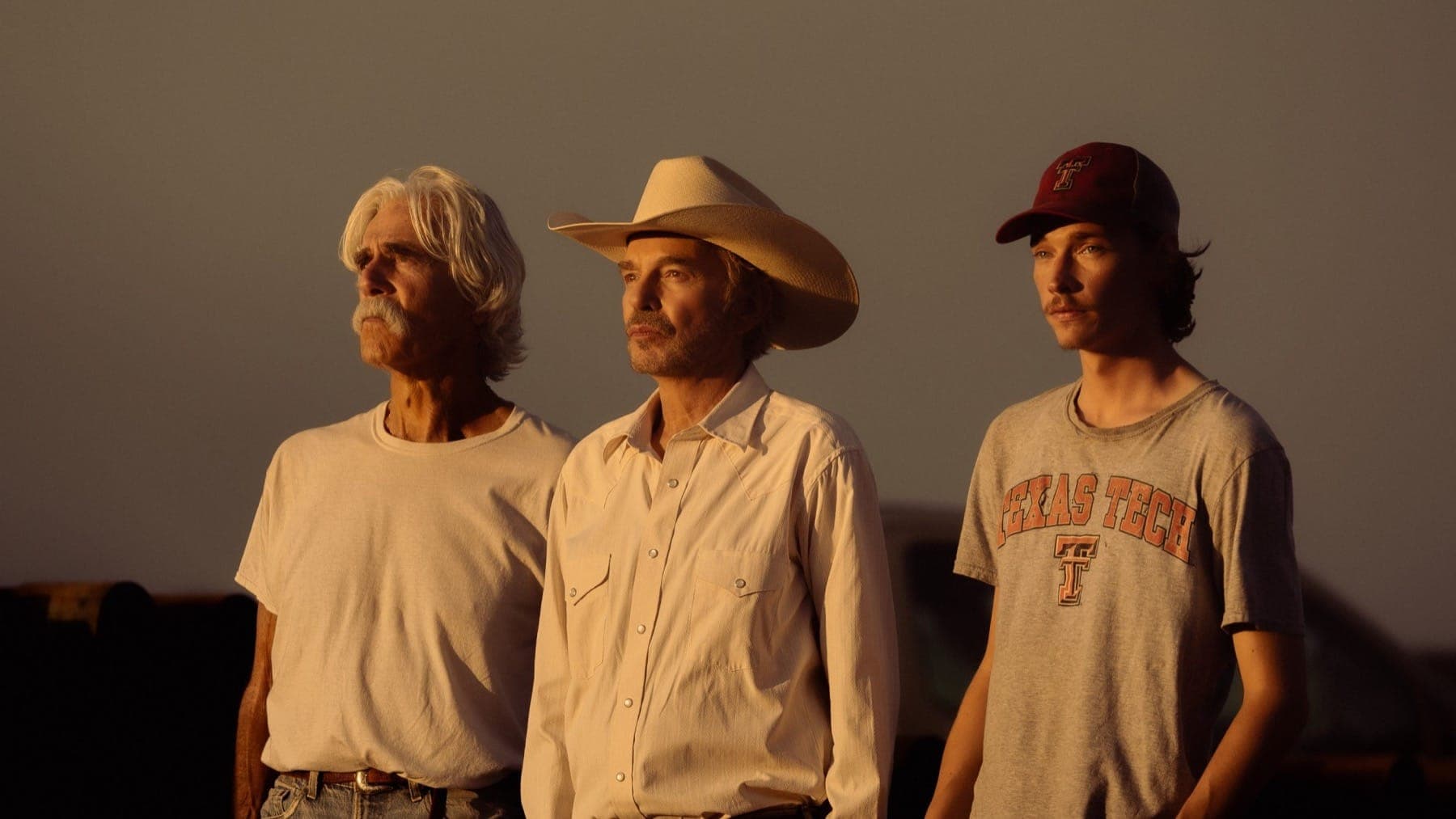
Boss
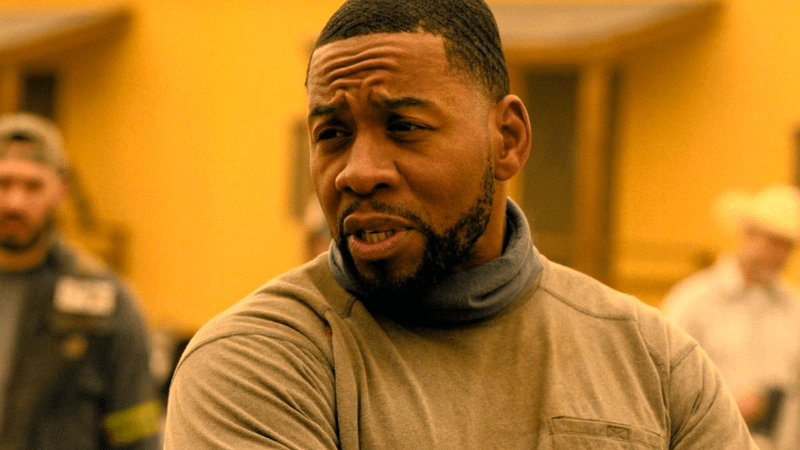
Character Overview
Mustafa Speaks portrays Boss, the toughest roughneck on the crew. True to his name, he commands absolute respect on the rig. More than just muscle, Boss is defined by his fierce loyalty to his team, serving as a protective figure in a profession where a single mistake can be fatal.
Biography
Boss, intensely portrayed by Mustafa Speaks in Taylor Sheridan's *Landman*, is the undisputed king of the drill floor. While executives like Monty Miller plot billions in boardrooms, and crisis managers like Tommy Norris navigate legal and cartel nightmares, Boss is the man standing on the iron, directly responsible for wrestling the oil out of the Texas dirt. He is the veteran crew chief, the alpha dog of the roughnecks, and the ground-level enforcer who ensures that the highly engineered drilling plans conceived by Dale Bradley are actually executed under the most brutal physical conditions imaginable.
In the highly stratified world of the Permian Basin, Boss is a legend. His moniker isn't just a nickname; it is a title earned through blood, sweat, and decades of surviving an industry that routinely maims and kills its labor force. Boss manages the most physically demanding, dangerous, and exhausting piece of the M-Tex Oil operation: the rig floor. He oversees the roughnecks, the derrickmen, the motormen, and the "worm" (new recruits like young Cooper Norris). His job is to keep the drill bit turning 24 hours a day, through blistering Texas heatwaves, freezing desert nights, and sandstorms that strip the paint off trucks, all while ensuring his crew doesn't get crushed by swinging iron or incinerated by a blowout.
Boss's relationship with Tommy Norris is built on an unspoken foundation of immense mutual respect. Tommy is nominally Boss's superior, acting as the VP of Operations, but Tommy implicitly understands that once you step onto the steel grating of the rig floor, Boss is the supreme authority. Tommy doesn't micromanage Boss's crew or undermine his discipline, because Tommy knows that Boss's draconian leadership is precisely what keeps the casualty rate down. In return, Boss delivers results, pushing his crew to perform seemingly impossible feats of endurance and mechanical coordination to meet M-Tex's aggressive drilling schedules.
What truly elevates Boss as a character is his role as a mentor and protector to the younger generation, specifically Cooper Norris. When Tommy's son joins the crew as a greenhorn roughneck, Boss doesn't give the VP's kid any special treatment. In fact, he is arguably harder on Cooper than anyone else. But this severity is born out of a deep, protective instinct. Boss knows that the oil field does not care about your last name or your father's executive salary—a snapping drill chain will decapitate a rich kid just as fast as a poor one. By breaking Cooper down and forcing him to learn the rigid, unforgiving rules of the rig, Boss is teaching him how to survive. This dynamic provides some of the most compelling scenes in *Landman*, showcasing Boss's gruff, unsentimental version of fatherly love.
Mustafa Speaks brings incredible physical presence and commanding intensity to the role of Boss. Although he may not have the mainstream A-list recognition of some of his co-stars, Speaks delivers a powerhouse performance that captures the unique, adrenaline-fueled culture of oil rig workers. Boss isn't "management" in the sterilized corporate sense—he doesn't send emails or attend HR seminars. His authority is absolute, derived purely from being the toughest, most experienced, and most capable worker on the platform. When Boss orders a man to do something, it is done immediately and without question, because every roughneck, from Armando to the greenest worm, knows that Boss's methods are the exact reason they get to go home to their families at the end of a 14-hour shift.
The character of Boss acts as the vital bridge between corporate ambition and the hard, physical reality of fossil fuel extraction. Dale Bradley can design the perfect directional drilling curve on a computer, and Tommy can secure the multimillion-dollar funding to drill it, but none of it happens unless Boss and his men physically wrestle thousands of pounds of steel pipe into the earth. Boss's character highlights the profound physical toll the industry exacts from its labor force. He is a man who has traded the prime physical years of his life, suffering broken bones, hearing loss, and chronic pain, to fuel the American economy. Through Boss, *Landman* powerfully honors the blue-collar, working-class heroes who do the dirty, dangerous work that modern civilization requires but rarely acknowledges.
Personality
Beneath Boss's intimidating, muscle-bound exterior lies an incredibly sharp, hyper-observant mind. He is not a mindless brute barking orders; he is a master of situational awareness and human psychology. On a drilling rig, milliseconds matter. Boss can instantly read a worker's body language—noticing if a roughneck is hungover, distracted by a fight with a spouse, or simply too exhausted to maintain focus. If Boss senses weakness or distraction, he will mercilessly tear into the worker, verbally flaying them in front of the crew or benching them entirely. To an outsider, this looks like abusive bullying. To the surviving crew, it is recognized as life-saving intervention. A distracted worker on the drill floor isn't just a liability to himself; he is a loaded gun pointed at everyone else on the rig.
Boss is intensely disciplined and demands an almost militaristic adherence to procedure. Oil extraction provides zero margin for error, and Boss operates under the grim philosophy that complacency is a death sentence. He is famously hard to please, offering praise so rarely that a simple "good job" from Boss is treated like a Medal of Honor by the younger hands. He cultivates an aura of fear, but it is a highly functional, calculated fear designed to maintain hyper-vigilance in an environment that actively wants to kill them.
Despite his terrifying demeanor, Boss possesses a profound, almost primal loyalty to his men. He operates as the patriarch of the rig. If someone messes up, Boss will unleash hell on them. But if an outside force—whether it be a hostile corporate executive, a local law enforcement officer like Walt Joeberg, or a cartel lackey—threatens one of his roughnecks, Boss transforms into an impenetrable shield. He bears the heavy, invisible burden of every man's life under his command, carrying the ghosts of the workers he couldn't save in the past. His harshness is his armor, a necessary psychological defense mechanism that allows him to lead men into a combat-like industrial zone day after day, year after year.
Memorable Quotes
"On my rig, we do things the right way or we don't do them at all."
"I don't care about your excuses. I care about you going home alive."
"Respect isn't given here. It's earned with every shift."
Key Relationships
- Tommy Norris (boss)
- Armando (crew member)
- Dale Bradley (supervisor)
Character Analysis
Boss represents a crucial element in Taylor Sheridan's exploration of the modern American oil industry. Through Mustafa Speaks's nuanced performance, the character embodies the complexities and contradictions inherent in this high-stakes world.
The character's role as senior roughneck & enforcer provides insight into the various layers of the oil business, from the personal relationships that drive decision-making to the broader economic and environmental implications of the industry.
🎬 Behind the Scenes
- Mustafa Speaks brings authentic working-class toughness to Boss, creating one of Season 2's most compelling new characters
- The character represents the senior roughnecks who actually run day-to-day operations on oil rigs
- Boss's name reflects oil field culture where nicknames often become official identities based on personality or role
- The character was created to show the leadership dynamics that exist below corporate management in oil extraction
- Boss represents workers who've sacrificed their physical health for economic security in dangerous professions
- His relationship with Armando shows authentic oil field camaraderie based on shared danger and mutual dependence
- Boss's tough but caring leadership style reflects real patterns in how experienced roughnecks mentor younger workers
- The character explores how authority in dangerous professions is earned through competence rather than official titles
- Boss provides grounding for Landman's dramatic storylines by showing the actual work and workers that make oil extraction possible
- His presence highlights the physical and psychological toll of oil field work on long-term workers
Series Information
Boss appears as a recurring character throughout the series, playing a vital role in the unfolding drama of the Texas oil industry.