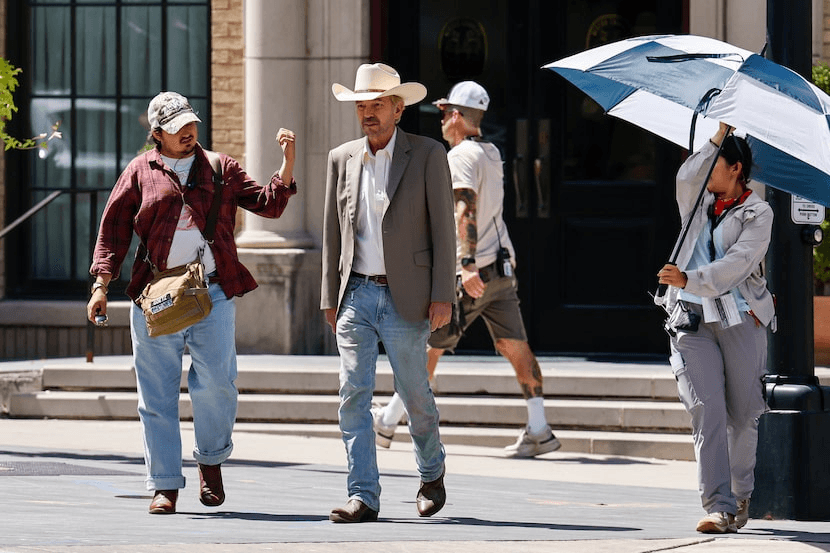
Dale Bradley

Character Overview
A petroleum engineer who manages roughnecks and is Tommy's roommate. He provides technical expertise and is one of Tommy's most trusted allies.
Biography
Dale Bradley is M-Tex Oil's lead petroleum engineer, portrayed by Taylor Sheridan universe veteran James Jordan in a role that brings crucial technical authenticity to Landman. While Tommy Norris handles the political maneuvering, crisis management, and dangerous negotiations that keep M-Tex operational, Dale handles something equally critical: the literal science and engineering that makes oil extraction possible in the first place. In the high-stakes world of West Texas oil fields, Dale is the man who translates geological surveys into drilling plans, who calculates the angles and depths that determine whether a well produces millions of barrels or catastrophic failure.
Dale's role as petroleum engineer places him at the absolute intersection of science, safety, and profitability. He's responsible for analyzing high-resolution seismic data, designing complex well trajectories that stretch miles underground, calculating the precise drilling parameters required, determining hydraulic fracturing (fracking) specifications, managing heavy equipment logistics, and ensuring that drilling operations follow strict engineering principles. In an industry where mistakes can mean explosions, blowouts, devastating environmental disasters, or worker deaths, Dale's technical competence isn't just valuable—it's essential for survival. Tommy might keep M-Tex from getting sued by Rebecca Falcone or attacked by cartels like Gallino's, but Dale keeps the company from drilling dry holes or causing mass casualties.
What makes Dale's character fascinating is how he represents the deep technical expertise that modern oil extraction absolutely requires, but that rarely gets dramatized in popular media. Most oil industry portrayals focus entirely on roughnecks getting dirty on the rigs, executives scheming in boardrooms, or environmental activists protesting at the gates—the visible, highly dramatic roles. But petroleum engineers like Dale are the invisible, intellectual foundation that makes the entire multi-billion-dollar industry possible. Without Dale's meticulous calculations, Tommy's crisis management would be irrelevant because there'd be no successful, producing wells to protect in the first place. Without Dale's granular understanding of ancient rock formations, subterranean pressure gradients, directional drilling angles, and the fluid dynamics of hydraulic fracturing, M-Tex Oil would be blindly gambling rather than operating a strategic extraction empire.
Dale's relationship with Tommy extends far beyond professional collaboration—they're roommates, sharing modest living space in the temporary "man camp" housing that oil workers typically occupy near active drilling sites, despite both making lucrative salaries. This intriguing roommate dynamic reveals a lot about both men. Tommy, who could easily afford a mansion or live in luxury accommodations, chooses to live with Dale and Nathan. This isn't about saving money—it's about maintaining a psychological connection to the men doing the actual fieldwork, staying grounded in the dust and dirt of operational reality rather than retreating to executive isolation. For Dale, living with the VP of Operations provides direct, unfiltered access to the ultimate decision-maker, eliminating bureaucratic layers when urgent technical concerns need immediate funding or attention.
Their domestic arrangement also humanizes both characters. After grueling 14-hour days managing impossible situations—Tommy negotiating with armed cartels or soothing furious landowners, Dale calculating microscopic drilling trajectories and managing exhausted roughneck crews—they come home to the same cramped quarters. They share cheap beer, discuss million-dollar problems, and decompress together. This shared domestic space breaks down the corporate hierarchies that might otherwise separate a high-level executive from a petroleum engineer. They are colleagues, yes, but they're also battle-tested friends who intimately understand each other's crushing stress because they witness it daily.
On the rig, Dale's management of the roughneck crews demonstrates his rare ability to bridge the gap between academic theory and ground-level reality. The workers, including veterans like Boss and Armando, respect Dale because he isn't an "ivory tower" engineer who relies solely on computer models—he understands the physical, exhausting reality of drilling work, the lethal dangers the men face every shift, and the heavy equipment they operate. When Dale explains why a particular directional drilling angle is necessary, or why they need to immediately adjust fracking pressures, the roughnecks listen without argument because they know his math is what keeps them from being blown up. Dale never talks down to the rig hands; he fluidly translates complex fluid dynamics into practical, actionable instructions that help the crew do their jobs safely and effectively.
One of Dale's most memorable and revealing moments occurs when he is aggressively questioned about hydraulic fracturing and its connection to induced seismicity (earthquakes)—a massive political and environmental controversy. His signature response—"There were earthquakes in Oklahoma before fracking, ma'am"—perfectly encapsulates his worldview. Dale firmly refuses to engage in political rhetoric, moral grandstanding, or emotional appeals. He simply states geological facts. His vocation is engineering, not public relations. This hyper-rational, matter-of-fact approach can easily come across as cold or dismissive to individuals genuinely concerned about the environmental impacts of the fossil fuel industry, but Dale operates on the core belief that public debates should be governed by hard geological data, not political theater.
James Jordan, a frequent collaborator in the Taylor Sheridan universe (having appeared in *Yellowstone*, *Mayor of Kingstown*, *1883*, and *Special Ops: Lioness*), brings an unmistakable authenticity to the role. Dale isn't a cartoonish nerd or a caricature of a scientist—he's a realistic, hardened professional who is deeply competent, takes immense pride in his precision, and carries the heavy knowledge that human lives depend entirely on his calculations being flawless. Jordan portrays Dale with a quiet, unshakeable confidence—the specific confidence of a man who explicitly knows his math is correct, even when billionaires and executives breathe down his neck demanding he cut safety corners to increase quarterly profits.
Dale's prominent role at M-Tex also highlights the company's overarching philosophy. The late Monty Miller built M-Tex into a juggernaut by hiring the absolute best people—like Tommy and Dale—giving them massive resources, and fiercely trusting their expertise. Dale possesses the unilateral authority to instantly halt drilling operations if he identifies a critical safety hazard or an engineering anomaly—and Tommy will back his play every single time, even if the delay costs the company hundreds of thousands of dollars a day. This ultimate trust reflects the reality that in the modern oil industry, respecting engineering limits is the only way to build a sustainable, profitable operation without inviting catastrophic, company-ending disasters.
Personality
Dale Bradley is fundamentally a data-driven pragmatist who relies on physics, mathematics, and geological science to guide his decisions, ruthlessly filtering out emotions, corporate politics, or pressure from executives desperate for faster production yields. In a volatile industry where massive egos, testosterone, and wild bravado often override sound judgment, Dale's steadfast commitment to simply following where the numbers lead makes him the most valuable asset in the field. When Dale declares that a well must be drilled at a specific 32-degree angle to a depth of precisely 12,400 feet using strict fracking parameters, he isn't guessing or playing a political game—he has run the simulations, analyzed the subterranean surveys, and calculated exactly what the prehistoric rock formations demand. You can argue with Dale's conclusions, but as he notes, "You can't negotiate with rock formations. Either your numbers are right or people die."
Dale's rigorous technical competence is perfectly balanced by his extraordinary ability to communicate hyper-complex engineering concepts in plain, blunt English. This translation skill is vital in oil operations, where a petroleum engineer must constantly coordinate with blue-collar roughnecks who lack formal degrees, corporate executives who only care about the bottom line, and hostile regulators scrutinizing environmental protocols. When Dale maps out extraction requirements, he doesn't hide behind academic jargon or belittle his subordinates. He breaks down the physics of extraction into highly practical, actionable terms. This unique communication prowess is what elevates Dale from a merely competent engineer to an exceptional, universally respected leader.
Unwavering loyalty is another of Dale's defining characteristics, specifically his profound loyalty to Tommy Norris. They are bound by years of surviving the trenches of the Permian Basin together. Dale knows absolutely that Tommy will shield him from upper management when he makes the tough, unpopular call to shut down a rig for safety reasons. In return, Tommy knows that Dale will never "cry wolf"—if Dale says the pressure gauges indicate an impending blowout, it is a factual certainty. This ironclad mutual trust allows them to operate with lethal efficiency, entirely bypassing the toxic corporate maneuvering that paralyzes other companies.
However, Dale is not without his blind spots. His rigid engineer's mindset—laser-focused on data models, thermodynamic solutions, and technical immediate fixes—often renders him dismissive of valid concerns that cannot be neatly solved with an equation. When confronted with the broader ecological or sociological impacts of his life's work, Dale retreats to technicalities rather than engaging with the morality of the situation. His strength is his technical brilliance; his flaw is a failure to recognize that being technically correct does not always resolve the deeply human, political, and environmental controversies that the oil industry inevitably creates.
Memorable Quotes
"Between 10,000 and 13,000 feet. But you got to drill at an angle, and then you got to frack it."
"There were earthquakes in Oklahoma before fracking, ma'am."
"Tommy handles the politics. I handle the geology."
"You can't negotiate with rock formations. Either your numbers are right or people die."
"I've seen what happens when you cut corners on engineering. It's never worth it."
Key Relationships
- Tommy Norris (roommate/colleague)
- Nathan (roommate)
Character Analysis
Dale Bradley represents a crucial element in Taylor Sheridan's exploration of the modern American oil industry. Through James Jordan's nuanced performance, the character embodies the complexities and contradictions inherent in this high-stakes world.
The character's role as petroleum engineer provides insight into the various layers of the oil business, from the personal relationships that drive decision-making to the broader economic and environmental implications of the industry.
🎬 Behind the Scenes
- James Jordan is an actor and producer known for his work in films like "Ant-Man and the Wasp: Quantumania" (2023) and TV series including "The Resident"
- Jordan's portrayal of Dale brings authentic technical expertise to the role, with the character's engineering explanations based on real petroleum engineering principles
- Petroleum engineering is one of the highest-paid engineering specializations, with average salaries exceeding $130,000 annually in the U.S.
- The roommate dynamic between Dale, Tommy, and Nathan reflects real living arrangements in oil fields, where workers often share temporary housing near drilling sites
- Dale's character represents the critical but often invisible technical expertise required in modern directional drilling and hydraulic fracturing operations
- Modern petroleum engineers use advanced software for reservoir modeling, well trajectory planning, and production optimization—Dale's calculations aren't done on napkins
- The fracking scene where Dale explains drilling depths and angles reflects genuine technical requirements for Permian Basin operations, which often drill 10,000+ feet deep
- Dale's response about Oklahoma earthquakes reflects real debates: Oklahoma's earthquake frequency increased dramatically after 2009, correlating with wastewater injection from oil operations
- Petroleum engineers like Dale must balance competing demands: maximize production, minimize costs, ensure safety, comply with regulations, and prevent environmental damage
- The Tommy-Dale friendship mirrors real dynamics where petroleum engineers and operations managers develop close bonds from shared stress and mutual dependence
- Dale's technical competence makes him one of the most valuable employees at M-Tex—petroleum engineers are harder to replace than executives or roughnecks
- The character demonstrates that successful oil operations require sophisticated engineering, not just "digging holes in the ground"—a misconception Dale constantly confronts
Series Information
Dale Bradley appears as a main character throughout the series, playing a vital role in the unfolding drama of the Texas oil industry.
Frequently Asked Questions About Dale Bradley
🔧 Who plays Dale Bradley in Landman?
Answer: Dale Bradley is portrayed by James Jordan, known for his work in films like "Ant-Man and the Wasp: Quantumania" (2023) and TV series including "The Resident." Jordan brings authentic technical expertise to the role of M-Tex Oil's petroleum engineer, with Dale's engineering explanations based on real petroleum engineering principles and Permian Basin operations. His performance captures the quiet confidence of a professional who's deeply competent in his specialization and understands that lives depend on his calculations being correct.
⚙️ What does Dale Bradley do at M-Tex Oil?
Answer: Dale is M-Tex Oil's petroleum engineer, responsible for analyzing geological data, designing well trajectories, calculating drilling parameters, determining fracking specifications, managing equipment logistics, and ensuring drilling operations follow engineering principles that keep roughnecks alive. While Tommy handles political maneuvering and crisis management, Dale handles the science and engineering that makes oil extraction possible. In an industry where mistakes can mean explosions, blowouts, environmental disasters, or worker deaths, Dale's technical competence isn't just valuable—it's essential. Tommy might keep M-Tex from getting sued or attacked by cartels, but Dale keeps the company from drilling dry holes or causing catastrophes that would shut them down permanently.
🏠 Why are Dale and Tommy roommates?
Answer: Dale and Tommy share living space in temporary housing near active drilling sites, along with Nathan (Mark Collie), another oil worker. This arrangement isn't about saving money—it's about Tommy maintaining connection to the men doing the actual work and staying grounded in operational reality rather than retreating to executive isolation. For Dale, living with Tommy provides direct access to the decision-maker, eliminating bureaucratic layers when technical concerns need immediate attention. Their roommate dynamic humanizes both men and strengthens their professional partnership built on competence and respect. After long days managing impossible situations, they come home to the same modest accommodations, sharing meals, discussing problems, decompressing together—breaking down hierarchies that might otherwise separate a VP of Operations from a petroleum engineer.
📐 What is petroleum engineering?
Answer: Petroleum engineering is one of the most demanding engineering specializations, requiring mastery of geology, physics, chemistry, fluid dynamics, materials science, and mechanical engineering. Petroleum engineers like Dale design directional drilling operations and hydraulic fracturing (fracking) that extract oil from formations 10,000+ feet underground. When Dale explains drilling depths, angles, and fracking requirements, he's describing genuinely complex operations that require years of specialized education and field experience. Dale's expertise didn't come from a weekend workshop—it came from university education, professional training, and years in the field learning how theory translates to real-world conditions. Petroleum engineers are among the highest-paid engineering professionals, with average salaries exceeding $130,000 annually in the U.S., reflecting the specialized knowledge and critical importance of their work.
🌍 Does fracking cause earthquakes?
Answer: Dale's response—"There were earthquakes in Oklahoma before fracking, ma'am"—reflects real geological complexity. While Oklahoma did have natural earthquakes, earthquake frequency increased dramatically after 2009, correlating with wastewater injection from oil operations (a byproduct of fracking). Dale's engineer mindset focuses on geological facts rather than political rhetoric, but his technically correct response doesn't fully address whether fracking increases earthquake frequency or severity—a nuanced question that requires more than simple geological facts. This exchange demonstrates Dale's strength (technical expertise and commitment to data-driven analysis) and his weakness (sometimes failing to recognize that technical correctness doesn't automatically resolve political, social, or environmental controversies). Dale doesn't engage in political rhetoric or emotional appeals; he simply states geological facts, letting the data speak for itself.
⭐ How important is Dale to M-Tex Oil's success?
Answer: Dale is absolutely critical to M-Tex's operations. Tommy might keep M-Tex from getting sued or attacked by cartels, but Dale keeps the company from drilling dry holes or causing catastrophes that would shut them down permanently. Without Dale's calculations and engineering expertise, M-Tex would be gambling rather than operating strategically. Without Dale's understanding of rock formations, pressure gradients, drilling angles, and hydraulic fracturing dynamics, M-Tex would be flying blind. Petroleum engineers like Dale are harder to replace than executives or roughnecks—his specialized knowledge, field experience, and ability to bridge technical expertise with ground-level operations make him one of M-Tex's most valuable employees. Monty Miller built M-Tex by hiring excellent people like Tommy and Dale, giving them resources and autonomy, and trusting their expertise. Dale has the authority to stop drilling operations if he identifies safety or engineering concerns—and Tommy backs him up, even when delays cost money, because engineering expertise saves money in the long run by preventing disasters.
Featured Videos
Official content from @paramountplus
📹 Official Dale Bradley character videos coming soon from Paramount+
🔗 Explore Dale's Professional Network
Discover Dale's working relationships that keep M-Tex Oil operations running.