Nathan
Character Overview
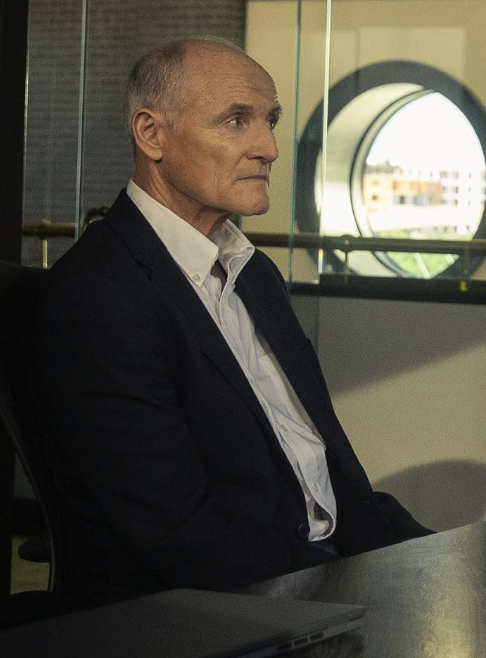
Nathan is M-Tex Oil's meticulous corporate attorney and administrator, portrayed by acclaimed actor Colm Feore. Sharing living quarters with Tommy Norris and Dale Bradley in a modest rental house, Nathan represents the legal and ethical guardrails that keep M-Tex from crossing lines that could destroy the company. Promoted to series regular for Season 2, Nathan serves as the audience's moral baseline—the voice of reason who dissects merger traps, liability nightmares, and ethical landmines while living among the men who create them. He's the suit who chose to live with roughnecks, the lawyer who understands that oil field law isn't practiced in courtrooms but in makeshift headquarters where million-dollar decisions happen over breakfast.
Biography
Nathan is M-Tex Oil's corporate attorney and administrator, portrayed by Colm Feore in what becomes one of Season 2's most crucial roles. When Season 1 introduces Nathan, he's a recurring character who appears to provide legal expertise when M-Tex faces particularly complex situations. But by Season 2, Nathan has been promoted to series regular, reflecting his growing importance to the show's exploration of corporate responsibility, legal ethics, and the impossible compromises required to keep an oil company operational in West Texas.
What immediately distinguishes Nathan from typical corporate attorney characters is his living arrangement: he shares a rental house with Tommy Norris and Dale Bradley, M-Tex's crisis manager and petroleum engineer respectively. This isn't standard corporate behavior—most attorneys working for billion-dollar oil companies don't choose to live with field operations personnel in modest accommodations. Nathan's decision to live with Tommy and Dale rather than maintaining professional distance reveals something fundamental about his character: he believes proximity matters. He can't provide effective legal counsel if he doesn't understand the ground-level realities that Tommy and Dale navigate daily. Living with them means witnessing firsthand the impossible situations they face, the split-second decisions they make, the moral compromises they accept as routine.
Colm Feore's casting is inspired. At 66 during Season 2 filming, Feore brings decades of experience playing complex authority figures in productions ranging from "The Borgias" to "House of Cards" (where he portrayed Raymond Tusk, a ruthless billionaire industrialist) to Marvel's "Thor" (as Laufey, King of the Frost Giants). Feore specializes in characters who operate in morally gray areas, who wield power with intelligence rather than force, who understand that real influence comes from controlling information and legal frameworks rather than dominating through personality. Nathan requires exactly this sophistication—he's not a simple "good lawyer" opposing Tommy's pragmatic corner-cutting; he's someone wrestling with the genuine complexity of providing legal counsel to an industry he finds ethically troubling.
Nathan's role at M-Tex is multifaceted. Officially, he's corporate counsel responsible for ensuring the company's operations comply with legal requirements—environmental regulations, labor laws, safety protocols, contractual obligations, liability management. He reviews drilling plans for legal exposure, negotiates mineral rights agreements, handles regulatory filings, manages litigation risks, and advises executives on corporate governance. But Nathan's unofficial role is equally important: he's the person who tells Monty Miller and Tommy when their plans cross lines that could expose M-Tex to catastrophic legal consequences. He's the voice saying "we can't do that" when everyone else is asking "how do we make this work?"
Living with Tommy and Dale creates fascinating dynamics that Season 2 explores in depth. Every evening, they return to the same modest house—Tommy exhausted from managing crises, Dale reviewing geological surveys and drilling calculations, Nathan analyzing merger documents and liability frameworks. Over dinner, conversations blend the practical and the theoretical: Tommy describes a situation that required creative problem-solving, Dale explains the engineering constraints, and Nathan points out the legal landmines they narrowly avoided or accidentally stepped on. These domestic scenes reveal how oil operations actually work—not through formal meetings and official channels, but through constant informal communication among professionals who trust each other enough to be honest about problems.
Nathan's relationship with Tommy is particularly complex. Tommy sees Nathan as necessary but sometimes frustrating—the guy who points out why Tommy's pragmatic solutions might create legal nightmares. Nathan sees Tommy as brilliant at crisis management but dangerously willing to ignore legal frameworks when situations demand immediate action. They respect each other's expertise while fundamentally disagreeing about acceptable risk tolerance. Tommy operates on the principle that sometimes you need to act first and manage legal consequences later; Nathan believes that mindset is exactly how companies destroy themselves. Their arguments aren't personal—they're philosophical debates about pragmatism versus prudence, immediate problem-solving versus long-term liability management.
With Dale, Nathan has an easier rapport. Dale's engineering background means he thinks systematically about constraints, procedures, and proper methodologies—frameworks Nathan finds more compatible with legal thinking than Tommy's improvisational crisis management. Dale and Nathan both believe in planning, in following established procedures, in respecting frameworks that exist for good reasons. When Dale explains why certain drilling angles are necessary based on geological formations, Nathan understands the parallel to legal requirements that aren't arbitrary obstacles but genuine protections against disaster.
Season 2's promotion of Nathan to series regular comes at a crucial moment in M-Tex's history. Following Monty Miller's death, M-Tex faces leadership chaos, corporate restructuring, and Cami Miller's legal battles over the insurance settlement. Nathan becomes indispensable—he's dissecting merger traps as larger companies circle M-Tex like sharks, analyzing liability exposure from decades of Monty's decisions that are only now becoming apparent, and trying to keep the company legally viable while Tommy handles operational crises and Cami fights for control.
Nathan also discovers uncomfortable truths about M-Tex's corporate structure. Monty's offshore deals, questionable financial arrangements, and gray-area business practices that seemed manageable while he was alive become legal nightmares once they're subject to corporate investigation and litigation. Nathan finds himself in the impossible position of defending a company whose previous leadership created problems he's only now discovering. This forces Nathan to confront a lawyer's classic ethical dilemma: when does aggressive legal defense cross the line into enabling past wrongdoing? How much can he rationalize cleaning up Monty's messes versus acknowledging that some arrangements were fundamentally problematic?
The character serves a crucial narrative function: Nathan is the audience's guide to understanding what's legally normal versus actually problematic in oil industry operations. When Tommy does something that seems ethically questionable, Nathan's reaction helps viewers calibrate whether this is standard industry practice or genuine corporate malfeasance. When M-Tex faces legal threats, Nathan's analysis explains whether they're legitimate regulatory enforcement or corporate harassment. He's the show's legal translator, making complex corporate law accessible without dumbing it down.
Season 2 also uses Nathan to explore the lawyer's version of Rebecca Falcone's ethical conflict. Rebecca wrestles with providing legal cover for an industry she believes should be illegal; Nathan wrestles with defending corporate practices he finds ethically troubling but legally defensible. The difference is that Rebecca is primarily focused on environmental and safety regulations, while Nathan deals with corporate governance, fiduciary duties, and the legal frameworks that allow extractive industries to operate. Both characters ask similar questions from different angles: What's the lawyer's responsibility when defending legal activities that cause harm? Can you reform a system from within or does participation make you complicit? Is aggressive legal defense a professional duty or moral compromise?
Nathan's expanded role in Season 2 positions him as one of Landman's most important characters for understanding how corporate power actually functions. He's not a villainous corporate lawyer enabling evil for profit, nor is he a crusading reformer trying to dismantle the industry from within. He's a professional navigating impossible ethical territory, providing legal expertise to operations he finds morally complex, living with the human consequences of corporate decisions while trying to keep his employer from self-destruction. Colm Feore's nuanced performance captures this complexity perfectly—Nathan is weary but not defeated, principled but not naive, compromised but not corrupt.
Personality
Nathan is fundamentally defined by his tension between professional duty and personal ethics. He's a brilliant corporate attorney who could work anywhere, earn top-tier money at major law firms, represent clients whose operations don't trouble his conscience. Yet he's chosen to work for M-Tex Oil, representing an industry he finds ethically complicated at best. This choice isn't masochism—it's Nathan's version of reform from within. He believes someone with genuine legal expertise and ethical principles needs to be in the room when M-Tex makes decisions, providing the voice of legal caution that prevents the worst excesses.
Nathan is meticulous to the point of being obsessive—a necessary trait for corporate attorneys where missing a single clause in a merger agreement can expose companies to billion-dollar liabilities. He reads contracts line by line, identifies potential legal landmines in operational plans, anticipates regulatory challenges before they materialize, and maintains extensive documentation of corporate decisions in case M-Tex faces litigation. This meticulousness sometimes frustrates Tommy, who needs quick decisions in crisis situations, but Nathan knows that shortcuts in legal compliance create problems that destroy companies years later when the consequences finally arrive.
He's also remarkably perceptive about people and power dynamics. Decades of corporate law practice have taught Nathan to read motivations quickly, to understand who actually holds power versus who appears to hold it, to identify when people are hiding information or genuinely confused. When Nathan reviews merger proposals or partnership agreements, he's not just analyzing legal language—he's analyzing the psychology of the parties involved, asking why they structured terms this way, what they're trying to hide, what leverage they're seeking. This perceptiveness makes Nathan invaluable to Tommy and Cami as they navigate M-Tex's corporate challenges in Season 2.
Nathan maintains emotional boundaries that Tommy can't and Dale doesn't need to. Living with Tommy and Dale doesn't mean Nathan becomes emotionally enmeshed in their personal dramas. He's supportive but detached, helpful but not paternal, friendly but professional. When Tommy faces family crises or Dale deals with operational stress, Nathan offers perspective but doesn't try to fix their problems. This emotional discipline is both Nathan's strength (it allows him to think clearly about legal issues without getting caught in drama) and perhaps a weakness (it can make him seem cold or uncaring when people need emotional support rather than legal analysis).
Yet beneath the professional detachment is genuine care for M-Tex's workers and the community depending on the company's operations. Nathan knows that when he prevents M-Tex from taking illegal shortcuts, he's not just protecting corporate assets—he's protecting workers' jobs, families' livelihoods, communities' economic survival. His legal conservatism isn't about loving regulations or enjoying saying "no" to Tommy's plans. It's about understanding that M-Tex's long-term survival requires operating within legal frameworks, even when those frameworks are frustrating or expensive. Nathan has seen companies destroyed by aggressive legal exposure that could have been prevented with more cautious operational approaches. He's determined not to let that happen to M-Tex if he can prevent it.
Nathan also possesses dry wit that he deploys strategically to deflate tension or point out absurdities in situations that have become too serious. When Tommy and Dale are spiraling into crisis mode, Nathan's sarcastic observation can puncture the drama and force everyone to step back and think more clearly. His humor isn't cruel—it's perspective-giving, reminding people that this particular crisis isn't unique, that they've survived worse, that catastrophizing doesn't help solve problems. This emotional regulation is another way Nathan provides value beyond pure legal expertise.
What makes Nathan compelling is his self-awareness about his compromises. He's not in denial about working for an industry he finds ethically problematic. He's not pretending M-Tex is a model of corporate responsibility or that his legal work is purely noble. Nathan has made a calculated decision: better to provide competent legal counsel to M-Tex and maintain some ethical guardrails than to leave and be replaced by someone who'll enable worse practices. Whether this rationalization is genuine service or just self-justification for accepting a lucrative position is something Nathan probably questions himself. The show uses Nathan's internal conflict to explore how professionals navigate complicity in systems they can't individually reform.
Colm Feore plays Nathan with understated intelligence and weary resignation. He's not performatively tortured by his ethical conflicts—he's just quietly carrying the weight of being the adult in rooms full of people making billion-dollar decisions with imperfect information and competing pressures. Nathan's exhaustion isn't from overwork (though corporate law is demanding); it's from being the person who always has to point out problems, predict disasters, and explain why the expedient solution will create worse problems later. It's emotionally draining to be the voice of caution in environments that reward aggressive risk-taking, to provide unwelcome advice that people resist but eventually recognize was correct. Nathan does this work anyway because someone has to, and he's qualified for it, and M-Tex needs it even when they don't want it.
Memorable Quotes
"Legally speaking, we're standing in a minefield. Every decision is a potential liability."
"Someone needs to be the adult in the room. Apparently, that's me."
"I didn't go to law school to enable cowboys playing fast and loose with corporate law."
"You want my legal opinion or my honest opinion? Because they're very different things."
"Living with you two is like having a front-row seat to a disaster in slow motion."
Key Relationships
- Tommy Norris (roommate/colleague)
- Dale Bradley (roommate)
- Monty Miller (former boss)
- M-Tex Oil (employer)
Character Analysis
Nathan represents a crucial element in Taylor Sheridan's exploration of the modern American oil industry. Through Colm Feore's nuanced performance, the character embodies the complexities and contradictions inherent in this high-stakes world.
The character's role as m-tex corporate attorney & moral compass provides insight into the various layers of the oil business, from the personal relationships that drive decision-making to the broader economic and environmental implications of the industry.
🎬 Behind the Scenes
- Colm Feore is a celebrated Canadian actor known for roles in "The Borgias," "House of Cards" (as Raymond Tusk), and Marvel's "Thor" (as Laufey)
- Feore has won multiple Gemini Awards (Canadian Emmy equivalents) and is considered one of Canada's finest classical actors
- At 66 during Season 2 filming, Feore brings decades of experience playing complex authority figures in morally gray situations
- Nathan was promoted from recurring character in Season 1 to series regular in Season 2, reflecting his growing importance to the narrative
- The character's living arrangement with Tommy and Dale is unusual for corporate attorneys, reflecting Nathan's belief that proximity to operations improves legal counsel
- Colm Feore's role as Raymond Tusk in "House of Cards"—a ruthless billionaire industrialist—prepared him perfectly for playing a corporate attorney in the oil industry
- Nathan serves as "the audience's moral baseline" according to critics, helping viewers understand what's legally normal versus actually problematic in oil operations
- The character explores the lawyer's ethical dilemma of providing legal defense for activities that are legal but cause harm
- Nathan's meticulous approach to corporate law reflects real patterns where missing contract clauses can expose companies to billion-dollar liabilities
- His relationship with Tommy creates philosophical debates about pragmatism versus prudence, immediate problem-solving versus long-term liability management
- The character represents reform from within—someone trying to prevent corporate worst excesses by maintaining ethical guardrails from inside the system
- Nathan's expanded Season 2 role coincides with M-Tex facing merger threats, leadership chaos, and legal exposure from Monty Miller's past decisions
- Colm Feore's understated performance captures Nathan's exhaustion from being the perpetual voice of caution in environments that reward aggressive risk-taking
Series Information
Nathan appears as a main character throughout the series, playing a vital role in the unfolding drama of the Texas oil industry.
