The Water War: Fracking, Contamination, and the Battle for Every Drop in the Permian Basin
15 million barrels of toxic brine per day, PFAS "forever chemicals" in fracking fluid, and a Texas Supreme Court ruling that ranchers say steals their water

West Texas setting guide
How this topic fits the world of Landman
This article explains one part of the larger West Texas story behind the series. For the full map of setting, filming reality, Midland-Odessa, and the Permian Basin, start with the West Texas in Landman hub.
Open the West Texas hubIn Landman Season 2, Rebecca Falcone witnesses produced water dumped on ranch land and becomes an advocate for stricter water standards. It is one of the show's most socially conscious storylines — and also one of its most understated. The real water crisis in the Permian Basin is orders of magnitude worse than anything Hollywood has dared to depict. Fifteen million barrels of toxic brine per day — a volume greater than all other U.S. oilfields combined — are pumped back underground, triggering magnitude 5+ earthquakes, poisoning ranch land, and contaminating groundwater with chemicals that never break down.
This is the Permian Basin's most consequential environmental story. It's also its most politically explosive: in June 2025, the Texas Supreme Court ruled that produced water belongs to the operator, not the landowner — a decision ranchers call an act of state-sanctioned theft.
The Scale of the Problem: An Ocean Underground
Every barrel of oil produced in the Permian Basin comes with approximately three barrels of "produced water" — ancient, hypersaline brine trapped in the rock formation for millions of years. This water is far too toxic for any surface use: it contains dissolved salts at concentrations 3-10 times saltier than seawater, heavy metals (barium, strontium, arsenic), naturally occurring radioactive materials (NORM), and — increasingly — synthetic chemicals added during hydraulic fracturing.
💧 The Numbers That Define the Crisis
| Produced Water Generated Daily (2024) | 20+ million barrels (840 million gallons) |
| Injected Underground Daily | 15 million barrels |
| Projected Daily Volume by 2030 | 26 million barrels/day |
| Water per Single Fracked Well | Up to 20 million gallons |
| Disposal Volume Increase (Next Decade) | +40% projected |
Sources: Texas Tribune, Inside Climate News
To put this into perspective: the Permian Basin injects more wastewater underground than all other U.S. oilfields combined. And the volume is growing — projections indicate a 40% increase over the next decade as operators drill longer laterals and develop deeper formations.
When the Earth Fights Back: Blowouts, Brine, and Broken Wells
The sheer volume of wastewater being forced underground is creating a crisis that Texas regulators now describe as "widespread." Underground pressure from decades of injection is building to dangerous levels, causing catastrophic failures:
- Crane County Blowout: Nearly 15 million gallons of toxic brine erupted to the surface through an old, improperly plugged well — a direct result of injection-driven pressure buildup
- Toyah Surface Eruptions: In October 2024, wastewater breaching through old wells caused ground swelling and ruptures near the town of Toyah, simultaneously triggering five earthquakes in 24 hours
- Rancher Lawsuits: A Permian Basin landowner filed suit in December 2024 alleging that injection wells and abandoned wellbores led to saltwater flooding across his property, destroying grazing land
- Production Losses: Some operators have reported their own production wells being contaminated by wastewater from neighboring injection operations, creating an in-industry economic crisis
The dirty water is breaching wells, causing ground swelling and ruptures, and directly imperiling drinking water supplies for both human populations and livestock. A 2024 study established a direct link between wastewater injection and oil well blowouts, confirming what ranchers and environmental activists warned about for years.
PFAS: The "Forever Chemicals" in Your Fracking Fluid
Perhaps the most alarming water contamination development is the confirmed presence of PFAS (Per- and Polyfluoroalkyl Substances) — "forever chemicals" — in fracking fluids used across the Permian Basin. These synthetic chemicals never break down in the environment, and for some types, no amount in drinking water is considered safe.
☠️ PFAS in Permian Basin Oil Wells
- Texas: At least 43,000 pounds of PFAS pumped into 1,000+ fracked wells over the last decade
- New Mexico: Approximately 9,000 pounds of PFAS injected into at least 261 wells between 2013-2022
- Additional volumes of "trade secret" chemicals — potentially containing PFAS — used without public disclosure
- Disposal through injection wells or spreading on soil poses direct groundwater, surface water, and air contamination risk
- Colorado banned PFAS in fracking in 2024 — Texas and New Mexico have not followed
Sources: Western Environmental Law Center, Grist
PFAS contamination in groundwater is nearly impossible to remediate. Once these chemicals enter an aquifer, they persist — effectively forever. In a semi-arid region where groundwater is the primary drinking water source for rural communities and ranches, PFAS contamination represents an existential threat that outlasts the oil itself.
The Texas Supreme Court Bombshell: Who Owns the Water?
In June 2025, the Texas Supreme Court dropped a landmark ruling that sent shockwaves through ranch communities: produced water belongs to the oil and gas operator, not the surface landowner. This decision overturned decades of assumption that water — even toxic wastewater — extracted from beneath a ranch belonged to the ranch owner.
The Texas & Southwestern Cattle Raisers Association condemned the ruling, arguing it undermines established property rights and gives operators carte blanche to extract and dispose of water without meaningful consent from surface owners. For landowners already dealing with saltwater flooding, well blowouts, and contaminated aquifers, the ruling felt like adding insult to injury.
In Landman, the tension between surface rights holders and mineral rights owners is a recurring theme. The Texas Supreme Court ruling takes this tension to its logical extreme: even the water that ruins your ranch belongs to someone else.
Water Recycling: Progress, But Not Enough
The industry has made genuine strides in water recycling. By 2023, the Permian Basin used more recycled produced water than fresh or brackish sources for completions — a remarkable achievement. However, the recycling rates reveal a stark interstate divide:
♻️ Water Recycling by State (2023)
| New Mexico Permian Operators | 75% recycling rate |
| Texas Permian Operators | 45% recycling rate |
| Gap Explanation | NM has stricter regulations; TX has more disposal well capacity |
Even at high recycling rates, the math doesn't close. With 20+ million barrels of produced water generated daily and growing, billions of gallons annually must still be disposed of underground. The industry faces three fundamental challenges:
- Salt content: Produced water is far too saline for most recycling applications beyond fracking itself
- Volume: Production generates more wastewater than new fracking operations can consume
- Geology: The underground formations accepting injection are reaching pressure limits, triggering earthquakes
Radical Solutions: The Pecos River Proposal and $20 Billion
With underground disposal reaching its limits, radical alternatives are emerging. In late 2025, a proposal gained traction to treat produced water and release it into rivers like the Pecos River near the New Mexico border. The proposal is technically feasible but environmentally controversial — introducing treated but previously underground water into a river system that flows through fragile desert ecosystems.
In June 2025, Texas Governor Greg Abbott signed legislation allocating $20 billion for water infrastructure — the largest water investment in Texas history. While primarily aimed at municipal water supply, a portion could fund produced water treatment facilities that would reduce reliance on underground injection.
These developments underscore a reality the oil industry is only beginning to confront: water, not oil prices or regulations, may ultimately be the limiting factor on Permian Basin production. The economics of extraction assume unlimited disposal capacity. When disposal becomes constrained — by earthquakes, by regulations, by physics — the entire production model must adapt.
The Drought Dimension: Fracking in a Desert
Overlaying the contamination crisis is a drought crisis. In 2024, the Permian Basin experienced "Extreme" to "Exceptional" drought conditions (D3-D4), with large portions of West Texas and Southeast New Mexico receiving far below normal precipitation. This is the same arid landscape where a single fracked well can consume 20 million gallons of freshwater.
While the industry's shift to recycled produced water has reduced freshwater consumption, the competition between oil operations, ranching, and municipal needs for a shrinking water supply creates social tensions that Landman has barely begun to explore. In real Permian Basin towns, ranchers and city councils are watching their groundwater tables drop while frac fleets consume volumes that would supply a small city.
Realism Score: 5/10
Landman Season 2 deserves credit for introducing the water management theme through Rebecca's advocacy arc. But the real story — 15 million barrels/day of toxic brine causing land ruptures, PFAS contamination, a Texas Supreme Court ruling stripping ranchers of water rights, and a $20 billion emergency infrastructure response — is so much more dramatic than what the show depicts that it almost demands its own series. Water is the Permian Basin's ticking time bomb, and the show has only barely lit the fuse.
Frequently Asked Questions About Permian Basin Water Contamination
Can fracking contaminate drinking water?
Yes, through multiple pathways. While the fracking process itself occurs thousands of feet below aquifers, contamination can occur through: (1) improperly cased or deteriorating wellbores that allow fluid migration; (2) wastewater injection that builds underground pressure, forcing toxic brine through old, unplugged wells to the surface; (3) surface spills during water transport and storage; and (4) PFAS "forever chemicals" in fracking fluid entering groundwater through injection or surface disposal. The RRC has acknowledged "widespread" underground pressure increases that threaten drinking water supplies.
What are PFAS and why are they in fracking fluid?
PFAS (Per- and Polyfluoroalkyl Substances) are synthetic chemicals used in fracking fluid as surfactants — they reduce friction and help proppant (sand) flow more efficiently underground. They are called "forever chemicals" because they never break down in the environment. At least 43,000 pounds have been pumped into Texas wells and 9,000 pounds into New Mexico wells. For some PFAS types, no amount in drinking water is considered safe. Colorado banned their use in fracking in 2024; Texas and New Mexico have not. Additional PFAS may be present in "trade secret" chemicals that operators are not required to publicly disclose.
Who owns produced water in Texas?
As of June 2025, the Texas Supreme Court ruled that produced water belongs to the oil and gas operator, not the surface landowner. This means operators can extract, transport, and dispose of the toxic brine generated during production without the surface owner's consent — even if that disposal causes damage to the land above. The Texas & Southwestern Cattle Raisers Association has condemned the ruling, arguing it removes a critical check on industry behavior and leaves ranchers without legal recourse when injection operations contaminate their water or damage their property.
How much water does fracking use vs. recycled water?
A single fracked well can consume up to 20 million gallons of water. By 2023, the Permian Basin crossed a milestone: operators used more recycled produced water than fresh or brackish sources for completions. New Mexico operators achieve 75% recycling rates while Texas operators average 45%. The gap exists because New Mexico has stricter regulations while Texas has abundant disposal well capacity (making injection cheaper than recycling). However, even at high recycling rates, the Permian generates 20+ million barrels of produced water daily — far more than fracking operations can consume — with the surplus requiring underground disposal.
Could water be the factor that limits Permian Basin production?
Increasingly, yes. The conventional constraint on Permian production has been oil prices, rig availability, and geology quality. But water disposal capacity may become the binding constraint first. Underground injection is triggering M5+ earthquakes and land ruptures, regulators are shutting down disposal wells, and wastewater volumes are projected to grow 40% over the next decade. If operators can't dispose of produced water, they can't produce oil — regardless of price. The $20 billion Texas water infrastructure bill and proposals to treat and discharge water into rivers reflect the industry's scramble to find alternatives before disposal hits a wall.
Does Landman accurately portray the water crisis?
Season 2's water management subplot through Rebecca Falcone is a welcome addition, but it dramatically understates the crisis. The show depicts produced water disposal as a compliance challenge; in reality, it's an existential threat that includes M5+ earthquakes, 15 million gallons of brine erupting from abandoned wells, PFAS forever chemicals in aquifers, a Texas Supreme Court ruling stripping landowners of water rights, and a $20 billion emergency state response. If Landman fully depicted the water war — the blowouts, the contaminated ranches, the legal battles — it would produce some of the most compelling television on air.
Sources
- Wastewater Injection and Oil Well Blowout Link Study - Texas Tribune
- RRC Warning: "Widespread" Underground Pressure Increase - World Oil
- 15 Million Barrels/Day: Permian Injection Volume - Inside Climate News
- Permian Landowner Lawsuit: Saltwater Flooding (Dec 2024) - Inside Climate News
- Crane County Blowout: 15 Million Gallons of Brine - University of Kentucky Study
- PFAS in NM Fracking: 9,000 lbs in 261 Wells - Western Environmental Law Center
- PFAS in TX Fracking: 43,000 lbs in 1,000+ Wells - Grist
- PFAS Contamination Risk from Oil and Gas Operations - Physicians for Social Responsibility
- TX Supreme Court: Produced Water Belongs to Operator (June 2025) - NTXE News
- Recycling Rates: NM 75%, TX 45% (2023) - Energy News Beat
- Produced Water Volumes: 20M bbl/day, Projected 26M by 2030 - AOGR
- $20B TX Water Bill; Pecos River Discharge Proposal - Insurance Journal
- Permian Injection Volume vs. All Other U.S. Oilfields - Texas Public Policy Foundation
- 2024 West Texas Drought: D3-D4 Conditions - U.S. Drought Monitor
- NM Producers: Cross-Border Contamination Lawsuits - Seeking Alpha
Related Blog Reading
More Landman analysis on this topic

Is Landman Based on a True Story? The Boomtown Podcast and Real West Texas Oil Boom Explained
Landman is fictional, but it is rooted in the Boomtown podcast and the real Permian Basin oil boom. Here is what comes from reality, what is dramatized, and why the show feels so specific.
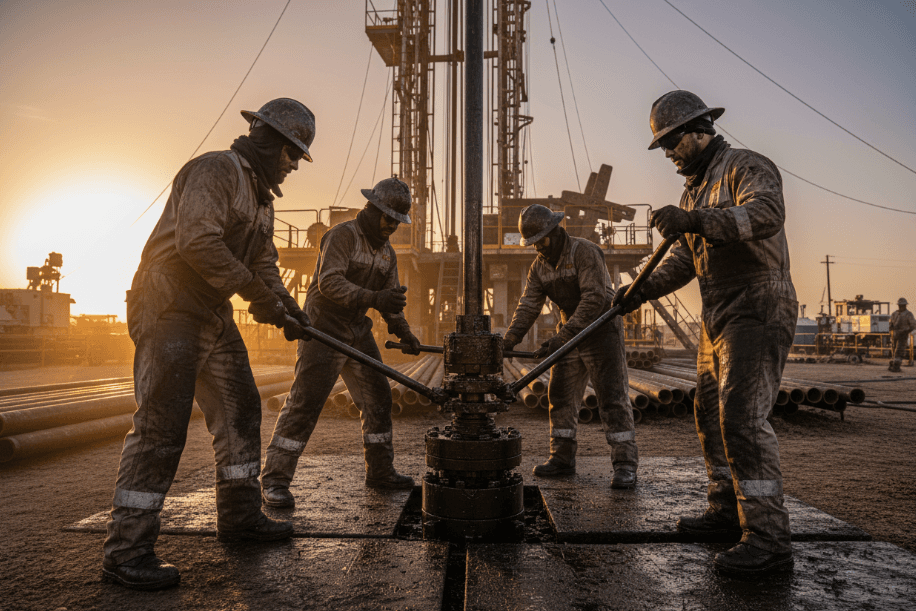
Roughneck Life: What It's Really Like Working in West Texas Oil Fields
In the vast, sun-scorched expanse of West Texas, under a sky that stretches into an infinite blue, a modern-day archetype toils for the black gold that fuels the world. He is the roughneck, a figure as central to the mythology of Texas as the cowboy, yet often shrouded in a layer of crude oil and misunderstanding. As Taylor Sheridan’s series Landman drills into the high-stakes world of the Permian Basin, it brings this figure to the forefront—the man on the rig floor, the engine of the boom. To
The Permian Basin Explained: How West Texas Became America's Oil Engine
By any measure that matters—barrels, budgets, or geopolitical leverage—the center of U.S. oil gravity sits under a hard blue sky in West Texas and southeastern New Mexico. The Permian Basin is not just another field; it is the field. In 2024 it supplied roughly 48% of all U.S. crude, an average of 6.3 million barrels a day, according to the U.S. Energy Information Administration (EIA). That single statistic explains an outsized share of America’s energy story—why exports hit record highs, why Gu
Landman Visual Style and Soundtrack: Cinematography and Music Explained
Landman is visually and sonically distinctive. Taylor Sheridan and director Stephen Kay use the wide horizons of West Texas, the industrial geometry of oil equipment, and a carefully chosen musical palette to create a world that feels both specific and timeless. The show's look and sound are not decorative choices. They are part of the storytelling, communicating themes of isolation, ambition, and the relationship between people and the land. This article explains the visual style and soundtrac