Landman Season 3: CTT Oil's Profit Split Explained
The most important thing that happened in the Landman Season 2 finale was not just that Tommy Norris got fired from M-Tex. It was that he stopped being the exhausted company man cleaning up other people's messes and became the founder of a new company: CTT Oil Exploration and Cattle.
That single move changes the series. Season 3 is no longer only about Tommy defending M-Tex from debt, accidents, family pressure, and cartel money. It is now about Tommy, Cooper, T.L., Rebecca, Dale, Boss, Ariana, and Nathan trying to build a lean oil company around leases, wells, debt, loyalty, and one very dangerous investor.
But the deal also left viewers asking a fair question: how can the numbers work?
Image: Landman season 1, episode 1. Photo credit: Emerson Miller/Paramount+ via Paramount Press Express.
Short answer
CTT Oil appears to be built on three layers of claims:
- Landowners or leaseholders get paid first, based on the lease terms tied to Cooper's acreage.
- Gallino gets a large share until his financing is repaid.
- CTT's own profit pool is then divided among the company and the people Tommy promised to bring in.
That means the employees are probably not getting 25 percent of all oil revenue from the wells. They are more likely getting 25 percent of CTT's remaining profit after prior obligations are handled.
That difference matters. It is the difference between a generous profit-sharing plan and a company that collapses before the first balance sheet closes.
The simple version of the money stack
The easiest way to read the CTT deal is not as one big percentage promise, but as a stack. Each layer has a different legal or business meaning.
| Layer | Who gets paid | What it probably means in the story |
|---|---|---|
| Lease and royalty burden | Landowners, mineral owners, leaseholders | These claims are tied to the land and the mineral rights before CTT can treat the well as pure upside. |
| Operating cost | Drillers, crews, vendors, water, hauling, power, insurance | The field has to be paid before the company can talk about profit. |
| Financing recovery | Gallino | He is likely using money to buy leverage, not acting like a friendly bank. |
| Company profit | CTT Oil Exploration and Cattle | This is the pool Tommy can use to reward employees, grow the company, and keep Cooper's dream alive. |
That order is why the scene can sound impossible if you hear every number as a percentage of gross oil revenue. In oil and gas, the word "cut" is doing too much work. A royalty interest, a working interest, an investor recovery, and a bonus-like employee share are not the same thing.

Image: Landman season 2, episode 10. Photo credit: Emerson Miller/Paramount+ via Paramount Press Express.
What CTT Oil is in the show
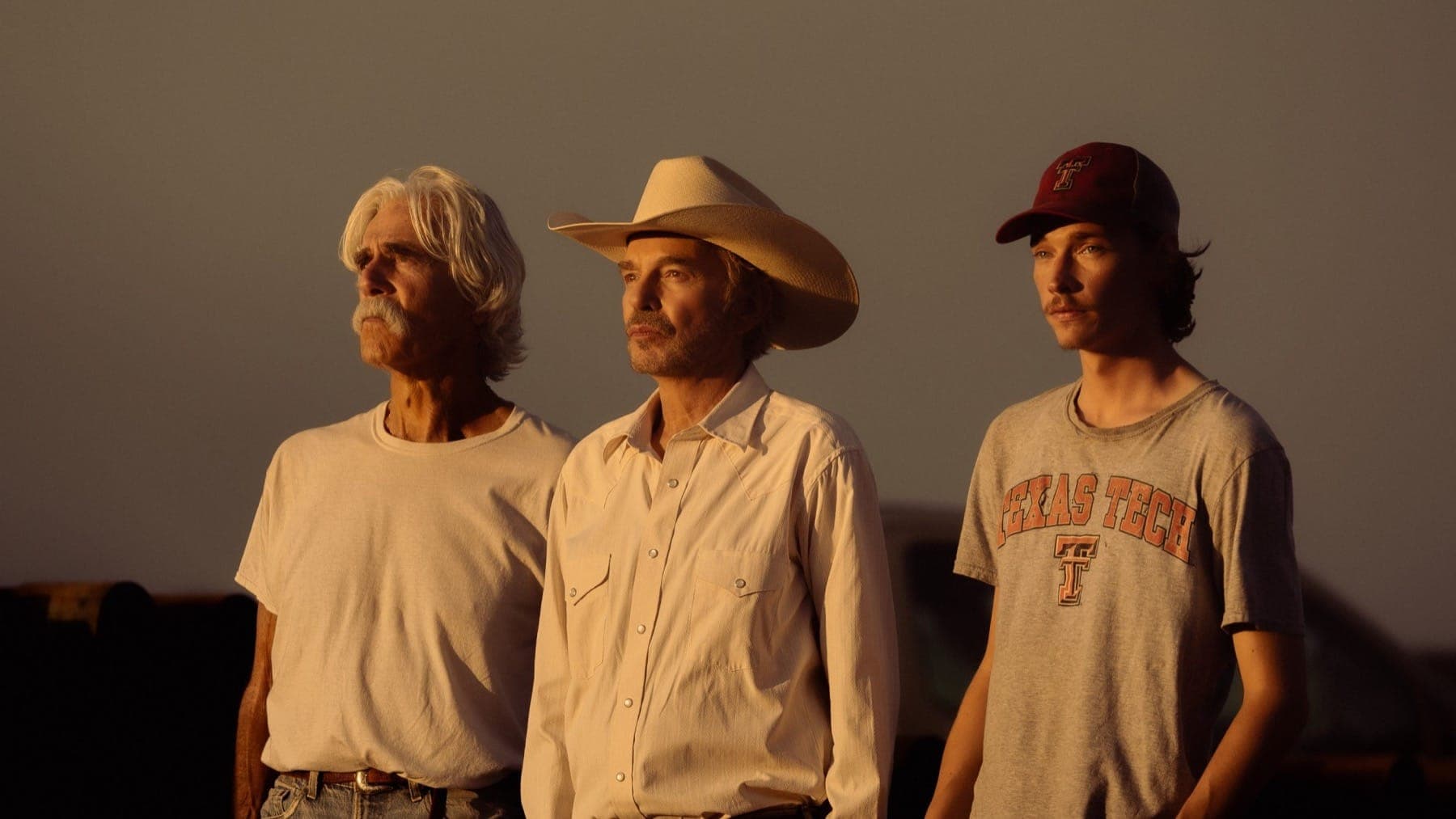
CTT Oil Exploration and Cattle is Tommy's post-M-Tex company. The initials point to the Norris family: Cooper, Tommy, and Thomas "T.L." Norris. The cattle part is not just decoration. It connects the oil leases to land, surface use, ranch identity, and the older West Texas economy that Landman keeps placing beside the modern shale business.
The Season 2 finale positions Cooper as president, Tommy as senior vice president, Nathan as treasurer, Rebecca as legal and operating muscle, Dale as exploration lead, Boss as crew chief, T.L. around drilling, and Ariana as office manager. Parade's finale recap summarized the same leadership handoff and noted that Tommy's new company effectively turns him into his own landman rather than M-Tex's fixer.
That is a strong drama setup because everyone now has skin in the game. It is also a fragile business setup because the money does not come clean.
Why viewers are confused
The confusion comes from the way the show stacks several different kinds of percentages into one emotional scene.
Fans are asking versions of the same question: if landowners get a cut, Gallino gets a cut, and employees get a cut, how is there anything left for CTT to grow?
That question is not nitpicking. In oil and gas, the order of payment matters. A royalty or lease burden is not the same thing as an investor's profit share. A company-wide employee pool is not the same thing as gross revenue. Debt recovery is not the same thing as long-term ownership.
The Reddit thread around CTT Oil and Cattle shows the live search demand clearly: viewers are trying to understand whether the 25 percent promised to landowners, the Gallino split, and the employee share are additive or sequential.
Gross revenue vs net profit
This is the difference that will decide whether CTT feels realistic in Season 3.
Gross revenue is the money generated when oil and gas are sold. It sounds huge because oil is priced in public, dramatic numbers. But the gross number is not what a small operator actually gets to keep.
Net profit is what remains after lease burdens, operating costs, transportation, services, taxes, legal costs, insurance, and financing arrangements are handled. That number can still be attractive, especially if the acreage is strong. But it is far smaller and more fragile than the first number viewers hear in a dramatic finale.
If Tommy promised employees a share of gross revenue, CTT would probably be financially reckless from day one. If he promised a share of net upside, the promise becomes more believable. It also becomes more dramatic, because employees may believe they are owners of a future fortune while Gallino quietly controls the timing of when that future ever pays.
That is the show-sized version of a very real oil problem: the deal that sounds simple at the table becomes complicated once the well, the title, the operating bills, and the lender all show up.
The likely deal structure
The cleanest way to understand CTT is to separate gross production revenue from distributable profit.
Imagine a well produces revenue. Before CTT can celebrate, money has to move through a rough order:
- Lease and royalty obligations are paid according to the land agreements.
- Operating costs come out: drilling, completion, water, labor, service companies, hauling, electricity, insurance, legal, and maintenance.
- Debt or investor recovery comes next, especially if Gallino fronted money that CTT could not raise anywhere else.
- Only then does CTT have a profit pool to divide.
So when Tommy talks about employees sharing in the company, the most realistic reading is that they share in CTT's net upside, not in the entire barrel-by-barrel revenue stream.
That is still a huge promise. It gives field people, lawyers, land staff, and engineers a reason to stay loyal. It also gives Season 3 a built-in conflict: the more money Gallino pulls out early, the longer everyone else waits for the dream Tommy sold them.
Why Gallino is both lifeline and trap
Tommy needs money fast. Cami has M-Tex. Banks are not likely to love a rushed startup built around oil leases, family drama, legal exposure, and a founder who just got fired. Gallino can move money when conventional finance cannot.
That is why the deal works for the story. Gallino is not just a villain standing outside the business. He becomes capital.
In real oil country, financing is often the difference between a lease position becoming a fortune and becoming paperwork. Landmen can identify the opportunity. Engineers can model the well. Crews can drill. But somebody has to pay before the first saleable barrel ever arrives.
Gallino gives CTT oxygen. He also gives it a shadow. If the wells underperform, if oil prices fall, if costs overrun, or if law enforcement pressure grows, CTT cannot simply walk away from him like a normal lender.
Image: Landman season 2, episode 10. Photo credit: Emerson Miller/Paramount+ via Paramount Press Express.
What a real landman would worry about first
The show makes the deal feel emotional, but a real land professional would slow down and ask a colder set of questions.
The first question is title. Does Cooper's acreage actually carry the mineral rights the company thinks it carries? Surface ownership and mineral ownership are not always the same. A person can own land but not the oil and gas beneath it, or own only a portion of the minerals. That is why land departments spend so much time with courthouse records, lease files, old assignments, probate documents, and mineral histories.
The second question is lease terms. CTT needs the right to explore and produce under specific agreements. Those agreements may include royalty rates, bonus payments, drilling deadlines, pooling rules, surface-use restrictions, and obligations to restore or protect the land. A strong lease can be an asset. A sloppy lease can become a lawsuit.
The third question is operating control. Even if the acreage is real, CTT still needs the ability to drill, complete, connect, and sell production. That means permits, contractors, service companies, water management, roads, power, midstream access, safety plans, insurance, and enough working capital to keep the operation alive before revenue arrives.
The fourth question is clean money. This is where Gallino becomes the Season 3 problem. Money does not only fund drilling. It can shape control, reporting, legal exposure, and who has power when the first well disappoints.
This is why CTT is a strong story engine. It gives the show a realistic business skeleton under the family drama.
Why Nathan and Rebecca matter now
Tommy can smell a bad deal. Cooper can see land value. Dale can read the field. But CTT needs two other kinds of protection: paperwork and legal force.
Nathan matters because the company needs someone who can turn Tommy's instinct into documents that survive pressure. A handshake is not enough when a new operator is taking investor money, hiring people, dividing upside, and tying itself to leases that could be worth millions.
Rebecca matters because CTT is going to live near lawsuits. Every major Season 3 conflict can become legal: a lease fight, a death on site, a cartel connection, an investor dispute, a royalty argument, a workplace injury, a family ownership fight, or a battle with M-Tex. If the show uses her correctly, she will not just be "the lawyer." She will be the person who understands how quickly Tommy's cowboy math can become discoverable evidence.
That gives the new company a useful internal triangle: Tommy wants speed, Nathan wants structure, and Rebecca wants survivability.
Why Cooper matters more now
Cooper's Season 2 arc was not only about romance, grief, or trouble with Ariana's attacker. It was about whether he could see value in land before older players did.
That makes him more than Tommy's son. In CTT, Cooper is the asset finder. Tommy knows people and danger. Dale knows the reservoir and the field. Rebecca knows legal exposure. Nathan knows contracts. Cooper is the reason the company exists at all.
That is why making Cooper president is not just sentimental. It is Tommy saying the new company is built around Cooper's find, not around Tommy's old M-Tex status.
It also creates a Season 3 problem: Cooper now has authority before he has real scar tissue. Tommy may say Cooper can fire him, but viewers should expect the father-son chain of command to get tested quickly.
Five Season 3 conflicts CTT creates immediately
The Season 2 finale did not only launch a company. It launched a conflict map.
First, CTT creates a father-son power problem. Cooper may be president, but Tommy has the experience, the relationships, and the authority everyone naturally follows. That is not a stable hierarchy.
Second, it creates a Gallino control problem. If Gallino's money sits ahead of everyone else's upside, CTT may technically be independent while practically trapped.
Third, it creates a Cami problem. M-Tex and CTT are no longer just connected through Tommy's past. They are now potential rivals, partners, or enemies depending on leases, capital, and family pressure.
Fourth, it creates an employee-expectation problem. Promising people upside is powerful, but it also makes every delay personal. If the company has to reinvest cash before paying out profit shares, loyalty may thin fast.
Fifth, it creates a legal-cleanliness problem. CTT needs to look like a real operator, not a convenient shell for dangerous money. That line will be hard to hold if Gallino keeps acting like the easiest answer to every cash problem.
Those five problems give Season 3 more than a plot. They give it a business machine that can generate stories for the whole cast.
Why this is good SEO and good story
CTT is the cleanest Season 3 hook because it brings together every audience:
- Viewers searching "what is CTT Oil in Landman?"
- Fans asking if Tommy really left M-Tex.
- People confused by the Gallino financing.
- Oil industry readers testing whether the math is realistic.
- AI answer engines looking for a concise explanation of the new company.
It is also a better long-term topic than another generic release-date post. Release dates change. CTT is now the new engine of the show.
What to watch in Season 3
The first Season 3 question is not whether CTT will strike oil. The more interesting question is whether CTT can survive success.
If the wells hit, CTT still needs cash discipline, clean title, operating capacity, transport access, legal protection, and a plan for Gallino. If the wells disappoint, the whole profit-sharing promise becomes a liability. Either way, Tommy has created exactly the kind of machine he used to warn people about: a company that depends on risk, loyalty, debt, and timing.
That is why the Season 2 finale works. Tommy finally gets a win. But in Landman, a win is usually just a debt with better lighting.
Sources and further reading
- Paramount Press Express: Landman Season 3 renewal and Season 2 viewership record
- Parade: Landman Season 2 ending explained
- American Association of Professional Landmen: What is a landman?
- Reddit fan discussion: CTT Oil and Cattle