The Announcement That Shook West Texas: Landman's Lightning-Fast Renewal
On December 5, 2025—less than three weeks after Season 2's explosive premiere—Paramount+ dropped news that sent shockwaves through the streaming landscape: Landman, Taylor Sheridan's gritty oil drama starring Billy Bob Thornton, would return for a third season. In an era when even hit shows often wait months for renewal decisions, this rapid-fire greenlight wasn't just unusual—it was a seismic statement about the show's dominance.
The announcement came with receipts. Paramount+ revealed that Landman Season 2's premiere had shattered every viewership record in the platform's history, racking up over 9.2 million streaming views in its first 48 hours alone. That number represented a staggering 262% increase over the series premiere, transforming what was already a success story into a cultural phenomenon. For a streaming service competing against Netflix, Max, and Disney+, Landman had become more than just another show—it had become the show. According to Deadline, Variety reported this historic milestone represented a new benchmark for the platform.
The renewal represented more than corporate confidence. It signaled that Sheridan's vision of modern Texas—where roughnecks and billionaires collide in a landscape reshaped by oil money, environmental destruction, and moral compromise—had struck a nerve with audiences hungry for complex, adult drama in an increasingly sanitized streaming ecosystem.
The Numbers Don't Lie: A Historic Streaming Triumph
To understand the magnitude of Landman's success, you need to examine the data—and the data is extraordinary.
The 9.2 million streaming views for the Season 2 premiere didn't just break Paramount+ records; they obliterated them. According to the streamer's official announcement, this made Landman "the most-watched premiere for any original series for Paramount+"—a category that includes hits like 1923, Tulsa King, and Lioness, all of which are also Sheridan creations. The 262% jump from Season 1's premiere suggested something rare in streaming: genuine word-of-mouth momentum driving exponential growth.

But the premiere numbers were just the beginning. Season 1 of Landman had already proven itself a heavyweight, averaging 15.8 million viewers across Nielsen's 35-day, cross-platform ratings—making it one of the biggest shows of the 2024-25 television season. Those figures placed Landman in rarefied air, competing with broadcast network titans and premium cable staples. The Hollywood Reporter noted this exceptional performance.
Nielsen's preliminary data for Season 2 painted an even rosier picture. During the week of November 17, Landman ranked as a top-three series among all original streaming content. By the week of November 24, it had climbed to the number-two position. This sustained performance demonstrated that the premiere wasn't a fluke—viewers were coming back week after week, transforming Landman into appointment television in an era when binge-watching supposedly killed that concept. Give Me My Remote reported on this remarkable trajectory.
The show's success also translated into broader streaming dominance. According to Nielsen's Streaming Content Ratings, Landman accumulated 1.19 billion minutes viewed during the week of November 17-23, then increased to 1.3 billion minutes the following week. These aren't just impressive numbers—they're the kind of metrics that make streaming executives recalculate entire content strategies. Paramount's press release confirmed these extraordinary viewing figures.
Why Early Renewals Matter in the Streaming Wars
In the current streaming landscape, early renewals are increasingly rare—and increasingly significant. The traditional television model of ordering seasons a year in advance has given way to a data-obsessed approach where platforms wait to see final numbers before committing resources. Shows that once would have received automatic renewals now face months of uncertainty while executives crunch completion rates, cost-per-subscriber metrics, and algorithmic predictions.
Against this backdrop, Landman's rapid renewal sends multiple messages. First, it signals unequivocal confidence from Paramount+. By greenlighting Season 3 before Season 2 even reaches its midpoint, the platform demonstrated that Landman has transcended typical risk-assessment protocols. The show isn't a gamble—it's a cornerstone asset.
Second, the early renewal provides crucial production continuity. Television production requires extensive lead time for writing, casting, location scouting, and scheduling. By confirming Season 3 now, Paramount+ enables the creative team to begin development immediately, maintaining the series' momentum and ensuring a consistent release schedule. For a show as production-intensive as Landman—with its West Texas locations, oil field sequences, and ensemble cast—this continuity is invaluable.
Third, the renewal demonstrates faith in the creative vision. In an industry increasingly driven by algorithmic decision-making and focus-group testing, Landman's success suggests that there's still a massive audience for complex, morally ambiguous storytelling. The show doesn't offer easy heroes or simple resolutions—it explores the machinery of American capitalism through the prism of the oil industry, examining how wealth is created, who pays the cost, and what moral compromises make modern life possible. That Paramount+ doubled down on this approach speaks to both artistic courage and commercial savvy.
The Taylor Sheridan Question: What Happens When the Creator Leaves the Network?
The renewal announcement arrived amid swirling questions about Taylor Sheridan's future at Paramount. In recent months, reports emerged that Sheridan had signed "a massive deal with rival NBCUniversal for film and TV when his commitments with Paramount are up." For a creator who has essentially built Paramount+'s drama strategy—with Yellowstone, 1923, Tulsa King, Mayor of Kingstown, Lioness, and now Landman—the prospect of his departure seemed catastrophic. The Wrap discussed these industry concerns.
However, the reality is more nuanced—and more favorable for Landman's future. While Sheridan's film contract with Paramount expires in March 2026, his television deal extends through 2028. This means that Landman Season 3 will be produced under Sheridan's existing Paramount contract, ensuring continuity of creative vision and production infrastructure. Harper's Bazaar clarified the timeline details.
Billy Bob Thornton addressed these concerns directly at the Landman Season 2 premiere, telling The Hollywood Reporter: "I think the shows that are at Paramount, stay at Paramount, so I don't think those are affected. His deal is for the future." This clarification was crucial—Sheridan's NBCUniversal deal covers new projects, not the migration of existing series. Landman, along with Sheridan's other Paramount shows, will continue as planned through the duration of his television contract. (Harper's Bazaar)
Moreover, Sheridan has structured Landman with long-term sustainability in mind. The show is co-created and showrun by Christian Wallace, the journalist behind the Boomtown podcast that inspired the series. Wallace has emphasized that there's "a lot of runway" for Landman, noting that "the world is so vast and big" and that "we're two seasons in, and we've barely skimmed the surface of what we can do and what we want to do." This collaborative structure ensures that Landman isn't solely dependent on Sheridan's day-to-day involvement—the show has a creative team capable of sustaining the vision across multiple seasons. CBR explored this creative partnership dynamic.
Cast and Creators on the Future: "We've Barely Scratched the Surface"
The enthusiasm for Season 3 extends beyond corporate press releases—the cast and creative team have been vocal about their commitment to Landman's long-term future.
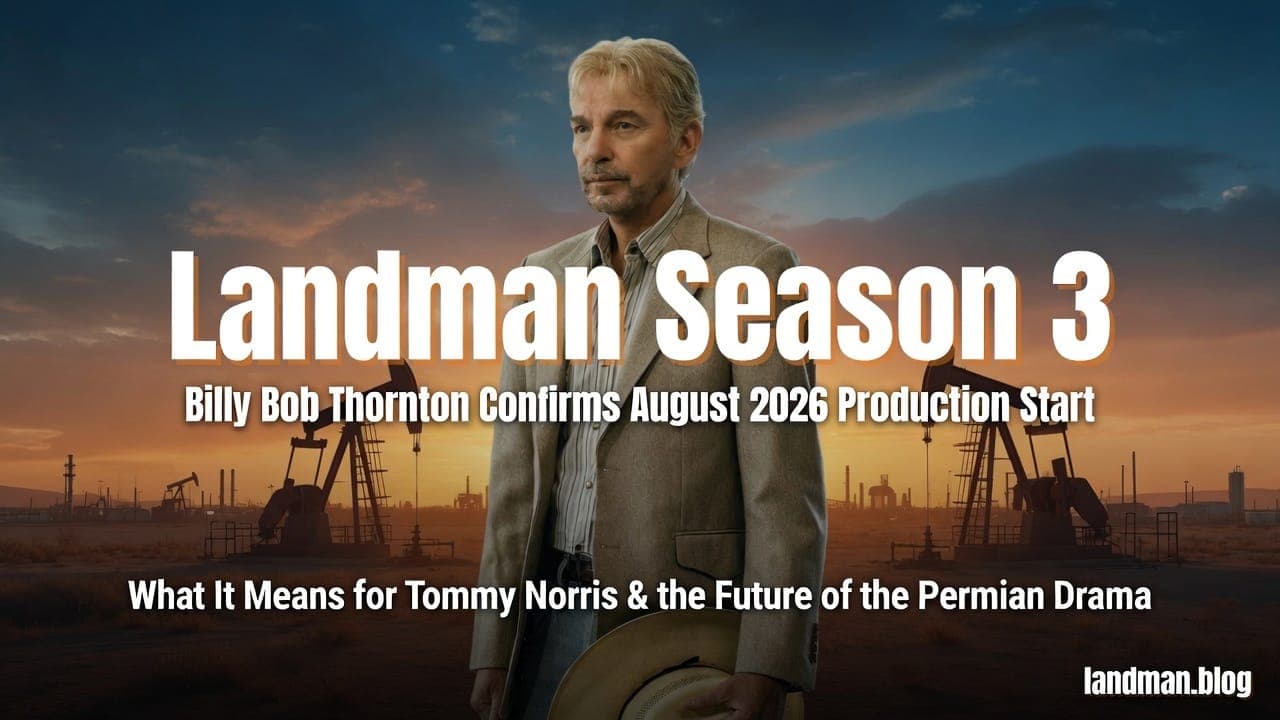
Billy Bob Thornton, who not only stars as Tommy Norris but also serves as an executive producer, has made clear he views Landman as a multi-year commitment. Speaking with The Hollywood Reporter, Thornton revealed he signed "a multi-year deal for four-to-five years of the series" and expressed his desire to continue "as long as I'm able" or until the story naturally concludes. "I think Landman, as an entity, will know when it's over," he noted, suggesting a thoughtful approach to the series' lifespan rather than a rush to milk the success. (The Hollywood Reporter)
Sam Elliott, who joined Season 2 as Tommy's father T.L. Norris, accidentally confirmed Season 3 before the official announcement. In an interview with ExtraTV, Elliott casually mentioned he'd be "going back to Texas" for Season 3 production, revealing not only the renewal but also the production timeline. His enthusiasm for the project was evident: "I don't think I've ever been involved in something that so many people on the audience end of it were so excited to see." Whiskey Riff covered Elliott's enthusiastic comments.
Elliott's comments also provided insight into the production schedule. If his shooting timeline proves accurate, Season 3 would follow the same annual release pattern as Season 2—suggesting fans might see new episodes by November 2026. Given Sheridan's reputation for maintaining tight production schedules across his various series, this seems likely.
Christian Wallace, co-creator and showrunner, has been equally enthusiastic about the show's potential. His comment about "barely skimming the surface" of what Landman can explore suggests ambitious plans for future seasons. The Boomtown podcast that inspired the series covered a vast landscape of West Texas oil culture—from environmental disasters to labor exploitation to the billionaires reshaping the region. Only a fraction of that material has made it to screen, leaving enormous narrative potential for Seasons 3 and beyond. (CBR)
What Season 3 Might Bring: Expanding the Texas Oil Empire
While specific plot details for Season 3 remain under wraps, Season 2's developments provide tantalizing hints about where the story might head.
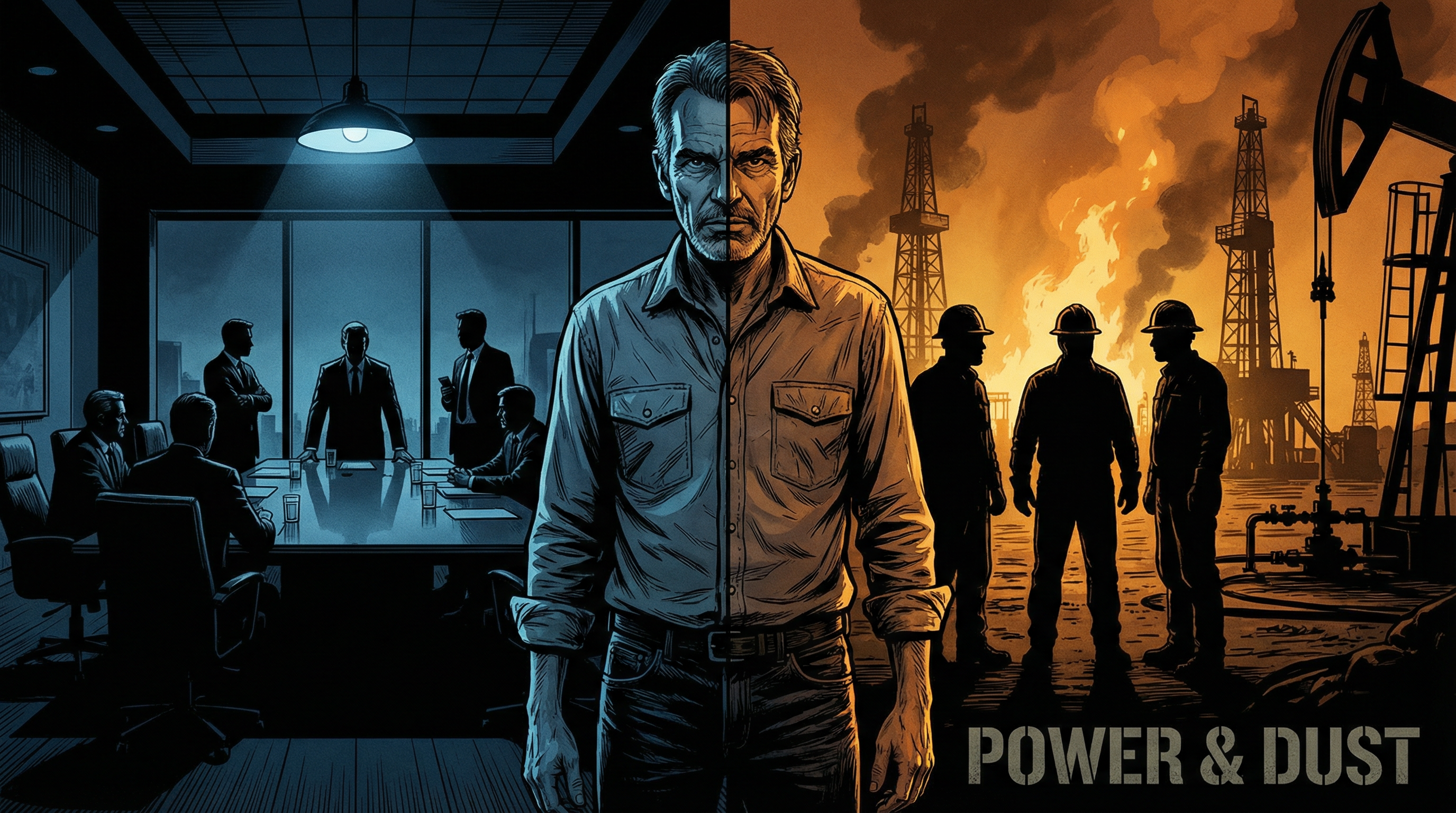
Season 2 has dramatically expanded Landman's scope. The death of Jon Hamm's Monty Miller at the end of Season 1 elevated Tommy Norris from crisis manager to president of M-Tex Oil, fundamentally changing his role and responsibilities. Demi Moore's Cami Miller—Monty's widow and the company's new owner—has emerged as a major power player, navigating the male-dominated oil industry with fierce determination. The introduction of Andy Garcia as cartel kingpin Danny "Gallino" Morrell has added international stakes and genuine danger to what was already a volatile situation.
Season 3 will presumably continue exploring these threads while introducing new complications. The financial crisis at M-Tex—revealed in recent episodes to involve missing funds and questionable accounting—promises to create sustained tension. Cooper's disastrous entanglement with Gallino's operation sets up conflicts that could reverberate across multiple seasons. And the addition of Sam Elliott as Tommy's father T.L. Norris has opened up unexplored family dynamics and generational tensions.
Beyond individual character arcs, Season 3 will likely continue Landman's thematic exploration of American capitalism at its most ruthless. The show has never shied away from depicting the environmental destruction, worker exploitation, and moral compromises inherent in the oil industry. As Sheridan and Wallace have emphasized, there's vast terrain left to explore—regulatory battles, community resistance, technological disruption, and the looming specter of climate change all offer rich material for future seasons.
The show's ensemble structure also allows for narrative expansion. While Thornton's Tommy Norris remains the anchor, Landman has demonstrated skill at building out supporting characters and storylines. Mark Collie's Sheriff Walt Joeberg, Kayla Wallace's Rebecca Falcone, and the various roughnecks and executives populating M-Tex's world all offer opportunities for deeper exploration. Esquire analyzed these narrative possibilities.
Production Timeline and Cast Continuity
Based on available information, Season 3 production will likely begin in 2026, with an eye toward maintaining Landman's annual release schedule. The show has established a pattern of November premieres—Season 1 debuted November 17, 2024, and Season 2 premiered November 16, 2025. If this pattern continues, fans can expect Season 3 around November 2026. Collider reported on the anticipated production timeline.
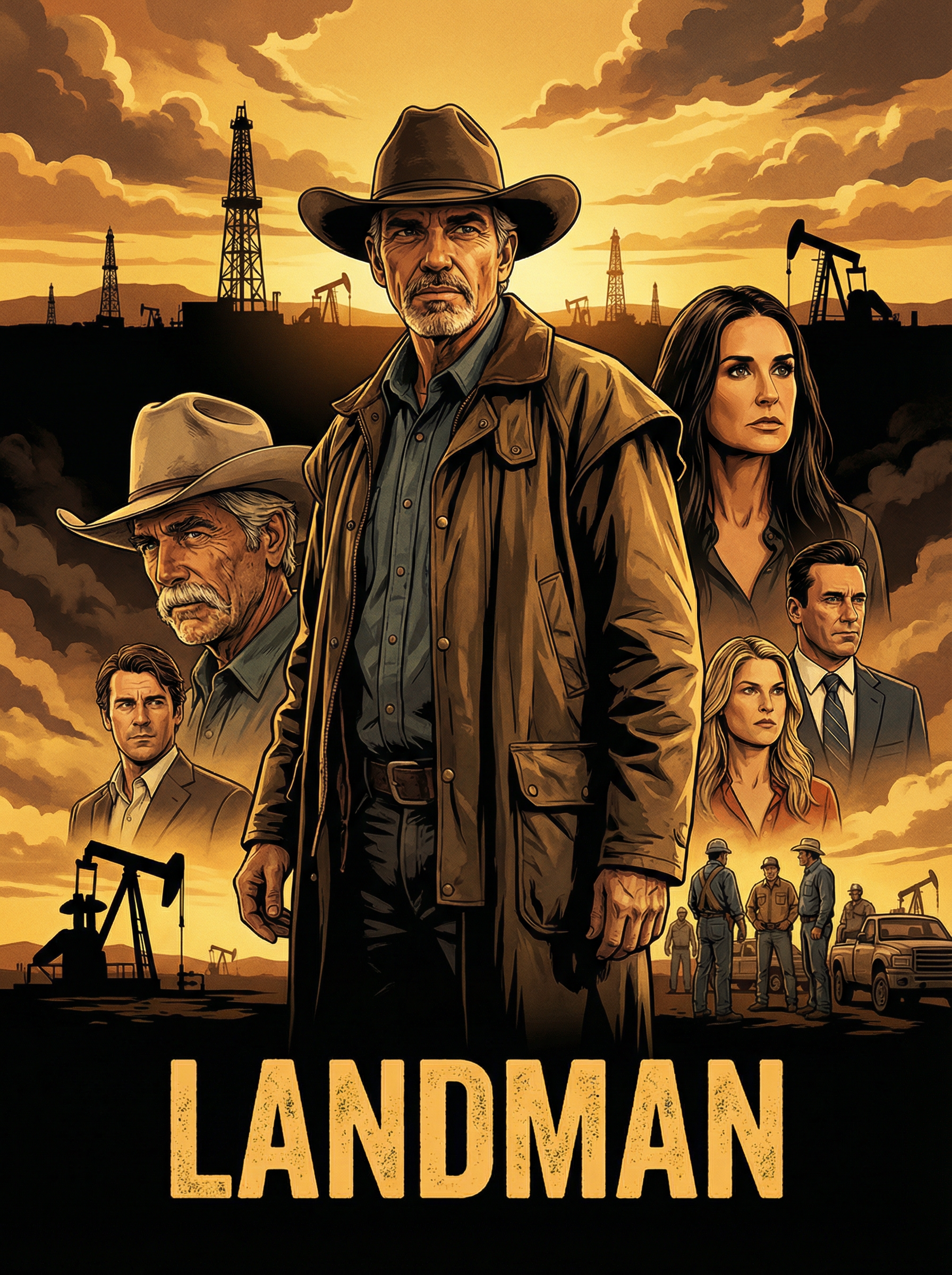
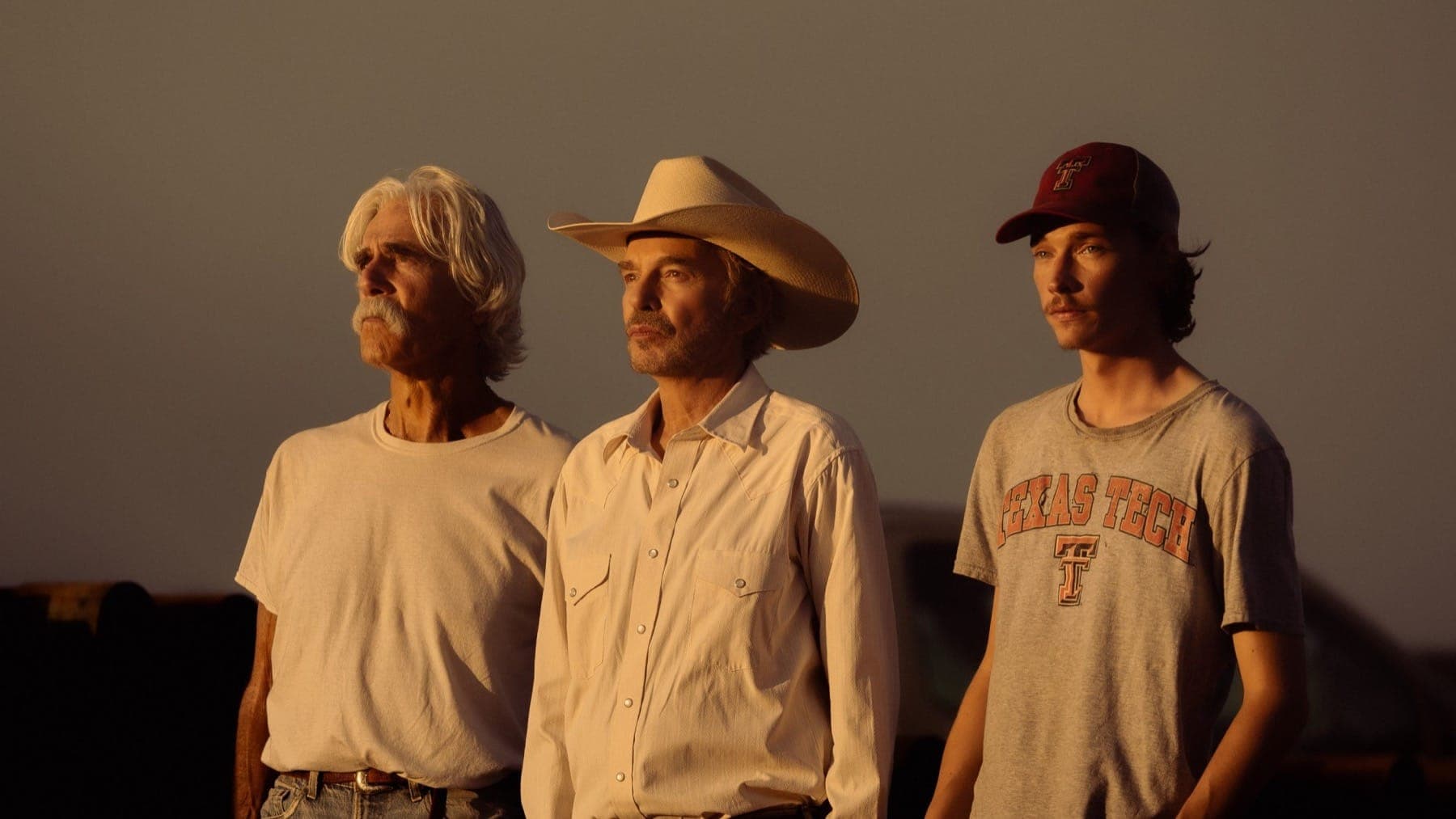
The core cast is confirmed to return. Beyond Thornton, Moore, Garcia, Elliott, and Larter, the ensemble includes Jacob Lofland, Michelle Randolph, Paulina Chávez, Kayla Wallace, Mark Collie, James Jordan, and Colm Feore. Additional casting announcements will presumably arrive as production approaches, particularly if Season 3 expands its scope geographically or introduces new corporate or criminal players. AOL covered the confirmed cast returns.
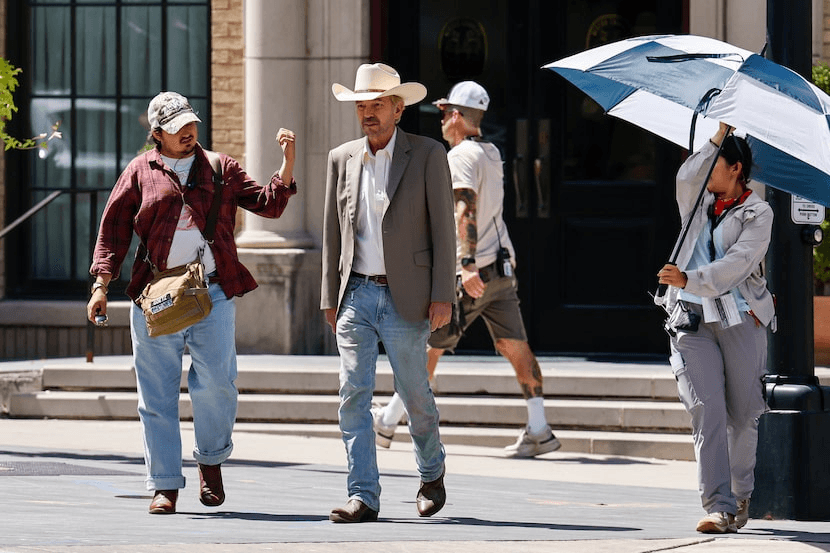
Filming will continue to be centered in Fort Worth, Texas, where Landman has become a significant economic and cultural presence. The show has shot at iconic locations including the Petroleum Club, Sundance Square, and Hotel Drover, bringing A-list talent to North Texas and cementing the region's growing importance in Sheridan's television empire. Fort Worth CultureMap discussed the local production impact.
The Broader Implications: Landman as Paramount+'s Flagship
Landman's renewal and success have significant implications beyond the show itself. The series has effectively become a cornerstone of Paramount+'s content strategy, demonstrating that the platform can compete with industry giants through prestige drama rather than just reality programming or sports.
The timing of the renewal coincided with Billy Bob Thornton receiving a Critics Choice Award nomination for Best Actor in a Drama Series—recognition that validates both the show's quality and Thornton's powerhouse performance. While Season 1 received limited awards attention aside from Golden Globe and Satellite Award nominations, the Critics Choice nod suggests growing industry respect for Landman's artistic achievements. Gold Derby noted this awards recognition.
The show's success also reinforces Taylor Sheridan's extraordinary influence in television. Despite his impending move to NBCUniversal, Sheridan remains the architect of Paramount+'s most successful original programming. His ability to create shows that attract both massive audiences and critical attention—while maintaining distinctive authorial voices—is virtually unprecedented in modern television. Landman joins Yellowstone, 1923, and Tulsa King as proof that Sheridan has cracked the code for populist prestige television.
For Fort Worth and North Texas, Landman's continued success represents significant economic and cultural impact. Sheridan, who lives near Fort Worth with his wife Nicole, has effectively made the region a hub for his productions. The jobs, economic activity, and cultural cachet generated by these productions have transformed North Texas into a legitimate production center, rivaling traditional hubs like Atlanta and New Mexico. Star-Telegram reported on this regional impact.
The Competitive Landscape: What Landman's Success Means for Streaming
Landman's triumph arrives at a crucial moment in the streaming wars. As platforms consolidate, raise prices, and face increased scrutiny over content spending, the pressure to produce genuine hits has never been greater. Landman represents exactly the kind of success story streaming services desperately need: a show that attracts subscribers, generates cultural conversation, and demonstrates platform value.
The 262% viewership increase from Season 1 to Season 2 is particularly significant. In an era of franchise fatigue and declining interest in second seasons, Landman managed to more than triple its audience—a feat that suggests genuine audience enthusiasm rather than algorithmic manipulation or promotional gimmickry. This organic growth is the holy grail of streaming content, indicating that the show has broken through the noise to become genuine event television.
The Nielsen data placing Landman among the top-three streaming originals during its premiere week and top-two the following week demonstrates its ability to compete across the entire streaming landscape, not just within Paramount+'s library. This cross-platform dominance is rare for non-Netflix shows, suggesting Landman has achieved the kind of cultural penetration typically reserved for The Crown, Stranger Things, or The Last of Us. (Give Me My Remote)
Looking Ahead: The Long Game for Landman
As Landman heads into Season 3, the show occupies an enviable position in the television landscape. It has massive audience support, critical recognition, a committed creative team, and network backing at the highest levels. The early renewal eliminates uncertainty, allowing the writers and producers to plan long-term story arcs rather than hedging their bets.
Christian Wallace's comment about "barely skimming the surface" of Landman's potential isn't just promotional rhetoric—it reflects the genuine depth of the world Sheridan and Wallace have created. The West Texas oil boom is a microcosm of American capitalism, embodying all its dynamism, cruelty, innovation, and moral compromise. There's material here for many more seasons, assuming the creative team maintains the quality that has defined the first two.
Billy Bob Thornton's four-to-five year commitment suggests he shares this long-term vision. Unlike many actors who view television roles as stopgaps between film projects, Thornton has embraced Landman as a signature work—a chance to create a complex, career-defining character across multiple seasons. His performance as Tommy Norris has already proven one of television's richest character studies, and with several more seasons ahead, the role could become his Breaking Bad or The Sopranos—the work that defines his artistic legacy.
Mark Collie, who plays Sheriff Walt Joeberg, assured fans that Landman would "keep on rocking" into the future, expressing confidence that Sheridan is "telling this story up to here"—suggesting ambitious plans extending well beyond Season 3. (Harper's Bazaar)
Conclusion: Oil Wells Don't Run Dry Overnight
The rapid renewal of Landman for Season 3 represents more than a savvy business decision—it's a validation of complex, adult storytelling in an increasingly risk-averse streaming landscape. At a time when many platforms are retreating from ambitious original programming, Paramount+ has doubled down on a show that refuses to offer easy answers or comforting narratives.
Landman depicts American capitalism at its most brutal and most vital—where fortunes are made and destroyed overnight, where workers' lives are expendable, where environmental destruction is a business expense, and where the machinery of extraction shapes everything from local politics to global markets. It's the kind of storytelling that requires faith from networks and patience from audiences, rewarding both with depth, complexity, and genuine dramatic power.
The numbers—9.2 million views, 262% growth, top-two streaming performance—tell part of the story. But the real measure of Landman's success is its cultural penetration, its ability to spark conversations about American industry, morality, and power. It's television that matters, that engages with the world rather than escaping from it.
As Season 2 continues its weekly rollout and Season 3 enters development, Landman stands as proof that there's still a massive audience for grown-up television—shows that trust viewers' intelligence, embrace moral complexity, and tell stories about how power actually operates in contemporary America. The renewal ensures that this story will continue, that the drill will keep running, and that the oil will keep flowing—both literal and metaphorical—for seasons to come.
For fans, the message is clear: Landman isn't going anywhere. The show has struck oil, and like the West Texas wells it depicts, this one runs deep. The early Season 3 renewal is just the beginning of what promises to be a long, profitable, and artistically significant run. In the competitive landscape of streaming television, Landman has secured its place as essential viewing—and with Taylor Sheridan at the helm through 2028, the future looks as bright as a Texas sunrise over an oil derrick.