When Performance Transcends Script: A Masterclass at a Funeral
The first three episodes of Landman Season 2 brought us oil rig explosions, cartel threats, and corporate power plays. But Episode 4, "Dancing Rainbows," turns the camera toward a more intimate, more painful battlefield—a fractured family's reconciliation at a funeral. This episode isn't just the season's emotional peak; it's what critics are calling "a masterclass in acting," proving what heights Taylor Sheridan's work can reach when he slows down and digs deep into character.
The deceptively gentle title "Dancing Rainbows" wraps around the cruelest of metaphors. Rainbows represent hope, beauty, and fleeting happiness, while "chasing rainbows" suggests a doomed obsession. As T.L. tells his son Tommy in that restaurant booth: "But demons run faster than rainbows"—a line that becomes the key to understanding the entire episode's theme.
Opening With Death: The Sheridan Setup
This episode continues Landman's signature opening move: a sudden, devastating crash. Late at night, an M-Tex oil tanker barrels toward a drill site and plows directly into a pickup truck parked on the roadside. Both drivers die instantly. The accident seems random, but there's a dark twist—the pickup's owner was attempting suicide by carbon monoxide, routing exhaust into the cab, only to have the truck "complete" his plan at the last moment.
This kind of brutal coincidence is classic Sheridan, though critics remain divided on the approach. As Ready Steady Cut points out, Sheridan has an "odd fascination with having his plots turn on totally random events"—sometimes it's bears (appearing surprisingly often in both Yellowstone and Mayor of Kingstown), sometimes traffic accidents or meth lab explosions. citation This tendency shows most clearly when there's no strong main plot, and Landman Season 2 sits right in that transitional space.
But this crash is merely the episode's opening gambit. The real emotional heavy lifting happens at a Texas funeral.
The Funeral Gathering: Unhealed Family Wounds

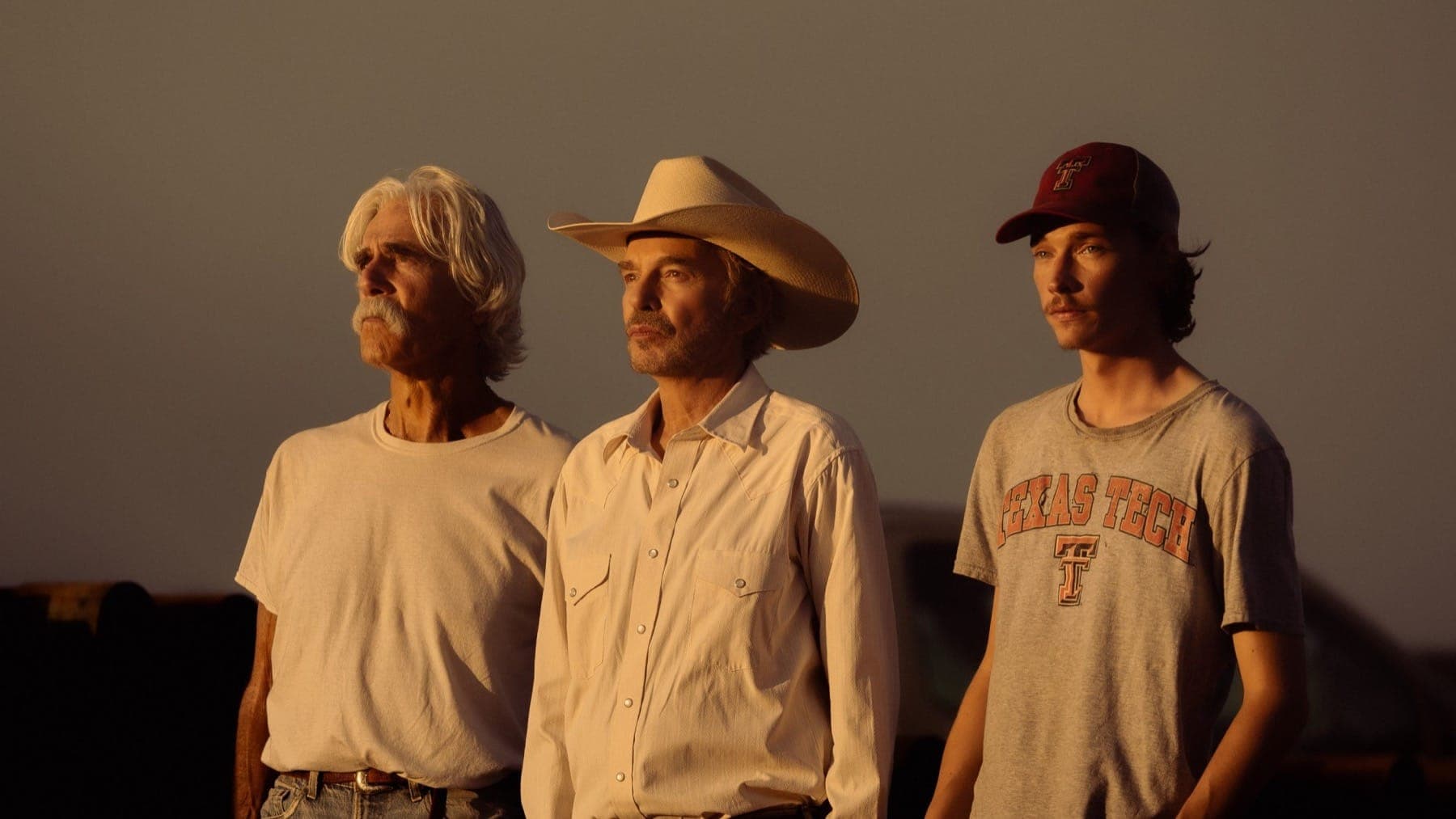
The funeral scene that anchors Episode 4's emotional core
Tommy's mother Dorothy (Dottie) has died. But this isn't a mournful goodbye—it's a collective exposure of family trauma. When everyone gathers for the funeral—Tommy, Angela, Ainsley, Cooper, Ariana, and the long-estranged grandfather T.L.—the air isn't thick with grief but with awkwardness, resentment, and unspoken accusations.
Tommy insists from the start that he's here to "celebrate" his mother's passing, not mourn it. This coldness unsettles his wife Angela, who tries to get Tommy to truly talk with his father T.L., rather than maintain years of distant civility. But Tommy refuses: "I came here to celebrate Dottie's passing, not to mourn it."
Billy Bob Thornton's performance in these scenes is heartbreaking. His face shows none of the satisfaction "celebration" would suggest. Instead, we see profound sadness—he's mourning not the real mother, but the mother he should have had and never did. citation
The Restaurant Monologues: Two Generations, Rainbows and Demons
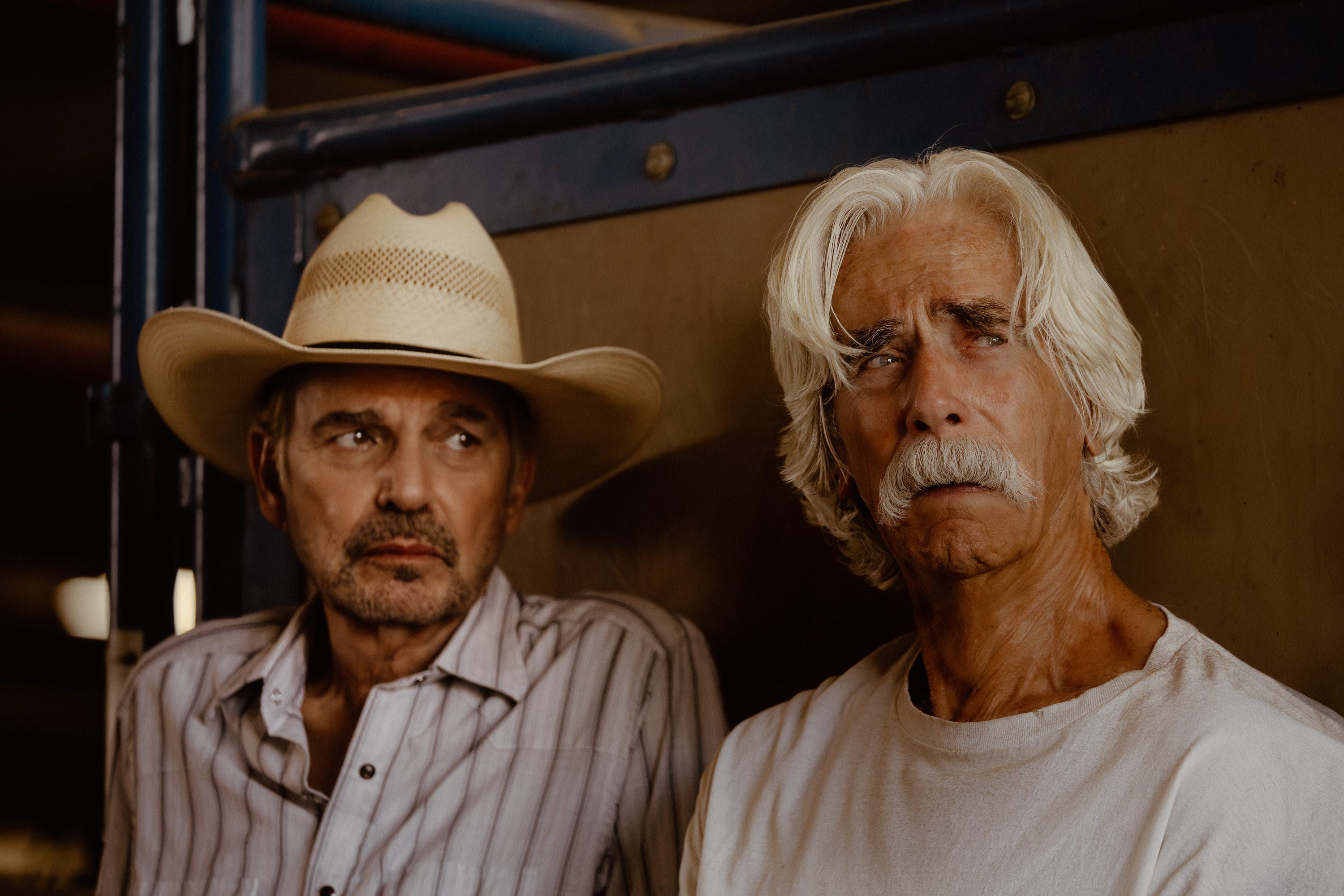
The episode's core scene unfolds over lunch. Tommy tells the family about his mother's alcoholism—how she got blackout drunk at his college graduation luncheon, humiliating young Tommy in front of classmates and professors. This story leaves daughter Ainsley in tears, and later that night, watching Save the Last Dance, she sobs to her father: "I don't care how many rainbows she chased. I hope God takes one of those rainbows and just shoves it right up her ass." citation
But the story isn't finished. Tommy then reveals a family secret: he had a sister who died of Sudden Infant Death Syndrome at four months old. This tragedy destroyed Dorothy; she never recovered from losing her daughter.
After Tommy leaves the table, T.L. stays behind and begins telling a completely different story about Dorothy. Sam Elliott's performance reaches its apex here. His voice low and nostalgic, he recounts a summer afternoon:
"When she was 17, I ain't never seen someone more alive. She made me stop the car so she could dance in the rainbows."
It was the rainbows created by lawn sprinklers in the sunlight. Young Dorothy, barefoot, spinning and laughing in the water mist as if the whole world belonged to her. T.L. fell in love with that girl—that girl who chased rainbows.
Then he delivers the episode's most devastating line:
"But demons run faster than rainbows, and hers caught up to her. I spent 60 years waiting for her rainbow to return, and it never did. That's life. And I wasted mine on hope." citation
This monologue evokes García Márquez's One Hundred Years of Solitude—how memories of beautiful things erode under time and tragedy, how lovers exhaust their lives in obsession. Sam Elliott's performance holds no artifice; every word feels wrung from sixty years of regret.
Tommy's Counterattack: The Bathtub Trauma
If T.L.'s story romanticizes tragedy, Tommy's response is brutal reality. That evening, he reveals to Ainsley something he's never mentioned:
At fourteen, he came home from school to find his mother face-down in the bathtub, unconscious. The teenage boy performed CPR, desperately compressing her chest, forcing water from her lungs. He saved her life.
What was Dorothy's first response upon waking? She kicked her son in the head and angrily demanded to know why he'd saved her.
This detail lands like a punch, shattering all of T.L.'s romantic fantasies about the "rainbow girl." Tommy saved his mother's life and earned her hatred for it. That's the lesson he learned at fourteen: your love might not be wanted, your sacrifice might be resented, and your closest family might wish you didn't exist.
Billy Bob Thornton delivers this story without raising his voice or shedding tears, just recounting facts in a numbly calm tone. This restraint makes the performance more powerful—this is a man who's lived with trauma for decades, needing no dramatic emotional outburst because the pain has long since become part of his character. citation
Redeeming the Female Characters: Dimensionality for Angela and Ainsley
One of Landman Season 2's biggest problems in earlier episodes was the flattening of Angela and Ainsley. They seemed to exist only on the edges of Tommy's story, lacking their own narrative dimensions. But "Dancing Rainbows" begins correcting this.
Angela becomes the key figure driving family reconciliation. She sees the decades-old rift between Tommy and T.L. and gently but firmly pushes Tommy to face his father. She's not simply the "supportive wife" but a mature woman who understands trauma and knows how to guide her partner toward healing.
Ainsley's character is even more moving. When she hears her father describe her grandmother's behavior at the graduation lunch, her reaction isn't perfunctory sympathy but genuine anger—anger at her father's humiliation, anger at her grandmother's selfishness. That line about "shoving a rainbow up her ass" is crude but real, a young woman's most direct indictment of an irresponsible elder.
As the site TV Brittany F notes, this episode "deserves a round of applause for giving both Angela and Ainsley Norris back some of their dimension." The funeral gives both characters genuinely serious moments, no longer just decorative accompaniments to Tommy's story. citation
Rebecca's Unexpected Encounter: Escape at 30,000 Feet
If Tommy's storyline is saturated with repressed emotion, Rebecca Falcone's subplot offers a kind of dark comedic release.
Attorney Rebecca needs to fly to the accident site to handle M-Tex's legal issues, but she's terrified of flying. On the plane, severe turbulence strikes, and panicked Rebecca starts downing alcohol to calm her nerves. Seated beside her is a mysterious man named Charlie Newsom, who looks like an oil worker but possesses unusual charm.
Alcohol, fear, and a stranger's gentleness—this combination produces predictable results. Rebecca passes out drunk and wakes the next morning in Charlie's hotel room. She remembers almost nothing about the previous night except that she slept with this stranger.
This plotline feels jarring against the main narrative, but it serves a larger theme: escape. Rebecca escapes work pressure through alcohol and sex, just as Dorothy escaped grief through alcohol, and T.L. escaped marital truth through romanticized memories. Everyone escapes reality in their own way. citation
Worth noting: Charlie, played by Guy Burnet, remains incompletely revealed in this episode. Is he really just an oil worker? Or is he connected to Gallino or other forces? This plants seeds for future plot developments.
Another M-Tex Disaster: The Myth of Zero Accident Days
The opening crash isn't an isolated incident but the latest in M-Tex's ongoing safety crisis. Two drivers dead, the company once again facing legal liability and PR nightmares.
As the new power holder, Cami Miller must confront the mess her husband Monty left behind. She's reached some kind of agreement with Danny Morrell (actually cartel boss Gallino), though the specific terms remain unclear. Gallino insists on negotiating details only with Tommy, leaving Cami in an awkward middle position—holding the title of power but lacking full decision-making authority.
Critics note Cami's character receives further development in this episode. She visits Monty's grave for the first time, a brief scene that marks her beginning to truly process her grief and prepare to lead the company her own way. As TechRadar argues, "Monty had to die so we could see more of Demi Moore's performance"—though Moore herself says she "missed having Jon Hamm on set." citation
But compared to Cami's corporate politics, the episode's true focus remains on the Norris family's emotional crisis. As Esquire puts it: "We might pal around with an oil company's president all day by following Tommy Norris, but Landman's most engaging stories cover what happens when you run a business that reports zero days without an accident every single day." citation
The Beginning of Reconciliation: T.L. Moves In
The episode's ending marks a major turning point in Norris family relations. After the funeral's emotional impact, the restaurant's honest conversation, and late-night intimate exchanges, Tommy makes a decision: he invites his father T.L. to leave the Prairie View nursing home and move in with them.
This decision shocks everyone, including T.L. himself. Decades of estrangement and resentment seem to find some outlet in a single funeral. Tommy hasn't forgiven his mother—he probably never will—but he's beginning to understand his father. T.L. wasn't a perfect father; he did indulge romantic fantasies about his wife while neglecting his son's real needs. But he's also a victim, a man trapped his entire life by the obsession with "chasing rainbows."
Angela plays a crucial role in pushing this decision forward. She sees Tommy's internal softening and offers timely encouragement. Ainsley, after hearing the real story about her grandmother, develops more sympathy for her grandfather. The entire family seems ready to welcome T.L.'s arrival.
This ending is warm but not cheap. Landman doesn't use one funeral to completely heal decades of trauma; it simply makes reconciliation possible. Can T.L. truly integrate into this family? Can Tommy let go of his resentment toward his mother? These questions remain for future episodes to answer. citation
Critical Acclaim: A Masterclass in Performance
After "Dancing Rainbows" aired, critics offered nearly unanimous praise, especially for Billy Bob Thornton and Sam Elliott's performances.
TVLine's headline declared directly: "Landman Season 2 Leveled Up With This Masterclass Moment From Billy Bob Thornton And Sam Elliott." The article notes: "Although Landman boasts a cast of many talented actors (including a criminally underused Demi Moore), Thornton and Elliott are on a whole other level in the restaurant scene. Their monologues are a masterclass." citation
Screen Rant gave the episode high marks, calling it one that "Raises the Bar for Its Hit Neo-Western Drama": "After a somewhat safe season opener, Landman has found its stride with Cooper's—and now T.L.'s—increased involvement, and intriguing new set-ups that showcase unexplored areas of the oil business—like last week's CO gas—and untapped reserves of the Norris family's backstory." citation
Vulture awarded the episode four stars, finding it "covers quite a lot of emotional ground": "We've been waiting weeks for some more information on Tommy's mother—and for some follow-up to Tommy's tense reunion with his father—and at last, we get it. In fact, 'Dancing Rainbows' covers quite a lot of emotional ground from start to finish, to the point that I'm awarding it another four stars even though it's not the most thrilling TV episode ever." citation
Reddit viewers responded with equal enthusiasm. One user commented: "I know people like to be critical here, but I'm enjoying this show. It's not one of the all time great shows, but it's a fun watch." Another shared: "Best episode so far, but I might be biased because my dad passed early and never really met him. [Billy Bob Thornton is] so damn good in this show on being able to relate to him and his what his character (Tommy) is going through." citation
Sheridan's Strength: When He Slows Down
"Dancing Rainbows"'s success reveals a paradox in Taylor Sheridan's work: when he slows the pace and focuses on character rather than plot, his writing often achieves its greatest heights.
Ready Steady Cut identifies this pattern: "Landman Season 2 keeps doing this, and in Episode 4, it does it remarkably. It presents an episode in which almost nothing is really going on, that threatens to be dull and empty and pointless, and then has very talented actors deliver award-worthy performances out of nowhere. Every word that comes out of Billy Bob Thornton and Sam Elliott's mouths in 'Dancing Rainbows' is golden, dripping with sincerity and pain and experience." citation
This contrasts with Sheridan's other work. In Yellowstone's later seasons, he increasingly relied on complex schemes, violent conflicts, and fast-paced editing. But the most memorable moments—John Dutton's monologues about land legacy, or Beth's late-night conversations with her father—all occur in quiet, character-driven scenes.
"Dancing Rainbows" proves Sheridan still possesses the ability to craft such scenes. T.L.'s rainbow monologue, Tommy's bathtub memory, Ainsley's late-night tears—these moments need no explosions, gunfights, or shocking conspiracies. They only require good writing, good acting, and respect for the truth of human emotion.
One Funeral, Two Memories, Sixty Years of Obsession
The title "Dancing Rainbows" can be read two ways: it refers both to young Dorothy dancing in the rainbow sprinklers and to T.L. spending his life chasing that vanished rainbow—that seventeen-year-old girl, that vital soul, that image forever frozen by the sprinklers in his mind.
But as T.L. himself says, demons run faster than rainbows. Addiction, child loss, depression, anger—these demons caught Dorothy and consumed all her light. T.L. waited sixty years for the rainbow to return, but it never did. And Tommy knew from age fourteen that the rainbow was never meant for him.
This is a story about how memory deceives us, how love becomes obsession, how trauma transmits across generations. But it's also a story about the possibility of reconciliation—not with the dead, but with the living, with the family we choose, with those who carry their own scars forward.
When Tommy invites T.L. to move in at the episode's end, he's not forgiving all his father's failures but choosing not to let the past continue defining the future. It's a small, fragile reconciliation that could shatter at any moment, but it's real.
In Landman, a show filled with oil well blowouts, truck explosions, and cartel threats, "Dancing Rainbows" reminds us: the deepest wounds don't come from accidents but from family; the hardest reconciliations don't happen in courtrooms but at dining tables; the most moving performances don't need action sequences, just two men, one memory, and sixty years of unspoken truth.
This is why the episode earned the label "masterclass," why it received such praise after airing. Because in Billy Bob Thornton and Sam Elliott's performances, we see not just Tommy and T.L., but all those who carry family trauma and try to find meaning in collapsing memories.
Rainbows always fade, but the courage to move forward can pass from generation to generation. Perhaps that's the message "Dancing Rainbows" ultimately wants to convey.