The Quiet Power Behind M-Tex: Nathan's Essential Role
In Taylor Sheridan's sprawling oil drama Landman, the testosterone-fueled world of West Texas petroleum is filled with roughnecks, billionaires, and crisis managers like Tommy Norris. But behind every dangerous well and multi-million-dollar deal stands a figure who rarely raises his voice yet wields immense influence: Nathan, M-Tex's chief legal counsel, portrayed with magnetic restraint by Canadian acting legend Colm Feore.
While Billy Bob Thornton's Tommy handles the daily chaos of oil field operations and Jon Hamm's Monty Miller plays the swaggering billionaire boss, Nathan occupies a unique position in Landman's ecosystem. He is the architect of legitimacy, the man who transforms raw ambition and dangerous gambles into legally defensible business decisions. In a show that explores the moral compromises inherent in America's energy industry, Nathan represents the intellectual machinery that keeps the whole enterprise running—or at least appearing to run—within the boundaries of law.
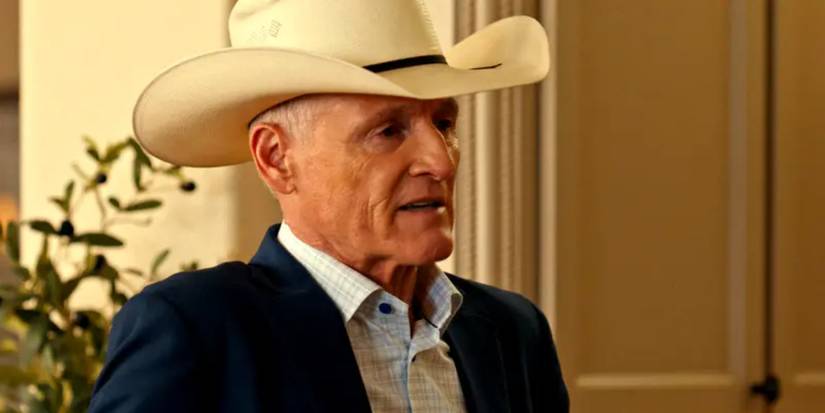
What makes Nathan fascinating is not just his function but his form: impeccably dressed in three-piece suits topped with a cowboy hat, he is the visual embodiment of Landman's central tension between old frontier values and modern corporate capitalism. He speaks in measured tones, never grandstands, and yet his presence in a room immediately changes its temperature. This is corporate power at its most refined—and Colm Feore delivers it with masterful understatement.
The Legal Architect: Nathan's Function in the Oil Machinery
Nathan's role extends far beyond the stereotype of a "company lawyer." In Landman, where business decisions can result in environmental disasters, worker deaths, and cartel violence, Nathan serves as the institutional conscience—or perhaps more accurately, as the voice that asks "Can we defend this in court?" rather than "Is this right?"
Throughout Season 2, we see Nathan navigate increasingly complex legal terrain. When Tommy's son Cooper makes catastrophic decisions regarding cartel money, Nathan is the one calculating exposure, crafting narratives, and building legal firewalls. When environmental incidents threaten M-Tex's operations, Nathan works to contain regulatory fallout. His job is not to prevent disaster but to manage its legal aftermath—a distinctly modern form of crisis management.
What distinguishes Nathan from typical TV lawyers is his pragmatism. He doesn't deliver passionate courtroom speeches or moral lectures. Instead, he operates in the grey zones that Sheridan's writing loves to explore: places where legality diverges from morality, where corporate interests clash with human welfare, and where the letter of the law can be weaponized to serve powerful interests.
In one particularly telling scene, Nathan discusses a drilling incident with Tommy. His questions are clinical: What documentation exists? Who can testify to what? What's our regulatory exposure? He's not asking whether M-Tex is responsible in a moral sense—he's calculating how responsibility can be legally distributed, deflected, or diluted. It's a chilling portrait of corporate law as a form of strategic defense rather than justice-seeking.
This pragmatism makes Nathan essential to Landman's thematic project. Sheridan has always been interested in systems of power—how they're maintained, who they serve, and what costs they exact. Nathan represents the legal infrastructure that allows the oil industry to function despite its human and environmental toll. He is the bureaucratic machinery that transforms ethical questions into procedural ones.
The Texas Paradox: Suit, Hat, and Cultural Identity
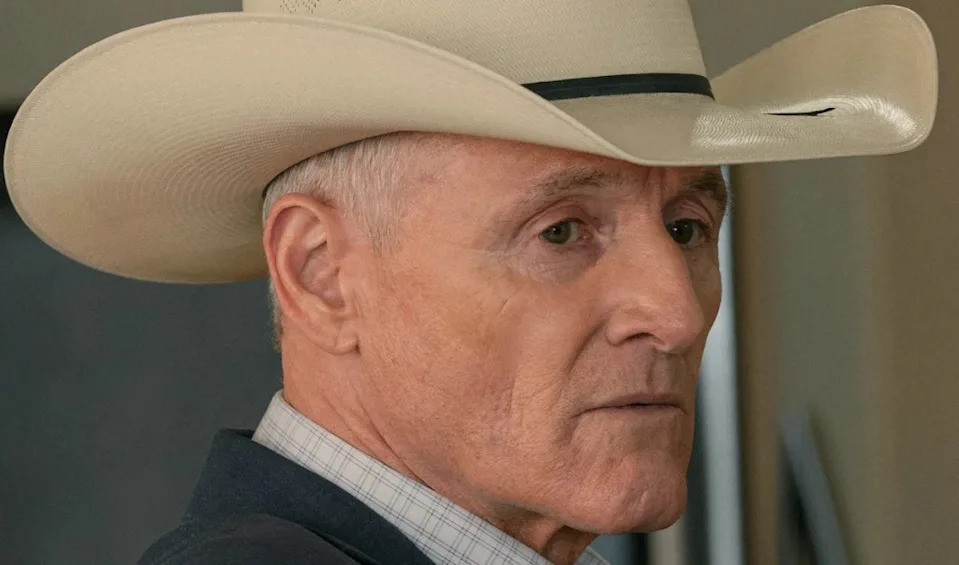
Nathan's signature look—immaculate three-piece suits crowned with a cowboy hat—is no accident of costume design. It's a visual thesis statement about contemporary Texas business culture and the show's larger themes about American identity.
The suit represents institutional power, corporate professionalism, and the modern legal frameworks that govern billion-dollar industries. It speaks to Nathan's role as a creature of contracts, regulations, and procedural mechanisms. But the cowboy hat roots him in Texas mythology—the frontier spirit, individual autonomy, and a certain defiance of Eastern establishment norms.
This sartorial contradiction mirrors the contradiction at the heart of the modern oil industry itself. The Permian Basin boom is simultaneously a return to Wild West frontier capitalism and a showcase of sophisticated corporate engineering. The roughnecks working the rigs may embody traditional masculine labor, but they're employed by multinational corporations navigating complex regulatory environments. Nathan's wardrobe captures this duality perfectly.
Sheridan has always been fascinated by how the mythology of the American West persists in contemporary contexts—from the modern Indian reservations of Wind River to the ranching families of Yellowstone. Nathan represents a specific evolution: the Western figure who has traded a six-shooter for legal briefs but maintains that distinctive Texas identity. He's what happens when frontier individualism meets corporate law.
Feore's portrayal emphasizes this contradiction through subtle physical choices. His posture is corporate-perfect—straight-backed, controlled, economical in movement. Yet there's something unmistakably Texan in his cadence, his comfort in the landscape, his understanding of the unwritten rules that govern oil patch business. He's an outsider's idea of a Texas lawyer and an insider's reality, all at once.
Colm Feore: The Art of Restrained Authority
To understand what makes Feore's performance as Nathan so effective, it's worth considering his broader career trajectory. The Canadian actor has built a reputation playing men of authority—from Pierre Trudeau in multiple productions to high-ranking military officers, politicians, and corporate leaders. He has a particular gift for portraying intelligence without warmth, competence without sympathy.
In Nathan, Feore taps into this established persona but adds layers specific to Landman's world. His performance is a masterclass in restraint. In a show where characters regularly explode in anger, grief, or desperation, Nathan maintains an almost preternatural calm. His voice rarely rises above conversational volume. His expressions shift in micro-movements—a slight narrowing of eyes, a barely perceptible tightening of jaw, a momentary pause before responding.
This restraint is not weakness but power. Nathan's composure signals that he operates from a position of security. Unlike Tommy, who must constantly react to crises, or Cooper, who's in over his head, Nathan has the luxury of thinking before acting, of choosing his words, of playing the long game. Feore makes this visible through his pacing—he never rushes, never fills silence unnecessarily, never competes for attention.
Compare Feore's Nathan to his performance as Martin Donovan in The Exorcism or Cardinal Strauss in The Amazing Spider-Man 2. In those roles, Feore brought menace, volatility, and dark charisma. As Nathan, he removes all theatrical flourish. There are no villainous monologues, no scenery-chewing moments. Instead, Feore gives us a portrait of bureaucratic power—the kind that doesn't need to announce itself because it's embedded in institutional structures.
The genius of this approach is how it makes Nathan simultaneously sympathetic and unsettling. He's not a cartoon villain. He seems reasonable, intelligent, even helpful. But that reasonableness is precisely what enables the system's perpetuation. Nathan doesn't twirl a mustache—he drafts liability waivers and structures corporate entities to shield executives from consequences.
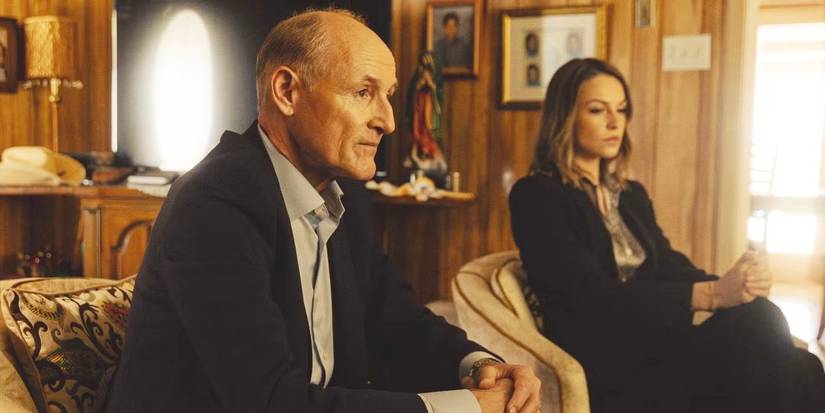
Feore's scene work demonstrates this brilliantly. In his interactions with Rebecca (Kayla Wallace), we see Nathan as a mentor figure—patient, instructive, seemingly invested in her professional development. Yet there's always an undercurrent of calculation. Is he genuinely mentoring her, or is he cultivating loyalty? Teaching legal thinking, or instilling corporate values? Feore plays both possibilities simultaneously, never quite letting us settle on one interpretation.
Similarly, his scenes with Tommy reveal a complex relationship. On the surface, Nathan provides Tommy with legal advice and support. But Feore's performance suggests Nathan also serves a gatekeeping function—managing what information reaches Monty Miller, shaping narratives about field operations, deciding which problems become official company concerns and which remain off the books.
The technical precision of Feore's work is remarkable. Watch his eye lines: Nathan rarely makes direct, sustained eye contact, instead maintaining the professional distance of someone assessing information rather than connecting emotionally. Listen to his vocal patterns: he often ends statements with slight downturns, not questions, reinforcing his statements as facts rather than opinions open to debate. Observe his physical stillness: while other characters fidget, pace, or gesture, Nathan often remains motionless, making his occasional movements more significant.
This is acting that understands the difference between stage presence and screen presence. Feore knows the camera catches everything, so he gives it almost nothing—and paradoxically becomes more compelling for it. It's the performance equivalent of Nathan's own philosophy: less exposure, more impact.
Navigating the Grey: Nathan and Corporate Ethics
One of Landman's most sophisticated elements is its refusal to offer easy moral judgments. The show doesn't present oil companies as purely evil or workers as purely noble. It explores the complicated reality of an industry that powers modern life while exacting enormous costs.
Nathan sits at the center of these moral ambiguities. He is neither villain nor hero—he's a professional doing his job within a system he didn't create but certainly perpetuates. His ethical framework is procedural: Is this legal? Can we defend it? What's our liability? These are legitimate questions for a corporate attorney, yet they also represent a profound moral limitation.
Throughout Season 2, we see this tension play out. When environmental incidents occur, Nathan focuses on regulatory compliance and litigation risk, not ecological damage. When workers are injured or killed, his concern centers on worker's compensation claims and potential negligence suits, not the human tragedy. This isn't because Nathan is heartless—Feore's performance suggests a man who has compartmentalized these concerns as beyond his professional scope—but because his role demands this narrow focus.
This makes Nathan a fascinating character study in professional ethics. He likely sees himself as neutral, as a technical expert applying legal knowledge to business situations. Yet his neutrality serves a specific interest: corporate protection. By focusing exclusively on legal defensibility, he enables practices that might be morally indefensible.
Sheridan has always been interested in how good people participate in bad systems, and Nathan exemplifies this theme. He's not corrupt in any traditional sense—he doesn't take bribes, fabricate evidence, or violate legal ethics rules. Instead, he operates impeccably within those rules to serve clients whose actions have devastating consequences.
Feore's performance captures this complexity beautifully. He never plays Nathan as conflicted or guilty—that would be too easy, too reassuring. Instead, he portrays a man who has made peace with his role, who believes in the legitimacy of legal process, who sees his work as necessary and professional. This makes Nathan more disturbing than a conflicted character because it illustrates how systems of harm rely on true believers, not just cynics.
The Relationship Web: Nathan's Position in M-Tex's Hierarchy
Nathan's interactions with other characters reveal much about M-Tex's power structure and the show's broader themes about authority and dependence.
With Tommy, Nathan has a complex relationship that blends professional consultation with subtle oversight. Tommy handles operational decisions, but Nathan manages their legal implications. This creates an interesting dynamic: Tommy has freedom to act, but Nathan has the power to define which actions are defensible. In their scenes together, Feore and Thornton establish a rhythm of pragmatic problem-solving, with Nathan often serving as the voice of institutional constraint—not saying "no" but rather "here's how this will look in court."
With Monty Miller (Jon Hamm), Nathan presumably functions as both protector and advisor, though Season 2 has shown limited direct interaction. The nature of corporate legal work is that the lawyer often shields the CEO from direct involvement in problematic decisions, creating plausible deniability. Nathan's role likely includes managing information flow upward, ensuring Monty knows enough to make strategic decisions but not so much that he becomes legally vulnerable.
With Rebecca and other younger M-Tex employees, Nathan appears as a mentor figure, though Feore's performance suggests this mentorship is ultimately about reproducing corporate values and legal thinking in the next generation. When Nathan teaches Rebecca about contract structures or regulatory compliance, he's not just sharing technical knowledge—he's socializing her into a particular worldview about what matters and what doesn't.
These relationships illustrate how corporate power operates through networks of specialized expertise. Nathan doesn't need to give orders or make threats. His power comes from being the person who interprets legal reality, who defines what's risky and what's safe, who determines which business practices can continue and which must stop. This is authority through indispensability.
Season 2 Developments: Nathan in Crisis Mode
Season 2 has tested Nathan's abilities as legal crises multiply. Cooper's disastrous involvement with cartel money has created exactly the kind of legal nightmare that makes corporate attorneys age prematurely. Feore has shown Nathan's response: a combination of damage control, strategic thinking, and cold assessment of options.
What's particularly interesting is how Nathan handles the human element—or rather, doesn't. When discussing Cooper's predicament, Nathan focuses on legal exposure, witness management, and paper trails. The fact that Cooper is Tommy's son, that lives are at stake, that families will be destroyed—these considerations appear to register for Nathan only as factors affecting decision-making, not as moral imperatives in themselves.
This isn't callousness but professional compartmentalization. Nathan has trained himself to separate legal analysis from emotional response, to treat human crises as legal problems requiring technical solutions. Feore plays this without judgment, presenting Nathan as neither sympathetic nor unsympathetic—simply professional.
The season has also shown Nathan navigating regulatory challenges as environmental incidents threaten M-Tex's operations. Here, his role as institutional protector becomes most visible. He's not concerned with whether M-Tex has caused harm but with how to manage the legal and regulatory consequences of that harm. This is corporate law in its purest form: representing the client's interests above all other considerations.
Feore brings increasing tension to these scenes as pressure mounts. While maintaining Nathan's characteristic composure, he suggests a man calculating multiple scenarios simultaneously, running legal simulations in his head, always thinking two or three moves ahead. It's a portrayal of intelligence as a kind of defensive weapon.
The Broader Significance: What Nathan Tells Us About Power
Nathan matters to Landman because he represents something essential about how contemporary corporate capitalism functions. He is the professional class that makes modern industry possible—the lawyers, accountants, consultants, and compliance officers who create the legal architecture for business operations.
These figures rarely appear as central characters in popular culture, which prefers more dramatic roles: crusading prosecutors, brilliant detectives, passionate activists. But Nathan reminds us that much of modern power operates through paperwork, through legal structures, through the boring but essential work of making questionable activities appear defensible.
Sheridan has always been interested in systems of authority—how they're built, maintained, and justified. Nathan embodies the legal dimension of these systems. He shows us that you don't need corrupt judges or bribed officials for powerful interests to dominate. You just need competent professionals applying legitimate legal principles to serve specific clients.
This is a more sophisticated and perhaps more depressing vision of power than traditional TV villainy. Nathan isn't breaking the law—he's using it. He's not undermining legal institutions—he's maximizing his clients' advantages within those institutions. He represents law as an instrument of power rather than a check on it.
Feore's restrained performance amplifies this theme. By refusing to make Nathan either heroic or villainous, he forces us to confront the mundane reality of how harm gets perpetuated. It's not through dramatic confrontations or nefarious schemes—it's through professional competence applied to morally dubious ends.
Conclusion: The Indispensable Man
In a cast of larger-than-life personalities—Billy Bob Thornton's volatile Tommy, Jon Hamm's swaggering Monty, Ali Larter's complicated Angela—Colm Feore's Nathan operates in a different register entirely. He is the quiet professional, the institutional memory, the man who makes the whole enterprise legally viable.
Feore's performance is a reminder that great acting doesn't require scenery-chewing or emotional fireworks. Sometimes the most powerful performances are the most restrained, the most controlled, the most precisely calibrated. Nathan is compelling precisely because he's not trying to be compelling—he's just doing his job with lethal competence.
As Landman continues to explore the moral complexities of the oil industry, Nathan will likely remain an essential figure—the man who keeps M-Tex running when everything threatens to fall apart, the legal architect who builds protective structures around dangerous operations, the corporate counselor who transforms ethical questions into procedural ones.
In the sprawling landscape of Taylor Sheridan's West Texas, where oil derricks pierce the sky and fortunes rise and fall with each well, Nathan stands as a different kind of power—quiet, precise, and absolutely indispensable. Colm Feore's portrayal ensures we never forget that in the modern frontier, the man in the suit and cowboy hat may be as important as any roughneck or billionaire. He is the machinery of legitimacy, and the show is richer for his presence.