Oil Field Slang: A Roughneck's Dictionary
The Complete Glossary of Drilling Terms, Equipment Names, and Industry Jargon
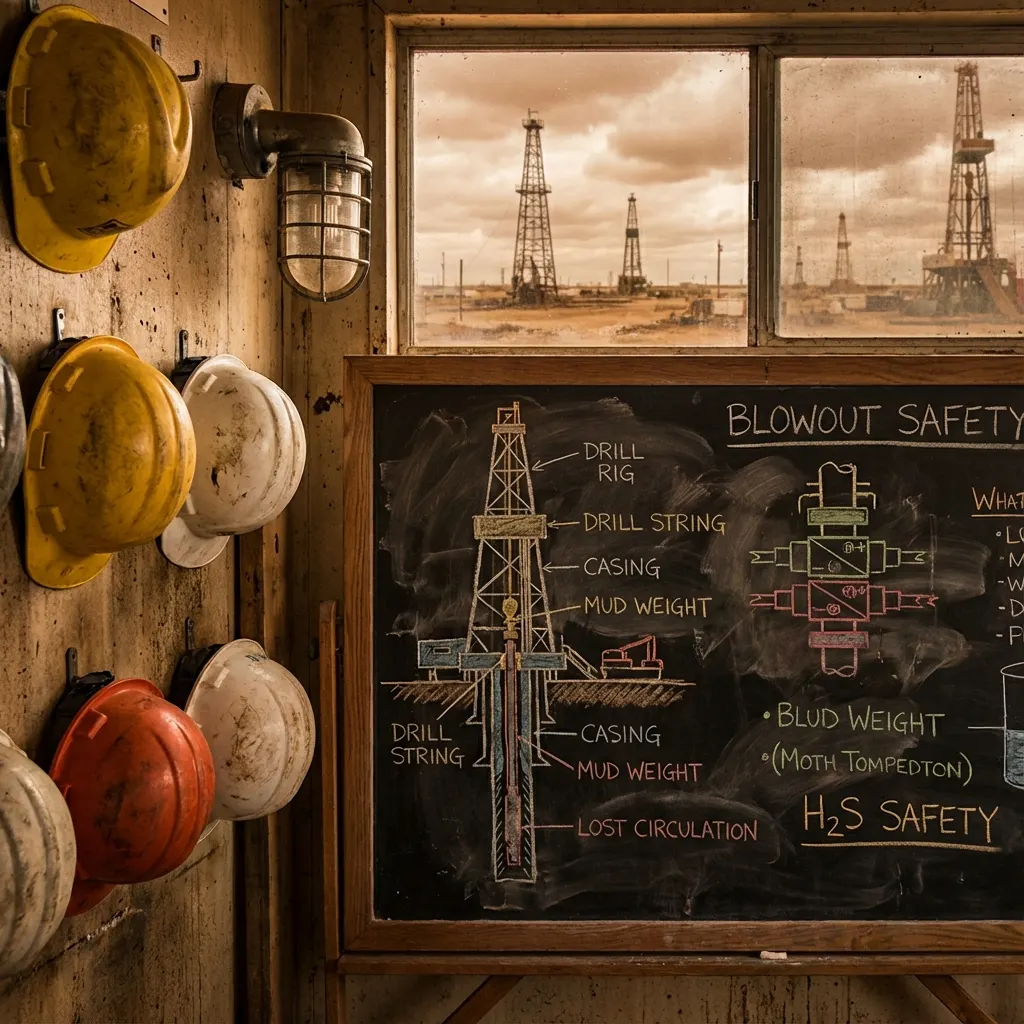
Walk onto any drilling rig in the Permian Basin and you'll hear a language that sounds almost foreign—a mix of technical jargon, regional slang, and colorful expressions that have evolved over a century of American oil production. From "Christmas trees" that have nothing to do with holidays to "doghouses" where no dogs live, this comprehensive dictionary will help you decode the vocabulary of the oil patch. Whether you're watching Landman or considering a career in the industry, understanding these terms is your first step toward fluency in oilfield speak.
How to Use This Dictionary
This glossary is organized alphabetically for quick reference. Terms are categorized by type:
- 🔧 Equipment: Tools, machinery, and physical components
- 👷 Roles: Job titles and crew positions
- ⚙️ Operations: Processes, procedures, and activities
- 📊 Business: Financial and legal terminology
- 🗣️ Slang: Informal expressions and roughneck jargon
🎬 Landman Language Alert
Terms marked with "📺" are frequently used in the Landman TV series. Listen for them during episodes!
A
- Abandon ⚙️
- To cease efforts to find or produce oil/gas from a well. Involves plugging the well, removing equipment, and restoring the surface. A well may be abandoned if it's a dry hole or no longer economically viable.
- Annulus 🔧
- The space between two concentric cylindrical objects—such as between the wellbore wall and casing, or between casing and tubing. Fluids can flow through this space, and it's monitored for pressure changes.
- API Gravity 📊
- A measure of how heavy or light petroleum liquid is compared to water. Higher API gravity means lighter oil. Crude oil typically ranges from 20° (heavy) to 45° (light). Light crude commands premium prices.
B
- Back-in 📊
- A type of interest that becomes effective after other parties have recovered their costs. Common in farmout agreements.
- Big Bear 🗣️
- Slang for an extended work hitch lasting 50+ consecutive days. Named for the endurance required. "He's on a big bear and won't be home for months."
- Blowout ⚙️ 📺
- An uncontrolled release of oil, gas, or other well fluids into the atmosphere when formation pressure exceeds the pressure applied by drilling fluid. The catastrophic scenario depicted in Landman Season 1 Episode 1. Can result in fire, explosion, and fatalities.
- Blowout Preventer (BOP) 🔧 📺
- A large, specialized valve assembly installed at the wellhead to control and prevent blowouts. Can seal the wellbore in emergency situations. The failure of a BOP caused the Deepwater Horizon disaster.
- Bonus Payment 📊 📺
- Upfront cash paid to a mineral owner for signing an oil and gas lease, calculated per acre. In the Permian Basin, bonuses range from \$500 to \$7,500+ per acre depending on location and market conditions.
- Borehole 🔧
- The hole created in the earth by the drill bit. Also called the wellbore.
- Bottomhole ⚙️
- The deepest point of the well. Bottomhole pressure and temperature are critical measurements for well operations.
C
- Casing 🔧
- Steel pipe cemented into the wellbore to prevent collapse, isolate formations, and control fluids. Multiple casing strings are run at different depths.
- Chainhand 👷
- An experienced rig crew member who handles the chain used to make up or break down pipe stands. Also called a motorman in some operations.
- Christmas Tree 🔧 📺
- The assembly of valves, gauges, and fittings installed on a completed wellhead to control flow from a producing well. Called a "tree" because of its branching appearance—nothing to do with holidays!
- Circulate ⚙️
- To pump drilling fluid through the drill string and back up the annulus to remove rock cuttings and maintain wellbore pressure.
- Completion ⚙️
- The process of finishing a drilled well so it can produce oil or gas. Includes perforating casing, stimulating the formation, and installing production equipment.
- Coiled Tubing 🔧
- Continuous steel tubing wound on a large spool, used for well intervention, cleanouts, and some drilling operations. Can be run in and out of a well without connections.
- Connection ⚙️
- The process of adding a new section of drill pipe as the bit drills deeper. Requires stopping drilling briefly—a routine but potentially dangerous operation.
D
- Dayrate 📊
- The daily fee charged for rig rental and crew services. Dayrates fluctuate with oil prices and rig demand. Can range from \$15,000 to \$50,000+ per day for land rigs.
- Derrick 🔧
- The tall, vertical tower structure that supports the drilling equipment. Modern rigs use mast-type derricks that can be raised and lowered for transport.
- Derrickman 👷 📺
- Third in command on a drilling crew, works high on the derrick handling the top of the drill string during trips. One of the most dangerous positions on the rig.
- Directional Drilling ⚙️
- Drilling at an angle or in a curved path to reach targets not directly below the rig. Essential for horizontal wells and accessing multiple locations from one pad.
- Doghouse 🔧 🗣️
- A small building on the rig floor where the driller operates controls and crew can take shelter. Also used for meetings and paperwork. "Meet me at the doghouse" is a common instruction.
- Driller 👷 📺
- The crew member who operates the drilling controls and is responsible for the drilling operation. Commands the rig floor and makes critical decisions.
- Drilling Mud 🔧
- A specially formulated fluid pumped down the drill string to lubricate the bit, carry rock cuttings to surface, and control formation pressure. Composition is adjusted throughout drilling. Also simply called "mud."
- Drill String 🔧
- The column of drill pipe, drill collars, and other tools that connects the surface equipment to the drill bit. Transmits rotation and drilling fluid to the bit.
- Dry Hole ⚙️ 📊
- A well that doesn't find commercial quantities of oil or gas. An expensive disappointment that happens to every operator eventually. Also called a "duster."
F
- Farmout 📊
- An agreement where a mineral rights holder assigns their interest to another party in exchange for drilling a well. The party "farming out" reduces risk while the "farmee" gains acreage.
- Fish 🔧 ⚙️
- Any object lost or stuck in the wellbore. "Fishing" is the process of retrieving it—can take days or weeks and cost millions.
- Flare ⚙️
- Burning off natural gas that cannot be economically captured or processed. Creates the flames visible from oil field locations. Increasingly regulated due to environmental concerns.
- Flowback ⚙️
- Fluids that return to the surface after hydraulic fracturing. Must be captured and disposed of or recycled.
- Formation 🔧
- A rock layer or series of layers with similar characteristics. The Wolfcamp and Spraberry formations in the Permian Basin are major targets.
- Fracking (Hydraulic Fracturing) ⚙️ 📺
- Injecting fluid, sand, and chemicals at high pressure to crack open rock formations and release trapped oil and gas. The technology that enabled the shale revolution.
G-H
- Gusher ⚙️ 🗣️
- An uncontrolled flow of oil from a well during drilling—dramatic but dangerous. Modern well control makes true gushers rare.
- Horizontal Well ⚙️
- A well that starts vertical and curves to run horizontally through the target formation. Horizontal sections can extend 2-3 miles, exposing more rock to the wellbore.
- Hot Shot 🗣️
- Emergency delivery service for critical parts. When equipment fails, "hot shot" drivers race supplies to the rig. "Call the hot shot—we need that part now."
- H₂S (Hydrogen Sulfide) ⚙️
- A deadly poisonous gas found in many oil and gas formations. Smells like rotten eggs at low concentrations but paralyzes your sense of smell at high levels. Can kill in minutes.
K-L
- Kelly 🔧
- A square or hexagonal pipe that transmits rotation from the rotary table to the drill string. Being phased out in favor of top drives.
- Kick ⚙️ 📺
- An influx of formation fluid into the wellbore, displacing drilling mud. A warning sign that can precede a blowout if not controlled. "We've got a kick—increase mud weight!"
- Kill ⚙️
- To stop a well from flowing by circulating heavy fluid or cement. "Kill weight" mud is heavy enough to control formation pressure.
- Landman 👷 📺
- A professional who negotiates oil and gas leases, researches mineral ownership, and manages land rights. The central profession depicted in Landman. Can be employed by a company or work independently.
- Lateral 🔧
- The horizontal section of a directional well. Lateral lengths have increased from 4,000 feet in 2010 to 15,000+ feet today.
- Lease 📊 📺
- The legal agreement granting an oil company the right to explore and produce minerals from a property. See our complete guide to oil and gas leases.
M-N
- Make a Connection ⚙️
- Adding another section of pipe to the drill string as the well deepens. A routine but hazardous operation performed multiple times per day.
- Man Camp 🗣️ 📺
- Temporary housing facilities for oil field workers, ranging from RV parks to hotel-like complexes. Common in remote areas during drilling booms.
- Mud Logger 👷
- A technician who analyzes rock cuttings coming up with drilling mud. Provides real-time geological information and helps identify hydrocarbon shows.
- Mud Man 👷
- The drilling fluids engineer responsible for maintaining mud properties. A critical role for well control.
- NGL (Natural Gas Liquids) 📊
- Hydrocarbons that exist as gas underground but condense to liquid at surface conditions. Includes propane, butane, and natural gasoline. Often more valuable than dry gas.
O-P
- Oil Patch 🗣️ 📺
- Slang for the oil and gas industry or a producing region. "He's worked the oil patch for 30 years."
- Operator 👷 📊
- The company responsible for drilling and operating a well. May own all or part of the working interest.
- Overriding Royalty Interest (ORRI) 📊
- A share of production revenue carved out of the working interest. Landmen often receive ORRIs as compensation.
- Perforating ⚙️
- Creating holes in the casing and cement to allow oil and gas to flow into the wellbore. Done with shaped explosive charges.
- Permian Basin 🔧 📺
- The massive oil and gas producing region spanning West Texas and southeastern New Mexico. The setting for Landman and America's most productive oil field.
- Plugging ⚙️
- Filling a well with cement to permanently seal it when abandoned. Required by regulations to protect groundwater.
- Proppant 🔧
- Sand or ceramic particles pumped into fractures during fracking to keep them propped open. Allows oil and gas to flow through the fractured rock.
- Pugh Clause 📊
- A lease provision that releases undeveloped acreage when only a portion is held by production. Essential protection for mineral owners.
- Pumper 👷
- A worker who monitors and maintains producing wells, checking gauges, adjusting equipment, and reporting problems.
- Pump Jack 🔧 📺
- The iconic "nodding donkey" beam pump that lifts oil from wells. Operates by creating a reciprocating motion to pull rod strings and pump barrels.
R-S
- Rig Floor 🔧
- The main working area of a drilling rig where the drill string is assembled and controlled. The most dangerous place on the rig.
- Roughneck 👷 📺
- A general laborer on a drilling rig who handles pipe and equipment on the rig floor. Physically demanding, dangerous work with high pay. Entry-level position to the drilling industry.
- Round Trip ⚙️
- Pulling all the drill pipe out of the hole and running it back in. Done to change the bit or for other operations. Can take 12+ hours on deep wells.
- Royalty 📊 📺
- The percentage of production revenue paid to the mineral owner. Typically 18.75% to 25% in Texas. The mineral owner bears no costs but receives their share of revenue.
- Seismic ⚙️ 📊
- Surveys using sound waves to image underground rock structures. Essential for identifying drilling targets before committing millions to a well.
- Show ⚙️ 🗣️
- Evidence of oil or gas in rock cuttings or drilling mud. "We've got a show!"—exciting but not always commercial.
- Shut-in ⚙️
- Closing the valves to stop a well from producing, temporarily or permanently. "Shut-in royalties" may be paid to maintain a lease when wells aren't producing.
- Sour 🔧
- Oil or gas containing hydrogen sulfide (H₂S). Requires special handling and processing. Opposite of "sweet."
- Spud ⚙️ 📺
- To begin drilling a new well. "Spud date" is when drilling starts. "We spudded that well yesterday."
- Stripper Well 🔧
- A marginal well producing less than 15 barrels per day. Many wells end their life as strippers, producing small amounts for decades.
T-W
- TD (Total Depth) ⚙️
- The final depth of a drilled well. "We reached TD at 15,000 feet."
- Tool Push 👷 📺
- The drilling contractor's representative on site, responsible for the rig and crew. Reports to the company man.
- Top Drive 🔧
- A motorized device suspended from the derrick that rotates the drill string. Safer and more efficient than the older rotary table/kelly system.
- Trip ⚙️
- Short for "round trip"—pulling pipe out of or running it into the hole. "We're tripping to change the bit."
- Wellhead 🔧
- The equipment at the surface of a well that provides structural support and containment of well pressure.
- Wildcat ⚙️ 🗣️
- An exploratory well drilled in unproven territory, far from existing production. High risk, high reward. "He's a wildcatter from way back."
- Workover ⚙️
- Operations on an existing well to restore or improve production. May involve refracking, zone changes, or equipment repairs.
- WTI (West Texas Intermediate) 📊 📺
- The benchmark price for American crude oil, based on oil delivered to Cushing, Oklahoma. The price that drives decisions in the Permian Basin.
Listen for These Terms in Landman
Taylor Sheridan and co-creator Christian Wallace, a former roughneck, use authentic industry language throughout Landman. Pay attention to scenes on the rig floor and in Tommy's office—you'll hear many of these terms used in context. The behind-the-scenes authenticity extends to the dialogue.
Frequently Asked Questions About Oil Field Terms
Why is it called a "Christmas tree"?
The wellhead assembly is called a Christmas tree because of its shape—multiple valves branch off from the main body, resembling a decorated tree. The name dates back to early oil fields when workers noted the similarity. Despite the festive name, it's serious equipment controlling thousands of pounds of pressure.
What's the difference between a roughneck and a roustabout?
Both are entry-level oil field positions, but with key differences:
- Roughneck: Works on the drilling rig floor, handling drill pipe and equipment during active drilling operations. Higher pay, more dangerous.
- Roustabout: General laborer who performs maintenance, construction, and support work around the oil field—not on the active rig floor.
Many roustabouts work their way up to roughneck positions.
What does "making hole" mean?
"Making hole" means the drill bit is actively drilling deeper—creating the wellbore. It's what everyone wants to hear because it means progress. The opposite is non-productive time spent on connections, trips, or waiting on equipment.
Why do oil workers use so much slang?
Oil field slang evolved for several practical reasons:
- Speed: Short terms communicate faster in noisy, time-critical environments
- Precision: Specialized terms describe equipment and situations precisely
- Culture: Shared language builds crew identity and separates insiders from outsiders
- Tradition: Terms passed down from early wildcatters carry industry heritage
Related Articles
Related Blog Reading
More Landman analysis on this topic
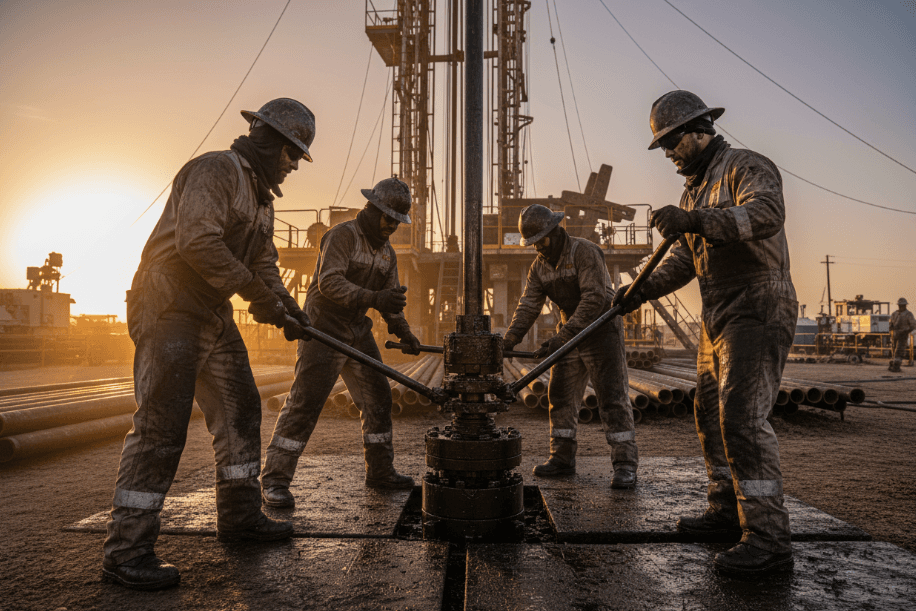
Roughneck Life: What It's Really Like Working in West Texas Oil Fields
In the vast, sun-scorched expanse of West Texas, under a sky that stretches into an infinite blue, a modern-day archetype toils for the black gold that fuels the world. He is the roughneck, a figure as central to the mythology of Texas as the cowboy, yet often shrouded in a layer of crude oil and misunderstanding. As Taylor Sheridan’s series Landman drills into the high-stakes world of the Permian Basin, it brings this figure to the forefront—the man on the rig floor, the engine of the boom. To

Is Landman Realistic? Oil Industry Accuracy Explained
Short answer: Landman is surprisingly realistic in its portrayal of the oil industry's day-to-day operations — landman negotiations, roughneck culture, and Permian Basin geography are all well-researched. The show takes creative liberties with cartel involvement and the speed of corporate deals, but the core work of a landman is accurately depicted. From drilling terminology to land negotiation tactics, Taylor Sheridan's Landman captures the authentic reality of America's oil fields with unprec

A Documentary of the Survival of a Forgotten Group Deep in the Texas Oil Fields
A Documentary of the Survival of a Forgotten Group Deep in the Texas Oil FieldsHis hard hat was smeared with black crude oil, and his heavy work boots echoed dully on the steel grating. This was his fourteenth consecutive day of work, twelve hours a day, with no weekends and no holidays. In this land known as the energy heart of the US, oil workers like Jack - known in the industry as "Landman" - are writing a national energy legend with their sweat and blood. However, behind the soaring stock

Cooper Norris Season 3: From Roughneck to Oil Boss, and Why Gallino's Money Changes Everything
Cooper Norris enters Landman Season 3 with a title, a company, and a dangerous investor. That promotion may be the hardest test the show has given him.
Related Episodes
See how this oil-industry topic shows up in the series.