The 12-Hour Darkness: Shift Culture, Fatigue, and the Human Cost of Permian Basin Oil
470 dead in five years, 25% more severe injuries in 2025, substance abuse in man-camps, and the grueling schedule that Landman depicts better than any other show
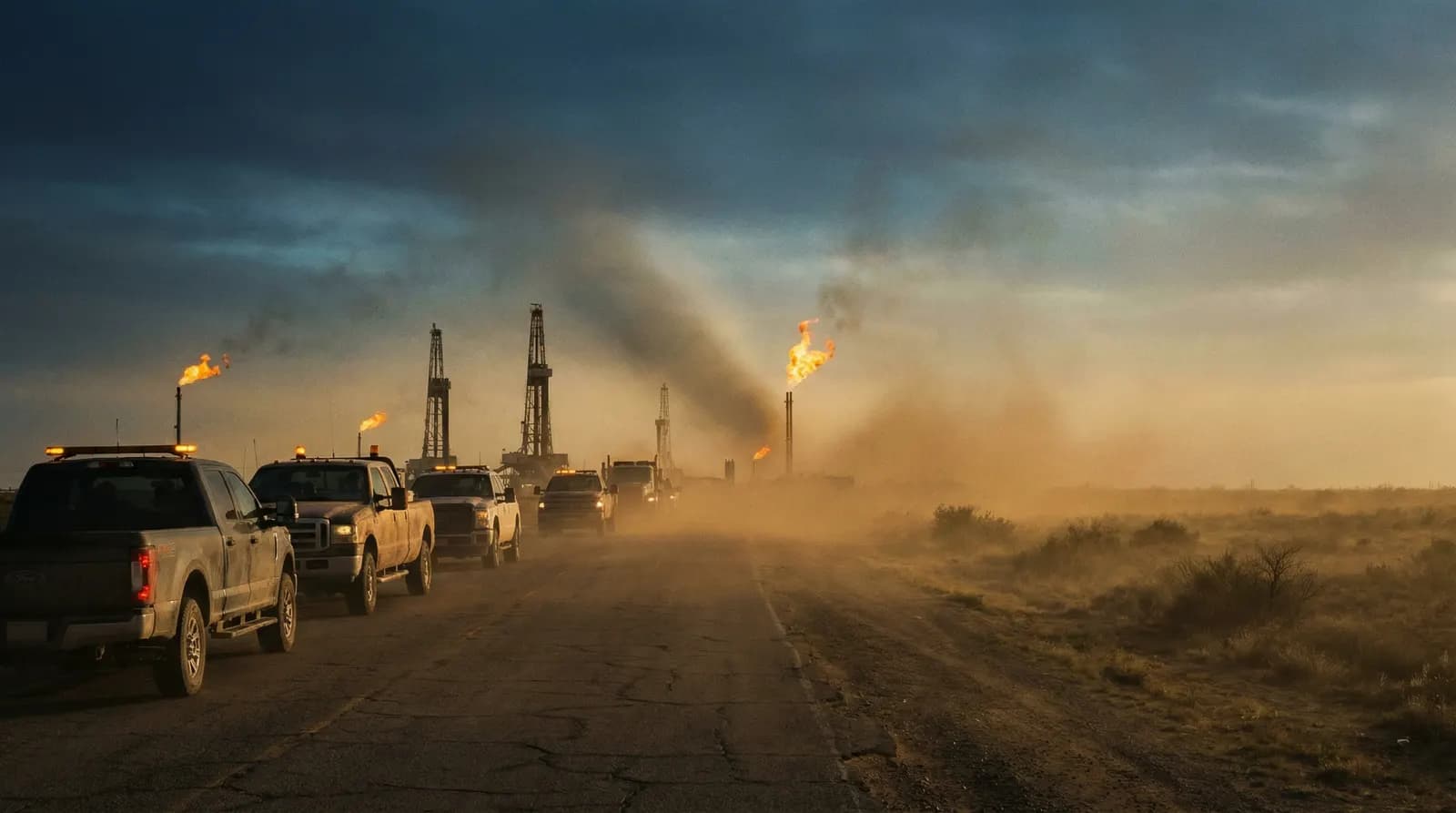
The most viscerally honest moments in Landman aren't the boardroom negotiations or the rig explosions. They're the quiet ones: a roughneck falling asleep in his truck at 4 AM, a crew change at dusk where exhausted workers stagger off the rig floor while fresh ones climb on, the dead-eyed thousand-yard stare of a man who hasn't slept in a real bed in three weeks. Taylor Sheridan captures the feeling of oilfield fatigue better than any documentary. But the real numbers behind that fatigue are worse than anything the show depicts.
470 oilfield workers died in the United States between 2014 and 2019. Texas led all states, and the Permian Basin accounted for approximately 30% of those deaths. By 2025, severe injuries in the Midland-Odessa region had increased 25% year-over-year — a trend driven by the exact schedule the show depicts: 12-hour shifts, 7 days on, brutal conditions, and the relentless pressure to keep drilling.
The Schedule: 12 Hours On, 12 Hours Off, Repeat
The standard oilfield shift is a 12-hour "tour" (pronounced "tower"). Workers typically work 7-14 days on, followed by 7 days off — though in boom periods, the "on" stretches can extend to 21 or even 28 days. There are two shifts: "day tower" (6 AM to 6 PM) and "night tower" (6 PM to 6 AM). Workers rotate between them, often with minimal transition time.
These 12 hours aren't cushy office hours. A roughneck's shift involves constant exposure to:
- Extreme physical labor — lifting heavy pipe, handling drilling equipment, constant standing and walking on steel grating
- Temperature extremes — West Texas summer heat regularly exceeds 105°F; winter nights drop below freezing
- Noise levels — Rig floor noise averages 90-110 dB, requiring hearing protection
- Chemical exposure — Drilling fluids, H2S gas, produced water splashes
- Vibration — Constant rig vibration that affects sleep quality even during off-hours
- Isolation — Many rigs are 30-60 miles from the nearest town, with no cell reception
⚠️ The Body Count
| U.S. Oilfield Deaths (2014-2019) | 470 workers killed |
| Texas Share | 219 deaths (47%) |
| Permian Basin Share | ~30% of U.S. total |
| #1 Cause of Death | Motor vehicle crashes (29%) |
| #2 Cause of Death | Struck-by incidents (22%) |
| Severe Injuries (Midland-Odessa, mid-2025) | 20+ by April, up 25% YoY |
| OSHA Severe Injuries Reported (2015-2022) | 2,101 nationwide |
Sources: CDC, Texas Tribune
The Science of Fatigue: Why 12-Hour Shifts Kill
The relationship between extended shifts and accidents is well-documented by sleep science and occupational health research:
- Diminished reaction times: After 12+ hours of physical labor, cognitive performance degrades to levels comparable to legal intoxication (0.08% BAC)
- Circadian rhythm disruption: Alternating between day and night shifts destroys the body's natural sleep-wake cycle, causing chronic sleep deficiency
- Shorter sleep durations: Studies show 12-hour shift workers sleep 1-2 hours less per night than 8-hour shift workers, with significantly worse sleep quality
- Cumulative deficit: By day 7 of a 12-hour rotation, the cumulative sleep debt can exceed the equivalent of missing an entire night of sleep
- Safety event correlation: CDC research confirms 12-hour shifts are associated with higher odds of safety events, near misses, and vehicle accidents
The #1 cause of oilfield worker death — motor vehicle crashes (29%) — is directly linked to fatigue. Workers driving to and from remote rig locations on highways like the infamous Highway 285 "Death Highway" after a 12-hour shift are effectively driving impaired. The combination of exhaustion, dark rural roads, heavy truck traffic, and cell-phone dead zones creates lethal conditions nightly.
Man-Camps, Isolation, and the Mental Health Crisis
Workers who don't commute from Midland or Odessa often live in "man-camps" — temporary worker housing near rig sites. These range from relatively modern modular units with shared kitchens to bare-bones trailers with minimal amenities. The social isolation can be devastating:
- Substance abuse: Workers in the Permian Basin report disproportionately high rates of substance use disorder — a coping mechanism for loneliness, physical pain, and exhaustion
- Mental health: Depression, anxiety, and relationship breakdown are endemic in the oilfield workforce. Workers miss births, weddings, holidays, and family emergencies during their rotational schedules
- Poor nutrition: 12-hour shifts on remote sites often mean reliance on fast food, gas station meals, or man-camp cafeteria food — contributing to obesity, diabetes, and gastrointestinal issues
- Underreporting: Discrepancies between state agencies in tracking worker deaths suggest systematic underreporting of fatalities and injuries
Contract Workers: The Invisible Majority
OSHA data reveals a critical distinction: contract workers — not direct company employees — bear the brunt of oilfield injuries. Workers in well-servicing and drilling subindustries, who are typically employed by third-party contractors rather than operators like M-Tex, are disproportionately represented in severe injury reports. These workers often have:
- Less training than direct-hire employees
- Lower pay and fewer benefits
- Less job security, creating pressure to accept unsafe conditions
- Limited access to company safety programs
In Landman, the distinction between M-Tex employees and contract workers mirrors this reality. The show's roughneck crews — the ones who bleed, get injured, and die — are the same demographic that OSHA data identifies as the most vulnerable.
OSHA in the Oil Patch: Present But Overwhelmed
OSHA inspection data for 2024-2025 shows 631 inspections of oil and gas extraction operations nationwide. The "General Duty Clause" — which requires employers to provide a workplace free from recognized hazards — was the second-highest citation category, suggesting systemic rather than isolated safety failures.
However, the intensity of enforcement varies dramatically by state. While Texas leads in absolute inspections, the rate per active well is significantly lower than in states like Michigan and Montana. Given that the Permian Basin alone has tens of thousands of active wells, many operations may go years without an OSHA inspection — particularly on remote well sites far from OSHA field offices.
Realism Score: 8.5/10
This is where Landman truly excels. The show captures the grinding exhaustion, the dark humor of rig crews, the physical toll, and the emotional isolation of oilfield work with remarkable authenticity. The filming locations, the equipment, and the crew dynamics ring true. The show loses points only for not fully depicting the substance abuse crisis, the contract worker vulnerability, and the sheer statistical lethality of the profession — 470 deaths in five years, with Permian Basin workers dying at rates that would cause a national outcry in any other industry.
Frequently Asked Questions About Oilfield Shift Culture
What is a typical roughneck schedule?
Most roughnecks work 12-hour shifts ("towers") on a rotational schedule — commonly 7 days on / 7 days off, 14/14, or 21/7. Day tower runs 6 AM to 6 PM; night tower runs 6 PM to 6 AM. During boom periods, operators may pressure crews to work 28-day rotations. Workers drive 30-60 miles to remote rig locations and may live in man-camps during their on-cycle. The schedule is relentless but pays significantly above average — entry-level roughnecks can earn $60,000-80,000, with experienced hands earning $100,000+.
Why is driving the #1 cause of oilfield death?
Motor vehicle crashes account for 29% of oilfield worker deaths — more than any other cause. The combination is lethal: a worker ending a 12-hour physical shift, driving 30-60 miles on dark rural roads (often the infamous Highway 285 "Death Highway"), sharing those roads with heavy water trucks and frac fleets, with no cell reception for emergencies, and cognitive performance degraded to levels comparable to legal intoxication. Many crashes occur in the pre-dawn hours when circadian rhythm disruption is most severe.
Is substance abuse really common in the Permian Basin oilfield?
Yes. Reporting from High Country News and SPE publications documents disproportionately high rates of substance use disorder among Permian Basin oilfield workers. Contributing factors include: chronic pain from physical labor, social isolation during weeks-long rotations, inadequate mental health resources in rural Boom Town communities, the culture of "toughness" that discourages seeking help, and the physical demands that make prescription painkillers both necessary and addictive. The industry has begun implementing drug testing and awareness programs, but the structural conditions — isolation, exhaustion, and pain — persist.
How accurate is Landman's depiction of rig work?
Exceptionally accurate for a scripted drama. The show captures the physical grind, the crew hierarchy, the dark humor, the dangerous equipment, and the emotional cost with notable fidelity. Real roughnecks have praised the show's attention to detail — the equipment looks right, the terminology is correct, and the crew dynamics ring true. Where the show falls short is in fully depicting the statistical lethality (470 deaths in five years), the contract worker vulnerability, and the substance abuse crisis that pervades the real Permian Basin workforce.
Could 8-hour shifts make the oilfield safer?
Sleep science strongly supports shorter shifts — 8-hour workers sleep more, have better reaction times, and experience fewer accidents. However, the industry argues that 12-hour shifts are logistically necessary: remote locations make frequent crew changes impractical, workers prefer concentrated schedules (7-on/7-off vs. 5-on/2-off), and adding a third daily shift would require 50% more workers in an already tight labor market. The compromise being explored by some operators is "controlled fatigue" programs with mandatory rest breaks, sleep tracking technology, and driving restrictions after night tower shifts.
What is the difference between company and contract workers?
Operators like M-Tex in Landman employ relatively few workers directly. Most rig crews, well-servicing teams, and frac crews are employed by third-party contractors. OSHA data confirms that contract workers suffer disproportionately more severe injuries — including amputations and hospitalizations — than direct-hire employees. They typically receive less training, lower pay, fewer benefits, and face pressure to accept unsafe conditions because they lack the job security of direct employment. This two-tier system is a structural feature of the industry, not an aberration.
Sources
- Oil & Gas Worker Deaths 2014-2019: 470 Fatalities - CDC
- Permian Basin: 30% of U.S. Oilfield Deaths - Texas Tribune
- Midland-Odessa 2025 Injuries: 25% YoY Increase - Zehl Law
- Andrews County BOP Failure Death (Dec 2024) - Zehl Law
- 12-Hour Shifts and Impaired Sleep Quality - CDC/NIOSH
- Fatigue and Cognitive Performance in Oil & Gas - Fatigue Science
- Sleep Deprivation and Safety Events Correlation - Safety Insights
- OSHA Severe Injuries: 2,101 Cases (2015-2022) - SPE
- Contract Workers: Disproportionate Injury Rates - CDC/OSHA
- OSHA Inspections 2024-2025: 631 Operations - Basin Check
- Permian Basin Substance Abuse and Mental Health Crisis - High Country News
- Oilfield Worker Mental Health and Isolation - SPE
- Highway 285: Fatigue-Related Fatalities - Pulitzer Center
Related Blog Reading
More Landman analysis on this topic
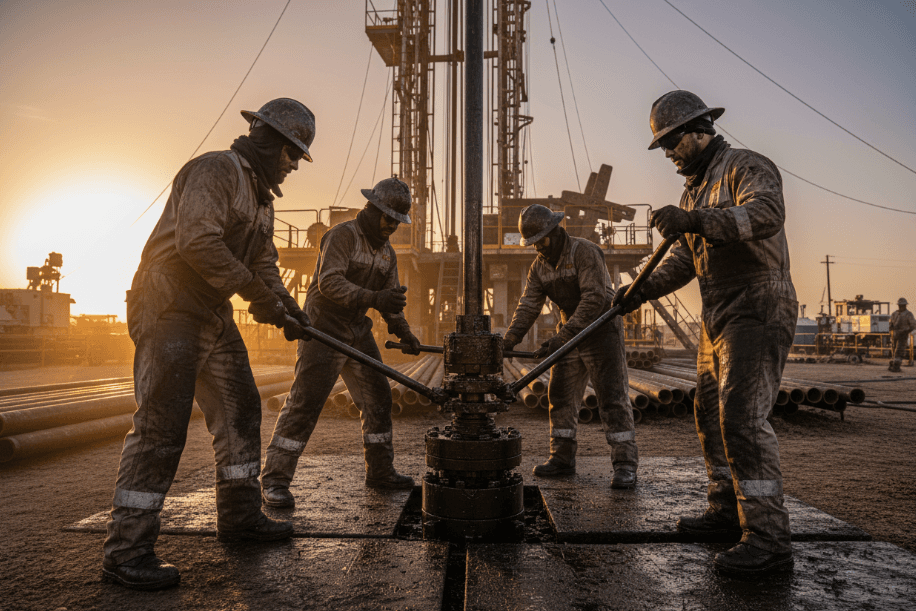
Roughneck Life: What It's Really Like Working in West Texas Oil Fields
In the vast, sun-scorched expanse of West Texas, under a sky that stretches into an infinite blue, a modern-day archetype toils for the black gold that fuels the world. He is the roughneck, a figure as central to the mythology of Texas as the cowboy, yet often shrouded in a layer of crude oil and misunderstanding. As Taylor Sheridan’s series Landman drills into the high-stakes world of the Permian Basin, it brings this figure to the forefront—the man on the rig floor, the engine of the boom. To

Is Landman Realistic? Oil Industry Accuracy Explained
Short answer: Landman is surprisingly realistic in its portrayal of the oil industry's day-to-day operations — landman negotiations, roughneck culture, and Permian Basin geography are all well-researched. The show takes creative liberties with cartel involvement and the speed of corporate deals, but the core work of a landman is accurately depicted. From drilling terminology to land negotiation tactics, Taylor Sheridan's Landman captures the authentic reality of America's oil fields with unprec

A Documentary of the Survival of a Forgotten Group Deep in the Texas Oil Fields
A Documentary of the Survival of a Forgotten Group Deep in the Texas Oil FieldsHis hard hat was smeared with black crude oil, and his heavy work boots echoed dully on the steel grating. This was his fourteenth consecutive day of work, twelve hours a day, with no weekends and no holidays. In this land known as the energy heart of the US, oil workers like Jack - known in the industry as "Landman" - are writing a national energy legend with their sweat and blood. However, behind the soaring stock

Cooper Norris Season 3: From Roughneck to Oil Boss, and Why Gallino's Money Changes Everything
Cooper Norris enters Landman Season 3 with a title, a company, and a dangerous investor. That promotion may be the hardest test the show has given him.
Related Episodes
See how this oil-industry topic shows up in the series.