Private Equity: The New Barons of the Oil Patch
How Wall Street Capital Tamed the Wild West of West Texas
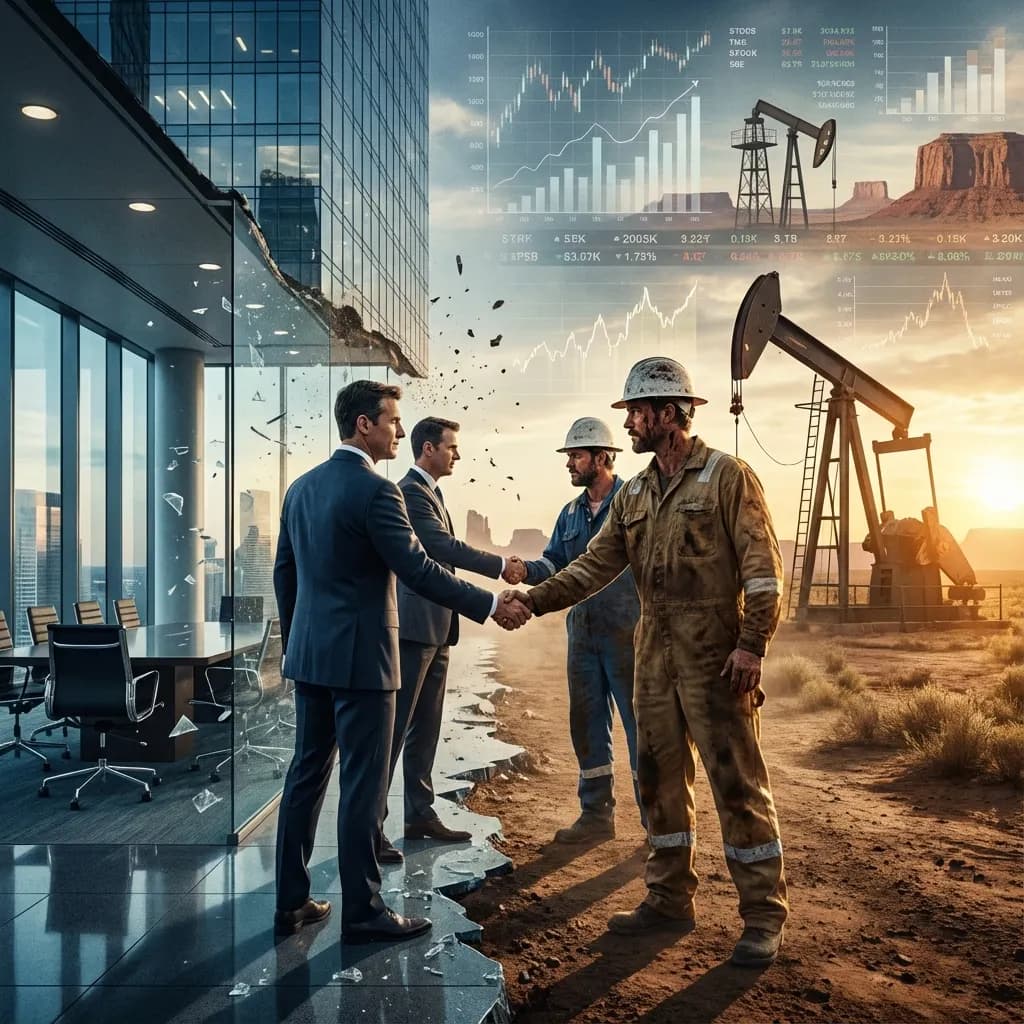
There was a time when the oil patch was ruled by wildcatters—individuals who bet their own money on a hunch. Today, the real power often sits in glass skyscrapers in New York and London. Private Equity (PE) firms have become the new barons of the Permian Basin, bringing massive capital, ruthless efficiency, and a very different set of rules. For a mid-sized operator like M-Tex in Landman, PE firms represent both a potential lifeline and an existential threat.
The Financialization of the Oil Patch
Private equity's entry into the oil and gas sector transformed the industry from a "casino" for gamblers into a manufacturing model for investors.
💼 The PE Playbook in the Permian
- Acquire: Buy undervalued acreage or small operators.
- Optimize: Use superior technology and scale to lower drilling costs.
- Scale: Drill "inventory" to prove reserves (not just production).
- Exit: Sell the packaged asset to a "Major" (Exxon, Chevron) for billions.
The Shift: From "Growth" to "Discipline"
For most of the 2010s, PE firms funded "growth at all costs"—drilling as many wells as possible to show rising production charts. This led to a global oil glut and the price crash of 2014-2016.
In 2024-2025, the strategy has shifted entirely. Now, the mantra is "Capital Discipline." PE firms demand:
- Free Cash Flow: Projects must generate cash now, not just promise it later.
- Dividends: Returning cash to investors takes priority over new drilling.
- Efficiency: Using multi-well pads and longer laterals (3-mile horizontal wells) to cut costs per barrel.
Major Players: The Invisible Hand
While their names might not be on the pump jacks, firms like Blackstone, KKR, Carlyle, and Apollo control vast swaths of energy infrastructure and production.
Blackstone & Infrastructure
Rather than risky drilling, firms like Blackstone often focus on "pipes and water." They own the midstream infrastructure—pipelines, gathering systems, and water disposal wells—that every driller needs. This is the "toll road" model: let others take the risk of drilling, but charge them a fee to move every barrel they produce.
KKR & The "Smashco" Model
Firms like KKR have pioneered the consolidation model (sometimes called "Smashco"). They buy 5 or 6 small, struggling operators, smash them together into one larger company, cut redundant staff, and create a scale player attractive enough to be bought by a public giant.
Landman Connection: The Squeeze on M-Tex
In Landman, Tommy Norris and M-Tex operate in a world increasingly squeezed by these giants.
Why Tommy Hates "The Suites"
When Tommy deals with "the suits," he's often dealing with PE representatives. They don't care about the history of the land or the relationships with ranchers. They look at spreadsheets. If M-Tex can't drill a lease efficiently, a PE-backed aggregator is waiting to swoop in, offer the landowner a bonus M-Tex can't match, and take the acreage.
The "Liquidity Event" Pressure
Every PE investment has a clock ticking. These funds have a 5-7 year lifespan. They must sell to return money to their investors. This creates artificial pressure in the market. A PE-backed company might drill aggressively not because it's good for the reservoir, but because they need to "dress up the pig" for a sale before the fund closes.
Environmental Impact: The Green Pivot?
Interestingly, Private Equity is also driving some environmental improvements—for financial reasons.
- Making Assets "Sellable": Public companies (the buyers) are under pressure to reduce emissions. They won't buy "dirty" assets.
- Methane Reduction: PE firms are upgrading equipment to stop methane leaks, making their portfolios more attractive to ESG-conscious buyers.
- Water Management: Massive investments in water recycling infrastructure (like Blackstone's Waterfield Midstream) reduce the industry's reliance on fresh water.
The Future: Private vs. Public
A dangerous trend is emerging: "Going Dark." As public scrutiny on oil companies intensifies (climate protests, ESG investing), some assets are moving from public companies to private equity.
Why? Private companies don't have quarterly earnings calls. They don't have shareholder meetings with protesters. They can operate quietly. This "shadow energy" sector produces millions of barrels a day with far less transparency than the Exxons and Chevrons of the world.
Frequently Asked Questions About PE in Oil
Do PE firms drill their own wells?
Rarely directly. They fund "Portfolio Companies"—management teams of experienced oil veterans who run the daily operations. The PE firm acts as the bank and the board of directors, approving budgets and strategy.
What is a "drilling obligation"?
A lease term that requires the operator to drill a well by a certain date or lose the lease. PE firms are ruthless about meeting these obligations to "hold by production" (HBP) the acreage, ensuring they own the asset indefinitely.
Is PE good or bad for the industry?
It's mixed. They bring efficiency and capital that keeps energy prices lower for consumers. However, their short-term focus (build and flip) can lead to short-sighted reservoir management and puts extreme pressure on service companies and workers.
Related Articles
Related Blog Reading
More Landman analysis on this topic

Landman Season 3: The $62 Million Gamble
For two seasons, Tommy Norris has been the ultimate fixer—a man whose job description is essentially managing chaos in a landscape where every handshake is dirty and every deal has a casualty count. But as the dust settles on the explosive Season 2 finale, the game has fundamentally changed. We are no longer watching a man putting out fires for M-Tex Oil; we are watching a man who has decided to light the match himself. The launch of CTT Oil Exploration and Cattle isn't just a business pivot; it

Landman Season 3: CTT Oil's Profit Split Explained
Tommy Norris ends Season 2 by launching CTT Oil Exploration and Cattle. Here is what the deal probably means, why viewers are confused, and what it sets up for Season 3.

Cooper Norris Season 3: From Roughneck to Oil Boss, and Why Gallino's Money Changes Everything
Cooper Norris enters Landman Season 3 with a title, a company, and a dangerous investor. That promotion may be the hardest test the show has given him.

How to Watch Landman Season 2 Outside the US: Streaming Guide
When The Times called Taylor Sheridan's Landman "a portrait of Trump's America," the characterization wasn't mere provocation—it captured something essential about how European viewers experience the series. Premiering across UK and European Paramount+ platforms last November, the West Texas oil drama landed with all the subtlety of a fracking rig punching through shale, delivering a vision of American capitalism, masculinity, and resource extraction that feels simultaneously alien and grimly fa
Related Episodes
See how this oil-industry topic shows up in the series.