The Railroad Commission: How Texas Regulates Oil With an Agency the Industry Funds
$10 million in campaign donations, an archaic name, elected commissioners who reject climate science, and the body that decides whether your well gets drilled
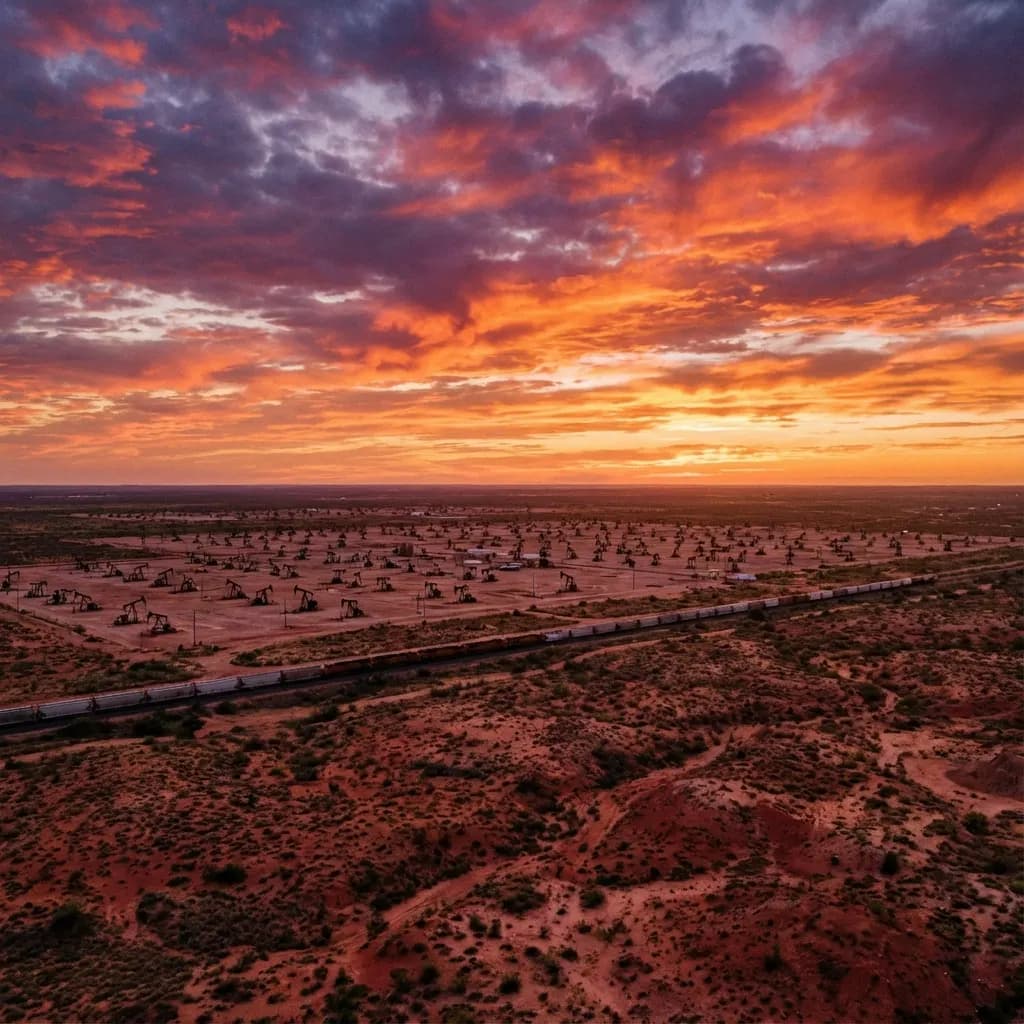
In Landman, the regulatory apparatus of Texas oil operates as an invisible force. Tommy Norris files permits, operators navigate compliance, and the bureaucratic machinery hums along in the background. But behind that machinery is one of the most controversial regulatory bodies in American government: the Railroad Commission of Texas (RRC) — an agency that hasn't regulated railroads since 2005 but controls trillions of dollars of oil and gas activity, is run by three elected commissioners who receive millions in campaign donations from the industry they oversee, and has been called "the most powerful agency you've never heard of."
Understanding the RRC is essential to understanding why the Permian Basin operates the way it does — why environmental enforcement is spotty, why earthquake regulations lag behind the science, and why operators like M-Tex can drill with remarkable speed and minimal interference.
What the Railroad Commission Actually Does
Despite its anachronistic name, the RRC is the primary regulator of the Texas oil and gas industry. Its jurisdiction includes:
- Oil and gas drilling permits — Every well drilled in Texas requires RRC approval
- Saltwater disposal (SWD) well permits — The agency controls the wastewater injection system linked to induced earthquakes
- Pipeline safety and routing
- Orphan well plugging — Managing Texas's backlog of abandoned wells
- Flaring and venting permits — Controlling methane emissions from oil operations
- Carbon capture and storage (CCS) wells — New authority gained from the EPA in 2025
- LPG (propane) safety and surface mining oversight
The RRC is governed by three commissioners, each elected statewide to staggered six-year terms. One seat is up for election every two years. This structure makes the agency uniquely responsive to political pressure — and uniquely susceptible to the financial influence of the industry it regulates.
The Money: $10 Million and Counting
In the 2024 election cycle, incumbent Commissioner Christi Craddick was re-elected for her third six-year term. Her campaign raised over $10 million since 2019 — overwhelmingly from the oil and gas industry she regulates. Unlike most regulatory positions, Texas railroad commissioners are permitted to accept campaign contributions throughout their entire six-year terms, not just during election seasons.
💰 Top Industry Donors to RRC Commissioners
| Midland Energy / CEO Javaid Anwar | $1.47 million |
| Energy Transfer / CEO Kelcy Warren | $1.29 million |
| Double Eagle cofounders Sellers & Campbell | $1.1 million |
| NGL Texas PAC + subsidiaries | $773,975 |
| Hilcorp / founder Hildebrand | $412,500 |
Sources: Inside Climate News, Houston Chronicle
Watchdog organizations like Commission Shift and Texans for Public Justice have documented this financial relationship extensively, arguing it constitutes classic regulatory capture — where the agency becomes beholden to the industry it's supposed to oversee. The RRC disputes this characterization, maintaining that commissioners make independent decisions based on technical merit.
The Failures: What Critics Point To
Winter Storm Uri (February 2021)
The RRC's most high-profile failure was its role in the Winter Storm Uri disaster, which killed over 200 Texans and knocked millions without power for days. The RRC had declined to require oil and gas companies to winterize wells and pipelines — despite warnings after a similar freeze in 2011. When gas supply collapsed during the storm, the power grid followed. The agency's failure to mandate winterization — a regulatory decision that directly served industry cost preferences — became a national scandal.
Orphan Wells and "Zombie Wells"
Texas has an estimated 7,000+ documented orphan wells — abandoned wells with no responsible operator. The actual number, including undocumented wells drilled decades ago, may be far higher. The RRC has been criticized for its slow pace in plugging these wells, which can leak methane, contaminate groundwater, and even erupt (as the Toyah geyser demonstrated in October 2024).
Methane Flaring and Venting
The RRC has been criticized for routinely granting flaring exceptions that allow operators to burn off natural gas rather than capture it. While flaring prevents methane release (methane is 80x more potent than CO2 as a greenhouse gas over 20 years), it results in significant CO2 emissions and wasted energy. Environmental groups argue the RRC approves flaring permits too easily, enabling operators to prioritize oil production speed over gas capture infrastructure.
Earthquake Response Lag
As documented in our induced earthquakes investigation, the RRC's seismic response has been criticized as reactive rather than preventive. Oklahoma implemented aggressive disposal restrictions years before Texas, despite Texas having comparable seismicity. The RRC's establishment of three Seismic Response Areas and new June 2025 rules came after years of escalating M5+ earthquakes.
The Defense: What the RRC Says
The RRC and its supporters counter the criticism with several arguments:
- Economic engine: Texas oil and gas generates $26+ billion in state taxes and royalties annually, funding schools, roads, and services. Aggressive regulation could kill the golden goose.
- Technical staff independence: While commissioners are elected, the agency's technical staff of engineers and geologists make recommendations based on science, not politics
- Recent action: The June 2025 seismic rules, SRA establishment, and new waste management rules effective July 2025 demonstrate the agency is evolving
- New CCS authority: The EPA's 2025 transfer of carbon capture well oversight to the RRC signals federal confidence in the agency's technical capabilities
- Democratic accountability: Unlike appointed federal regulators, RRC commissioners face voters — creating a different kind of accountability
What This Means for Landman
In Landman, the RRC is the invisible hand behind every permit Tommy Norris files, every well M-Tex drills, and every environmental incident the company navigates. A realistic portrayal would show how the agency's pro-industry orientation enables the speed and scale of Permian Basin development — while simultaneously creating the conditions for water contamination, earthquakes, and the worker safety compromises that drive the show's most dramatic moments.
Realism Score: 4/10
Landman treats the regulatory environment as a given — permits appear, compliance happens, and no one questions why Texas oil operates with such extraordinary freedom compared to other industries. The real story of the RRC — elected commissioners funded by the industry they regulate, a Winter Storm Uri failure that killed hundreds, and a seismic response that lagged years behind the science — would add rich political texture to the show and raise uncomfortable questions about who really benefits from the Permian Basin boom.
Frequently Asked Questions About the Railroad Commission
Why is it called the "Railroad Commission" if it doesn't regulate railroads?
The agency was founded in 1891 to regulate railroads and prevent monopoly pricing. Over the decades, it accumulated oil and gas regulatory authority and eventually lost its railroad jurisdiction in 2005. Multiple attempts to rename it (to the "Texas Energy Commission" or similar) have failed in the state legislature, partly because the archaic name benefits incumbents — voters who don't know what the agency does are less likely to scrutinize commissioner elections.
Is the RRC actually captured by the oil industry?
This is debated. Watchdog groups like Commission Shift document millions in industry campaign donations and argue this creates systemic bias. The RRC counters that its technical staff operates independently. The truth likely lies in the middle: the agency isn't a rubber stamp (it does deny permits and enforce violations), but its structural incentives — elected commissioners funded by industry, weak ethics rules, and a pro-development political culture — create an environment where industry interests carry disproportionate weight in regulatory decisions.
How does the RRC affect Landman-style operations?
Every well Tommy Norris helps lease and every well M-Tex drills requires an RRC permit. The agency sets spacing rules (how close wells can be), controls disposal well permits (critical for wastewater), manages flaring allowances, and enforces safety standards. The RRC's pro-development orientation is what enables the frenetic pace of Permian Basin drilling depicted in the show — a more restrictive regulator would slow operations considerably.
What changed after Winter Storm Uri?
The Texas legislature passed several bills requiring weatherization of gas infrastructure, and the RRC implemented new winterization rules. However, critics argue enforcement remains weak and many facilities have received exemptions. The fundamental structural issue — that the agency's commissioners receive millions from the companies they regulate — did not change. Commissioner Craddick won re-election in 2024 despite the Uri controversy.
What is the RRC's new carbon capture authority?
In 2025, the EPA transferred authority to permit and oversee carbon capture and storage (CCS) wells to the RRC — making Texas one of the few states with state-level CCS oversight. Critics are skeptical: some commissioners have publicly rejected the role of carbon in climate change, raising questions about whether the agency will rigorously oversee a technology designed to mitigate emissions. Commissioner Wayne Christian publicly criticized carbon injection plans in November 2025, challenging the industry he theoretically regulates.
Can the RRC actually shut down wells for earthquakes?
Yes. The RRC has authority to modify, suspend, or terminate injection permits if disposal activity is proven or suspected to contribute to seismic events. It has exercised this power — shutting down two deep disposal wells in Scurry and Fisher counties after a M5.1 earthquake in July 2024, and suspending 23 permits in the Northern Culberson-Reeves SRA. However, critics argue the agency acts only after damaging earthquakes occur rather than preventing them through proactive volume limits. The February 2025 M5.0 earthquake — occurring despite prior well suspensions — illustrates the limits of reactive regulation.
Sources
- Christi Craddick Re-election 2024: Campaign Finance - Texas Tribune
- RRC Campaign Donations: $10M+ Since 2019 - Inside Climate News
- Top Industry Donors: Midland Energy $1.47M, Energy Transfer $1.29M - Houston Chronicle
- Industry Capture Analysis: Weak Ethics Rules - Commission Shift
- RRC Regulatory Failures and Industry Influence - Texas Observer
- 2024 Election: Commissioner Craddick Donor Controversy - KSAT
- Winter Storm Uri: RRC Failure to Mandate Winterization - Grist
- RRC Carbon Capture Authority and Skepticism (2025) - Houston Chronicle
- EPA Transfers CCS Well Authority to RRC - Texas Tribune
- RRC Methane, Flaring, and Orphan Well Criticism - Volts
- New RRC Waste Management Rules (July 2025) - JD Supra
- RRC Commissioner Elections and Structure - Ballotpedia
- Railroad Commission of Texas: History and Jurisdiction - Wikipedia
Related Blog Reading
More Landman analysis on this topic
Landman Themes Explained: Family, Power, and the Price of Oil
Taylor Sheridan's Landman is not simply a television drama about the oil industry. Beneath the pumpjacks, lease negotiations, and boardroom confrontations lies a deeper exploration of American identity, family legacy, moral compromise, and the price of progress. The show uses the Permian Basin as both setting and symbol — a vast, ancient landscape where old debts, new money, and human ambition collide. This article breaks down the major themes of Landman and how they connect to the real world o

Landman Season 2 Episode 7: Real Oil Industry Science, Risk, and Strategy
While viewers tune into Paramount+’s Landman for the explosive relationship drama between Tommy Norris (Billy Bob Thornton) and his family, Season 2 has increasingly leaned into the high-stakes technicalities of the energy sector. Episode 7, "Forever Is an Instant," dropped significant exposition regarding offshore drilling, geological risks, and corporate liability. For fans wondering how much of the jargon is real and what the business strategy actually implies, here is a deep dive into the p

Following the Money: What Real Landmen Actually Earn in the Oil Patch
The hit series Landman has captivated audiences with its gritty portrayal of the West Texas oil industry, but one question keeps viewers up at night: just how much money are these characters actually making? When Tommy Norris casually drops a hundred-dollar bill at breakfast or his ex-wife Angela orders white truffles for a weeknight dinner, we can't help but wonder what kind of paychecks fuel this lifestyle. Thanks to a fascinating Reddit discussion among industry insiders and fans, we're final

When the Oil Tycoon Plays Himself: Jerry Jones' Million-Dollar Moment in 'Landman'
It was only fitting that Jerry Jones, who made a fortune in the oil industry, made an appearance on a popular TV series about the oil boom in West Texas. And no surprise that the Dallas Cowboys owner and president earned rave reviews. When Jones appeared in the ninth episode of Paramount+'s Landman, it wasn't just another celebrity cameo—it was a moment where art, commerce, and authenticity collided in the most Texas way possible. In a show that explores the brutal realities and human costs of
Related Episodes
See how this oil-industry topic shows up in the series.