What Is a Roughneck? The Real Oilfield Jobs Behind Landman
Cooper, Boss, Armando, Manuel, and Elvio represent the dangerous field ladder that keeps the Permian running: roustabouts, roughnecks, derrickhands, drillers, and supervisors.
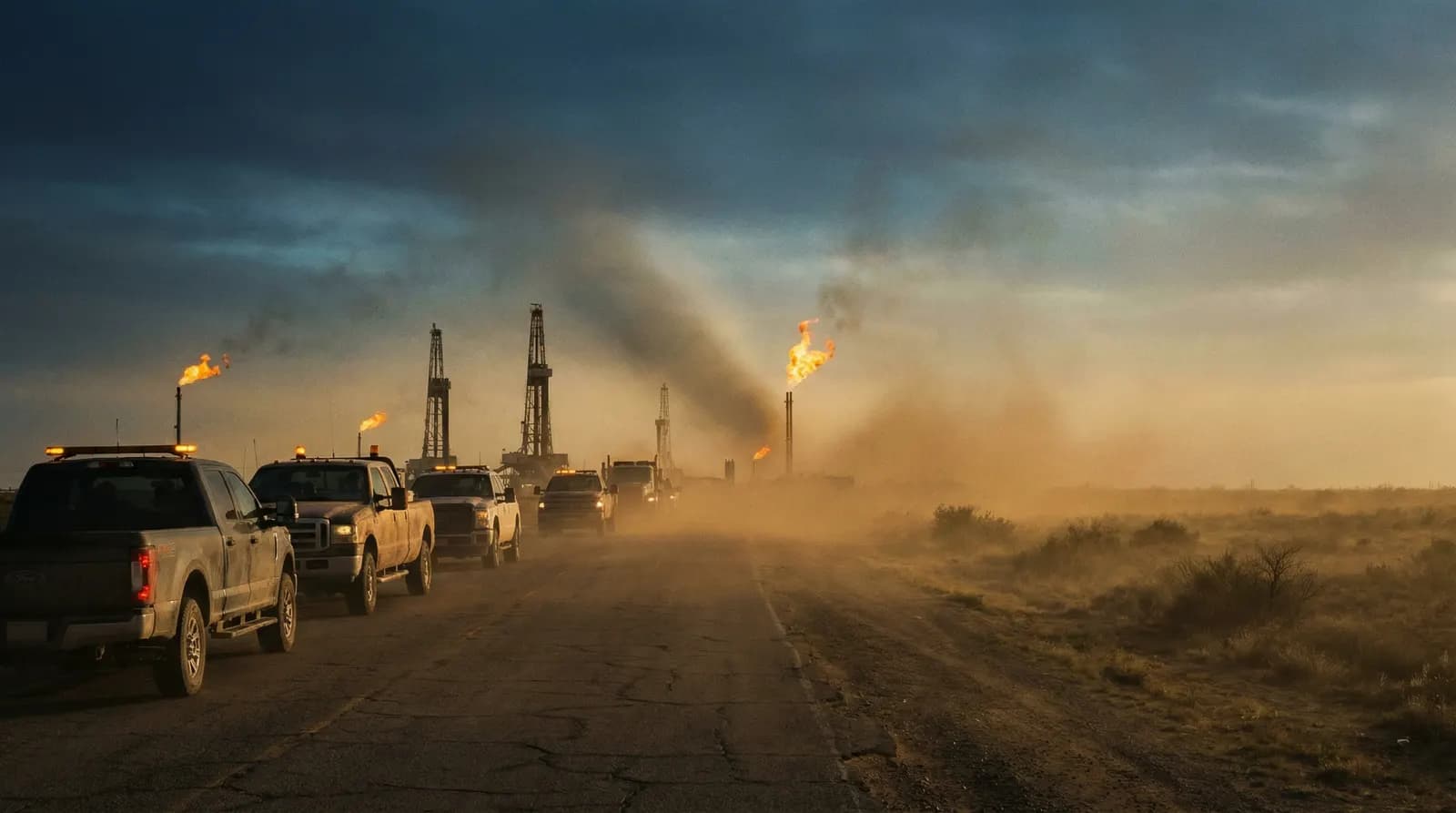
In Landman, the boardroom people talk about acreage, insurance, and billions. The roughnecks live inside the risk those conversations create. Cooper Norris, Boss, Armando, Manuel, and Elvio Medina make the oil business physical. They are the hands on the pipe, the people under the clock, and the workers most likely to pay for a bad decision with bone, blood, or life.
A roughneck is not one exact job title in every company. It is a field identity used for the hard manual labor around drilling rigs and oilfield operations. In real employment terms, the work overlaps with roustabouts, floorhands, derrick operators, rotary drill operators, service-unit operators, and field supervisors. The show compresses that ladder into a few faces, but the danger underneath is real.
The Core Reality
Oilfield work is not dangerous because television needs danger. It is dangerous because heavy equipment, pressure, vehicles, flammable gas, long shifts, and remote locations stack risk on top of risk.
The Oilfield Job Ladder Landman Is Showing
The Bureau of Labor Statistics profile for oil and gas workers groups several field jobs together. The basic pattern is simple: some workers set up and maintain equipment, some handle the drilling floor, some work above the rig floor on the derrick, and some operate or supervise the drilling equipment itself.
Roustabout
Maintains equipment, clears sites, handles basic repairs, moves pipe, and does the unglamorous work that keeps a lease functioning.
Floorhand / roughneck
Works on the rig floor, handles pipe and tools, follows the driller's commands, and learns the rhythm of the crew.
Derrickhand
Works higher on the derrick, manages pipe and drilling fluid duties, and carries more skill and more danger.
Driller / supervisor
Operates the rig, coordinates the crew, watches pressure and equipment, and answers for speed and safety.
Why Cooper's Path Is Dramatic but Not Impossible
Cooper's appeal is that he does not start in an office. He starts where the work is hardest. That matters because the oil patch respects field credibility. A young man who has worked the floor, watched people get hurt, and learned how crews actually behave has knowledge a spreadsheet cannot provide.
But going from roughneck to oil company president is not a normal promotion path. A real operator needs leases, capital, engineering support, insurance, regulatory compliance, vendors, water handling, takeaway capacity, and someone who understands cash flow. Cooper may know enough to be brave. He does not yet know enough to be safe. That is exactly why his Season 3 setup works as drama: the title is not the prize. The title is the test.
The more realistic version of Cooper's rise would include older field supervisors, petroleum engineers, land professionals, attorneys, and finance people around him. If he survives as an operator, it will be because he learns that oilfield confidence is not the same thing as company control.
The Safety Numbers Behind the Show
The CDC's Fatalities in Oil and Gas Extraction Database review counted 470 worker deaths in U.S. oil and gas extraction from 2014 through 2019. The Permian Basin accounted for 148 of them. Vehicle incidents, contact with objects and equipment, fires, explosions, falls, and toxic exposures all show up in the data.
That is why Landman's accident scenes land so hard. The show heightens the timing, but the baseline danger is not invented. Remote roads, long shifts, pressure equipment, young workers, contractor layers, and the constant push to keep production moving create exactly the sort of environment where small mistakes become fatal.
What the Show Gets Right
- new workers are vulnerable because they are still learning crew rhythm and hazard recognition
- field culture rewards toughness, but toughness does not replace training
- accidents ripple beyond the rig into families, lawsuits, insurance, and community memory
- roughnecks are not background labor; they are the people who turn financial bets into production
Frequently Asked Questions
Is roughneck a real job title?
Yes, though companies may use more specific titles such as floorhand, roustabout, derrickhand, or drilling crew member. "Roughneck" is the broader oilfield term for hard manual rig work.
Could a roughneck become an oil company owner?
It can happen, but not just through grit. A worker moving into ownership needs capital, leases, technical partners, insurance, regulatory approvals, and reliable field management. Cooper's rise is possible only if he builds a serious support system around him.
Sources
- Oil and Gas Workers - U.S. Bureau of Labor Statistics
- Occupational Employment and Wages in Oil and Gas Industries, May 2024 - U.S. Bureau of Labor Statistics
- Fatalities in Oil and Gas Extraction Database, 2014-2019 - CDC MMWR
- Oil and Gas Extraction Hazards - OSHA
Related Blog Reading
More Landman analysis on this topic
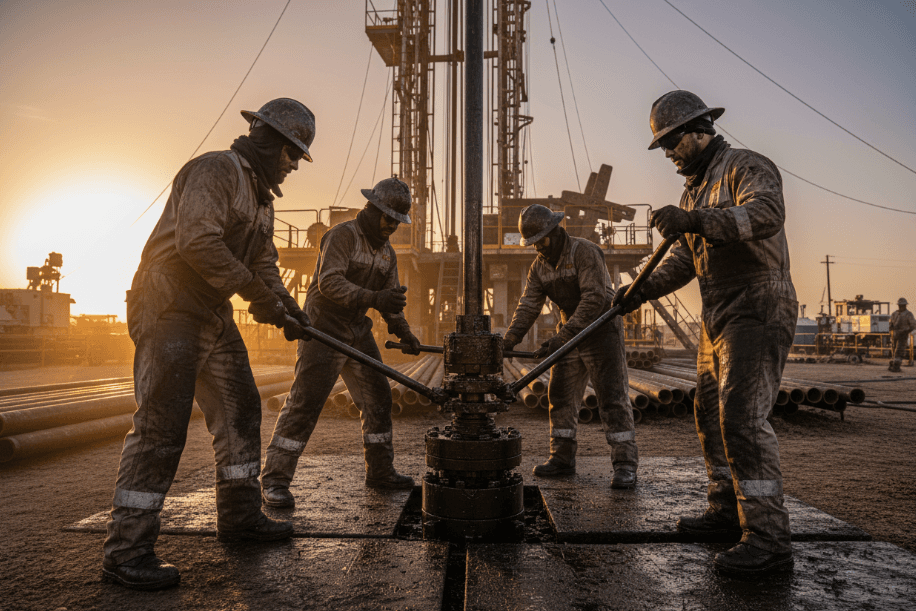
Roughneck Life: What It's Really Like Working in West Texas Oil Fields
In the vast, sun-scorched expanse of West Texas, under a sky that stretches into an infinite blue, a modern-day archetype toils for the black gold that fuels the world. He is the roughneck, a figure as central to the mythology of Texas as the cowboy, yet often shrouded in a layer of crude oil and misunderstanding. As Taylor Sheridan’s series Landman drills into the high-stakes world of the Permian Basin, it brings this figure to the forefront—the man on the rig floor, the engine of the boom. To

Cooper Norris Season 3: From Roughneck to Oil Boss, and Why Gallino's Money Changes Everything
Cooper Norris enters Landman Season 3 with a title, a company, and a dangerous investor. That promotion may be the hardest test the show has given him.

Is Landman Realistic? Oil Industry Accuracy Explained
Short answer: Landman is surprisingly realistic in its portrayal of the oil industry's day-to-day operations — landman negotiations, roughneck culture, and Permian Basin geography are all well-researched. The show takes creative liberties with cartel involvement and the speed of corporate deals, but the core work of a landman is accurately depicted. From drilling terminology to land negotiation tactics, Taylor Sheridan's Landman captures the authentic reality of America's oil fields with unprec

A Documentary of the Survival of a Forgotten Group Deep in the Texas Oil Fields
A Documentary of the Survival of a Forgotten Group Deep in the Texas Oil FieldsHis hard hat was smeared with black crude oil, and his heavy work boots echoed dully on the steel grating. This was his fourteenth consecutive day of work, twelve hours a day, with no weekends and no holidays. In this land known as the energy heart of the US, oil workers like Jack - known in the industry as "Landman" - are writing a national energy legend with their sweat and blood. However, behind the soaring stock
Related Episodes
See how this oil-industry topic shows up in the series.